Arecaceae
Canary Island Date Palm: The Iconic Feather Palm of the Mediterranean
Phoenix canariensis
Large outdoor palm for full sun conditions. Water every 10 days in summer, reducing to every 14-21 days in winter. Once established, highly drought tolerant. Fertilize with a palm-specific fertilizer containing magnesium to prevent deficiency.
Every 10 days
Direct sun
-10° - 40°C
30% - 60%
Categories
What is Canary Island Date Palm?
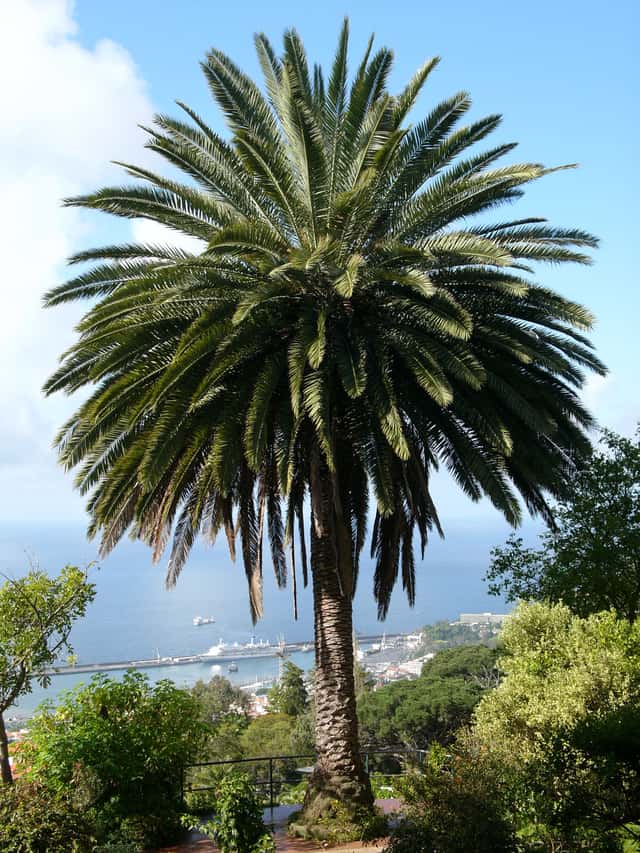
Canary Island Date Palm (Phoenix canariensis) is a medium-care plant from the Arecaceae family. Phoenix canariensis, commonly known as the Canary Island Date Palm or Pineapple Palm, is a majestic feather palm native to the Canary Islands, Spain. It is one of the most widely planted ornamental palms in the world, recognizable by its stout trunk adorned with distinctive diamond-shaped leaf scars...
Canary Island Date Palm grows up to 18.0m, spread of 800cm, watering every 10 days, -10°C – 40°C, 30–60% humidity. It is not suitable for indoor environments and safe for pets.
Unlike many popular species, Canary Island Date Palm is safe to keep around pets.
How to Care for Canary Island Date Palm?
TLDR: Canary Island Date Palm needs Direct sun, watering every 10 days, and temperatures between -10-40°C with 30-60% humidity.
How Often Should You Water Canary Island Date Palm?
Water deeply every 7-10 days during the growing season. Reduce to every 2-3 weeks in winter. Excellent drainage is essential — never allow roots to sit in waterlogged soil. Once established, this palm is highly drought tolerant.
How Much Light Does Canary Island Date Palm Need?
Requires full sun for vigorous growth — at least 6-8 hours of direct sunlight daily. Can tolerate partial shade but growth will be significantly slower. Ideal for open gardens, avenues, and coastal landscapes.
What Is the Best Soil for Canary Island Date Palm?
Thrives in well-draining soils: sandy, loamy, or clay with good drainage. Tolerates a wide pH range of 6.1-7.8. Salt-tolerant — suitable for coastal planting. Avoid waterlogged or poorly drained soils.
What Pot Should You Use for Canary Island Date Palm?
Large terracotta or stone planter with adequate drainage holes for young specimens. Mature trees are best planted directly in the ground as they develop extensive root systems.
Care Schedule
Fertilize
Every 90 days
What Is Canary Island Date Palm and Where Does It Come From?
Phoenix canariensis, commonly known as the Canary Island Date Palm or Pineapple Palm, is a majestic feather palm native to the Canary Islands, Spain. It is one of the most widely planted ornamental palms in the world, recognizable by its stout trunk adorned with distinctive diamond-shaped leaf scars, and its long arching pinnate fronds that can reach over 6 meters. Unlike Phoenix roebelenii (the pygmy date palm already in the database), this species is a large-scale outdoor tree that can grow up to 18 meters tall.
How to Propagate Canary Island Date Palm?
Seed propagation
Use fresh seeds for best germination rates — older seeds have significantly lower viability. Hot water treatment has been shown to achieve up to 87% germination success.
- 1 Collect fresh seeds and remove any remaining fruit pulp
- 2 Soak seeds in warm water for 24-48 hours to soften the seed coat
- 3 Plant in well-draining seed mix at a depth of 2-3 cm
- 4 Maintain temperatures of 25-30°C and consistent moisture
- 5 Germination may occur between 4 weeks and 3 months
Materials needed:
How Big Does Canary Island Date Palm Grow?
TLDR: Canary Island Date Palm can reach up to 18.0m tall with Slow growth rate.
Max height
18.0m
Spread
8.0m
Growth rate
Slow
Foliage
Evergreen
Plant Uses
Ornamental
Great for decoration
Is your plant showing symptoms?
Click on the symptom to discover possible causes:
What Diseases Commonly Affect Canary Island Date Palm?
TLDR: Canary Island Date Palm is susceptible to 8 known diseases. Monitor regularly for early detection.
Fusarium Wilt
Fusarium wilt is a serious fungal disease caused by the soil-borne fungus Fusarium oxysporum. The fungus invades roots and blocks the water-conducting vessels (xylem) of the plant, causing progressive wilting and eventual death. Host-specific forms of the pathogen exist that attack different plant species.
Root Rot
Root rot is a serious fungal disease that affects the root system of plants, causing them to decay and die. It is primarily caused by overwatering, poor drainage, or soil-borne fungi such as Pythium, Phytophthora, Rhizoctonia, and Fusarium. The disease thrives in waterlogged conditions where roots are deprived of oxygen, making them susceptible to fungal infection.
Spider Mites
Spider mites are tiny arachnids (less than 1/20 inch long) related to spiders and ticks that feed on plant sap. They thrive in hot, dry conditions and can cause significant damage to ornamental and vegetable plants. During severe infestations, crop losses can reach 14% or higher as these pests disrupt vital plant processes including photosynthesis, carbon dioxide absorption, and transpiration.
Mealybugs
Mealybugs are small, soft-bodied insects covered with a white, waxy, cottony material. They are common pests of houseplants and outdoor plants in mild climates. These sap-sucking insects feed on plant tissue, causing damage, stunted growth, and can lead to plant death if left untreated. They produce sticky honeydew which attracts sooty mold.
Meaning & Symbolism
A symbol of the Canary Islands and Mediterranean gardens worldwide. Represents longevity, grandeur, and resilience. Frequently used in formal avenue plantings and as a signature landscape tree.
Fun Facts
Can grow up to 18 meters tall, with fronds exceeding 6 meters in length
The trunk's pineapple-like texture comes from the diamond-shaped scars left by old leaf bases
It is the official symbol of the Canary Islands and appears on the regional coat of arms
Surprisingly cold hardy — can survive temperatures as low as -10°C (14°F)
Frequently asked questions
How often should I water a Canary Island Date Palm?
Can Phoenix canariensis be grown indoors?
Is the Canary Island Date Palm toxic to pets?
Why are my palm fronds turning yellow?
What is the difference between Phoenix canariensis and Phoenix roebelenii?
Compare with similar plants
| Attribute | Difficulty | Light | Watering | Pet Safe |
|---|---|---|---|---|
| Dark Fieldcap | Medium | Low light | 2d | ⚠️ |
| Azalea | Medium | Partial shade | 3d | ⚠️ |
| Muriel's Bamboo | Medium | Partial shade | 3d | ✓ |
| Bougainvillea | Medium | Direct sun | 7d | ⚠️ |




