Cactaceae
Cane Cactus (Austrocylindropuntia cylindrica)
Austrocylindropuntia cylindrica
It needs direct sun, very sandy soil and little water. It won't survive a hard frost. Wear thick gloves when you handle it: the spines hurt and the stem segments come off easily.
Every 21 days
Direct sun
-1° - °C
% - %
Categories
What is Cane Cactus?
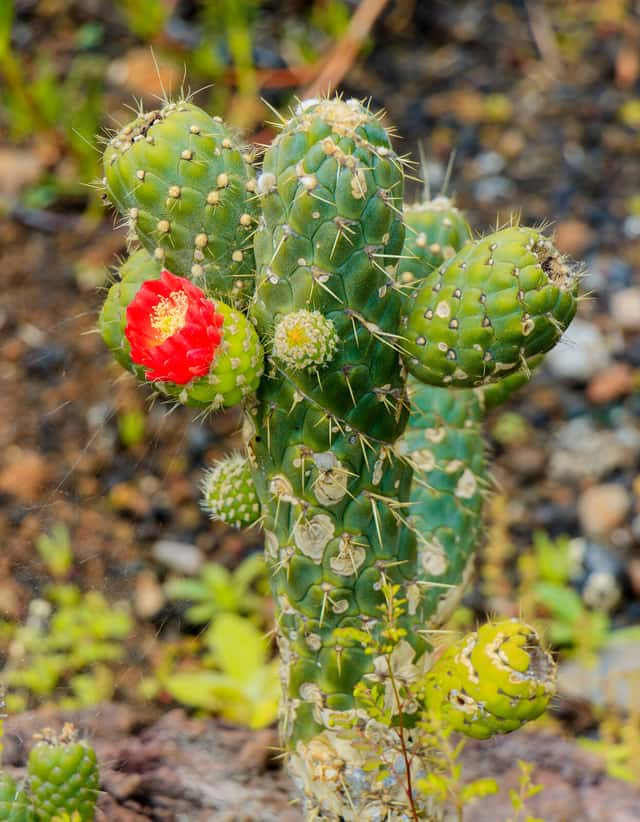
Cane Cactus (Austrocylindropuntia cylindrica) is a easy-care plant from the Cactaceae family. Cane cactus is a shrubby cactus native to the Andes, from central Colombia to Ecuador and northwestern Peru. The stems are long, round and grey-green, covered in bumps, with pale yellow spines about 1/2 in (1 to 2 cm) long. It usually reaches 3 to 10 ft (1 to 3 m), and can hit 13 ft (4 m) with a woo...
Cane Cactus grows up to 4.0m, watering every 21 days. It is suitable for indoor environments and safe for pets.
Unlike many tropical plants, Cane Cactus tolerates watering mistakes. Best for beginners. Unlike many popular species, Cane Cactus is safe to keep around pets. Without adequate drainage, root rot can develop within 42 days.
How to Care for Cane Cactus?
TLDR: Cane Cactus needs Direct sun, watering every 21 days, and temperatures between -1-30°C with 40-70% humidity.
How Often Should You Water Cane Cactus?
Water deeply, then wait until the soil is completely dry before watering again, usually every 21 days or longer. Water even less in cold weather.
How Much Light Does Cane Cactus Need?
Direct sun is best. Indoors, it needs a very bright window, because in low light the stems grow thin and bent.
What Is the Best Soil for Cane Cactus?
Use cactus mix with 70 to 80% coarse material, such as coarse sand, pumice or perlite.
What Pot Should You Use for Cane Cactus?
A heavy pot with drainage holes, ideally terracotta, so a tall plant doesn't tip over.
What Is Cane Cactus and Where Does It Come From?
Cane cactus is a shrubby cactus native to the Andes, from central Colombia to Ecuador and northwestern Peru. The stems are long, round and grey-green, covered in bumps, with pale yellow spines about 1/2 in (1 to 2 cm) long. It usually reaches 3 to 10 ft (1 to 3 m), and can hit 13 ft (4 m) with a woody trunk. The flowers are red and small, about 1 in (2 to 3.5 cm), followed by yellowish to orange fruit. A stem piece that falls on the ground can root by itself, which is how it escaped gardens and became a weed in Australia and New Zealand.
How to Propagate Cane Cactus?
Stem cutting
Don't toss stem pieces in yard waste where the plant could escape, since they can root by themselves.
- 1 Cut a healthy stem segment, wearing thick gloves
- 2 Let the cut dry in the shade for a few days
- 3 Plant it in dry cactus mix
- 4 Wait until it settles in before you start watering
Materials needed:
How Big Does Cane Cactus Grow?
TLDR: Cane Cactus can reach up to 4.0m tall with Medium growth rate.
Max height
4.0m
Foliage
Evergreen
Plant Uses
Ornamental
Great for decoration
Is your plant showing symptoms?
Click on the symptom to discover possible causes:
What Diseases Commonly Affect Cane Cactus?
TLDR: Cane Cactus is susceptible to 4 known diseases. Monitor regularly for early detection.
Root Rot
Root rot is a serious fungal disease that affects the root system of plants, causing them to decay and die. It is primarily caused by overwatering, poor drainage, or soil-borne fungi such as Pythium, Phytophthora, Rhizoctonia, and Fusarium. The disease thrives in waterlogged conditions where roots are deprived of oxygen, making them susceptible to fungal infection.
Pythium Root Rot
Pythium root rot is a serious fungal disease caused by various Pythium species including P. aphanidermatum, P. ultimum, and P. irregulare. These water molds are present in practically all cultivated soils and attack plant roots under wet conditions, causing rapid wet rot that can extend into the stem. The disease is favored by poor drainage, overwatering, and specific temperatures depending on the species.
Mealybugs
Mealybugs are small, soft-bodied insects covered with a white, waxy, cottony material. They are common pests of houseplants and outdoor plants in mild climates. These sap-sucking insects feed on plant tissue, causing damage, stunted growth, and can lead to plant death if left untreated. They produce sticky honeydew which attracts sooty mold.
Scale Insects
Scale insects are small sap-sucking pests that appear as brown, shell-like bumps on plant stems and leaves. There are over 25 species, divided into armored (hard) and unarmored (soft) scales. They feed by piercing plant tissue and extracting sap, which weakens the plant and can lead to yellowing, stunted growth, and even death if left untreated. They also excrete honeydew, which attracts ants and promotes sooty mold growth.
Fun Facts
In Australia and New Zealand it escaped gardens through discarded stem pieces
A 2023 study concluded the plant used to describe the species most likely came from Ecuador, not Peru
Frequently asked questions
How often should I water cane cactus?
A piece fell off my cactus. What do I do?
Can it handle cold?
Is cane cactus toxic to cats and dogs?
Compare with similar plants
| Attribute | Difficulty | Light | Watering | Pet Safe |
|---|---|---|---|---|
| Field Maple | Easy | Bright indirect | 14d | ✓ |
| Iberian Houseleek | Easy | Direct sun | 14d | ✓ |
| Silver Birch | Easy | Direct sun | 14d | ✓ |
| Common Blanketflower | Easy | Direct sun | 10d | ✓ |
Choose & Compare
Sources & References
- POWO: Austrocylindropuntia cylindrica
- VicFlora: Austrocylindropuntia cylindrica
- Mountain Crest Gardens: Austrocylindropuntia cylindrica
- World of Succulents: Cane Cactus
- NZ Plant Conservation Network: Austrocylindropuntia cylindrica
- Environmental Weeds of Australia: cane cactus
- Espace pour la vie: pests and diseases of succulent plants





