Moraceae
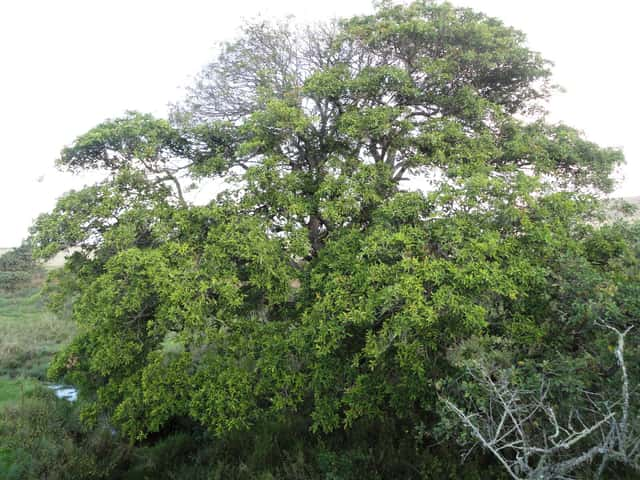
Cape Fig (Ficus sur)
Ficus sur
An easy tree for full sun and plenty of water in frost-free climates. It needs a lot of space: the roots are aggressive and should be kept away from buildings, paving and pipes.
Every 7 days
Bright indirect
0° - 38°C
40% - 80%
Categories
What is Cape fig?
Cape fig (Ficus sur) is a easy-care plant from the Moraceae family. Ficus sur is an African fig in the family Moraceae, found from Cape Verde and Senegambia to Ethiopia, Yemen and southern Africa, usually along rivers and in moist forest. It is a large, fast-growing tree up to 35 m tall with a broad crown and oval leaves. The figs grow in clusters on the trunk and e...
Cape fig grows up to 35.0m, spread of 2500cm, watering every 7 days, 0°C – 38°C, 40–80% humidity. It is not suitable for indoor environments and not safe for pets.
Unlike many tropical plants, Cape fig tolerates watering mistakes. Best for beginners. Without precautions, ingestion can cause irritation in pets. Keep out of reach of cats and dogs.
How to Care for Cape fig?
TLDR: Cape fig needs Bright indirect, watering every 7 days, and temperatures between 0-38°C with 40-80% humidity.
How Often Should You Water Cape fig?
Keep the soil moist, especially for young trees and in hot weather; in the wild it grows along rivers. Established trees cope with drier spells.
How Much Light Does Cape fig Need?
Full sun for fast growth and fruiting. Young trees tolerate part shade, as the species comes from riverine forest.
What Is the Best Soil for Cape fig?
Deep, fertile, moist soil, ideally loam. It adapts to many soils as long as water is available.
What Pot Should You Use for Cape fig?
A tree for the ground. In a container only when young or as bonsai, in a large, heavy pot with good drainage.
What Is Cape fig and Where Does It Come From?
Ficus sur is an African fig in the family Moraceae, found from Cape Verde and Senegambia to Ethiopia, Yemen and southern Africa, usually along rivers and in moist forest. It is a large, fast-growing tree up to 35 m tall with a broad crown and oval leaves. The figs grow in clusters on the trunk and even on the roots at ground level. They turn pinkish and soft when ripe, are edible and feed birds, bats and monkeys.
How to Propagate Cape fig?
Seed
Seed germinates quickly and seedlings grow fast once moved into larger pots.
- 1 Remove the seed from ripe figs and wash off the pulp
- 2 Scatter it on a fine mix without covering
- 3 Keep moist in a warm, bright spot
- 4 Transplant once the seedlings are a few centimetres tall
Materials needed:
Stem cutting
Wear gloves: the white latex irritates the skin.
- 1 Cut a 20-30 cm semi-hardwood branch
- 2 Let the latex dry and remove the lower leaves
- 3 Insert into moist sandy mix
- 4 Keep in bright shade until rooted
Materials needed:
How Big Does Cape fig Grow?
TLDR: Cape fig can reach up to 35.0m tall with Fast growth rate.
Max height
35.0m
Spread
25.0m
Growth rate
Fast
Foliage
Evergreen
Warning: Toxic Plant
This plant can be toxic if ingested. Keep out of reach of:
Plant Uses
Ornamental
Great for decoration
Edible
Can be consumed
Medicinal
Medicinal properties
Culinary Uses
- Ripe figs eaten fresh
- Fig jam
Is your plant showing symptoms?
Click on the symptom to discover possible causes:
What Diseases Commonly Affect Cape fig?
TLDR: Cape fig is susceptible to 3 known diseases. Monitor regularly for early detection.
Scale Insects
Scale insects are small sap-sucking pests that appear as brown, shell-like bumps on plant stems and leaves. There are over 25 species, divided into armored (hard) and unarmored (soft) scales. They feed by piercing plant tissue and extracting sap, which weakens the plant and can lead to yellowing, stunted growth, and even death if left untreated. They also excrete honeydew, which attracts ants and promotes sooty mold growth.
Mealybugs
Mealybugs are small, soft-bodied insects covered with a white, waxy, cottony material. They are common pests of houseplants and outdoor plants in mild climates. These sap-sucking insects feed on plant tissue, causing damage, stunted growth, and can lead to plant death if left untreated. They produce sticky honeydew which attracts sooty mold.
Cold Damage
Cold damage, also known as frost injury, occurs when plants are exposed to freezing or near-freezing temperatures. This environmental stress can cause cellular damage as ice crystals form within plant tissues, rupturing cells and disrupting normal plant functions. Chilling injury can also occur in sensitive species at temperatures between 32-55°F (0-10°C), even without actual freezing.
Fun Facts
The name sur comes from a region of Ethiopia called Sur
Figs even form on the roots at ground level, and locals say those are the sweetest
Each fig species has its own pollinating wasp
Frequently asked questions
Are cape figs edible?
Can I plant it near the house?
Is it frost hardy?
Can it grow in a pot?
Compare with similar plants
| Attribute | Difficulty | Light | Watering | Pet Safe |
|---|---|---|---|---|
| Field Maple | Easy | Bright indirect | 14d | ✓ |
| Iberian Houseleek | Easy | Direct sun | 14d | ✓ |
| Silver Birch | Easy | Direct sun | 14d | ✓ |
| Common Blanketflower | Easy | Direct sun | 10d | ✓ |





