Meliaceae
Catuaba - Trichilia
Trichilia
Grows best in bright, filtered light with organic-rich, well-draining soil and high ambient humidity, mimicking its native rainforest understory habitat.
Every 6 days
Bright indirect
18° - 28°C
60% - 80%
Categories
What is Catuaba?
Catuaba (Trichilia) is a medium-care plant from the Meliaceae family. Trichilia is a genus of over one hundred tropical tree species in the mahogany family (Meliaceae), distributed across tropical America, Africa, and Madagascar. Representative species like Trichilia catigua (catuaba) grow as understory trees in the Atlantic Forest and South American rainforests, reac...
Catuaba grows up to 15.0m, spread of 600cm, watering every 6 days, 18°C – 28°C, 60–80% humidity. It is not suitable for indoor environments and safe for pets.
Unlike many popular species, Catuaba is safe to keep around pets.
How to Care for Catuaba?
TLDR: Catuaba needs Bright indirect, watering every 6 days, and temperatures between 18-28°C with 60-80% humidity.
How Often Should You Water Catuaba?
Water when the top few centimeters of soil feel dry, keeping the substrate consistently moist but never waterlogged.
How Much Light Does Catuaba Need?
Provide strong indirect light for several hours daily; avoid harsh direct sun, which can scorch the foliage.
What Is the Best Soil for Catuaba?
Use a light, organically rich, well-draining potting mix similar to tropical forest floor soil.
What Pot Should You Use for Catuaba?
A large, deep, well-draining pot suited to young tree-form species.
What Is Catuaba and Where Does It Come From?
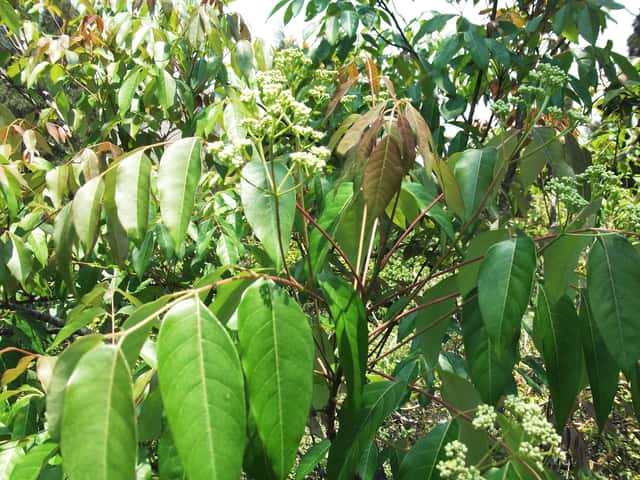
Trichilia is a genus of over one hundred tropical tree species in the mahogany family (Meliaceae), distributed across tropical America, Africa, and Madagascar. Representative species like Trichilia catigua (catuaba) grow as understory trees in the Atlantic Forest and South American rainforests, reaching up to 10 meters tall, with compound leaves of 5-7 leaflets and yellow-whitish flowers blooming in spring. The genus is valued both as ornamental foliage plants and, in the case of catuaba, as a traditional Brazilian tonic herb.
How to Propagate Catuaba?
Seed propagation
Catuaba seeds lose viability quickly, so sow them as soon as possible after collecting.
- 1 Collect ripe seeds from the capsule fruit
- 2 Sow in light, moist substrate soon after collection
- 3 Keep in a shaded, humid spot until germination
Materials needed:
How Big Does Catuaba Grow?
TLDR: Catuaba can reach up to 15.0m tall with Medium growth rate.
Max height
15.0m
Spread
6.0m
Growth rate
Medium
Foliage
Evergreen
Plant Uses
Ornamental
Great for decoration
Medicinal
Medicinal properties
Medicinal Uses
- Traditional revitalizing bark tonic
- Folk use as a stimulant and aphrodisiac
Is your plant showing symptoms?
Click on the symptom to discover possible causes:
What Diseases Commonly Affect Catuaba?
TLDR: Catuaba is susceptible to 4 known diseases. Monitor regularly for early detection.
Scale Insects
Scale insects are small sap-sucking pests that appear as brown, shell-like bumps on plant stems and leaves. There are over 25 species, divided into armored (hard) and unarmored (soft) scales. They feed by piercing plant tissue and extracting sap, which weakens the plant and can lead to yellowing, stunted growth, and even death if left untreated. They also excrete honeydew, which attracts ants and promotes sooty mold growth.
Sooty Mold
Sooty mold is a fungal disease that develops on surfaces coated with honeydew, a sticky sweet substance secreted by sap-sucking insects like aphids, scale insects, and whiteflies. While it does not directly infect plant tissue, it reduces photosynthetic capacity by blocking sunlight and diminishes the plant's aesthetic appearance.
Root Rot
Root rot is a serious fungal disease that affects the root system of plants, causing them to decay and die. It is primarily caused by overwatering, poor drainage, or soil-borne fungi such as Pythium, Phytophthora, Rhizoctonia, and Fusarium. The disease thrives in waterlogged conditions where roots are deprived of oxygen, making them susceptible to fungal infection.
Leaf Spot
Leaf spot is a common fungal disease caused by various pathogens including Alternaria, Ascochyta, Colletotrichum, Septoria, and Venturia. It primarily affects leaves, causing discolored spots that can lead to premature leaf drop if left untreated.
Meaning & Symbolism
In Brazilian folk tradition, catuaba symbolizes vitality and renewed energy, long valued as a revitalizing tonic for body and spirit.
Fun Facts
Catuaba is one of Brazil's most traditional medicinal plants, used for generations as a revitalizing tonic.
The genus Trichilia includes over one hundred species spread across the American, African, and Madagascan tropics.
Its capsule fruits can remain on the tree for up to 5-6 months before dropping.
Frequently asked questions
Does Trichilia need a lot of light?
Is Trichilia toxic to pets?
How often should I water Trichilia?
Compare with similar plants
| Attribute | Difficulty | Light | Watering | Pet Safe |
|---|---|---|---|---|
| Dark Fieldcap | Medium | Low light | 2d | ⚠️ |
| Azalea | Medium | Partial shade | 3d | ⚠️ |
| Muriel's Bamboo | Medium | Partial shade | 3d | ✓ |
| Bougainvillea | Medium | Direct sun | 7d | ⚠️ |




