Cactaceae
Chacalapa Pitayo (Stenocereus chacalapensis)
Stenocereus chacalapensis
A sun-loving cactus for hot, frost-free climates. Plant in very free-draining soil, water sparingly and let it dry out completely between waterings. Barely water in winter. It grows slowly and needs almost no care beyond avoiding overwatering.
Every 21 days
Direct sun
10° - 40°C
20% - 60%
Categories
What is Chacalapa Pitayo?
Chacalapa Pitayo (Stenocereus chacalapensis) is a easy-care plant from the Cactaceae family. Stenocereus chacalapensis is a tree-like columnar cactus endemic to the southern coast of Oaxaca, Mexico, where it grows on slopes and in valleys at 20-230 m near Huatulco, Pochutla, Huamelula and San Isidro Chacalapa, the village it is named after. It usually reaches 10-15 m, with a distinct trunk...
Chacalapa Pitayo grows up to 15.0m, watering every 21 days, 10°C – 40°C, 20–60% humidity. It is not suitable for indoor environments and safe for pets.
Unlike many tropical plants, Chacalapa Pitayo tolerates watering mistakes. Best for beginners. Unlike many popular species, Chacalapa Pitayo is safe to keep around pets.
How to Care for Chacalapa Pitayo?
TLDR: Chacalapa Pitayo needs Direct sun, watering every 21 days, and temperatures between 10-40°C with 20-60% humidity.
How Often Should You Water Chacalapa Pitayo?
Water every 2-3 weeks in warm weather, only when the soil is completely dry. In winter, water once a month or less. Standing water at the base causes rot.
How Much Light Does Chacalapa Pitayo Need?
Needs direct sun all day. In shade the stems grow thin and lean. Newly planted cuttings may need a few days to acclimatise to avoid sunburn.
What Is the Best Soil for Chacalapa Pitayo?
Use sandy or gravelly, very well-drained soil. In a pot, mix cactus soil with equal parts coarse sand or grit.
What Pot Should You Use for Chacalapa Pitayo?
While young, a wide, heavy terracotta pot with drainage holes. Mature plants belong in the ground: they reach 10-15 m.
Care Schedule
Fertilize
Every 90 days
Repot
Every 730 days
What Is Chacalapa Pitayo and Where Does It Come From?
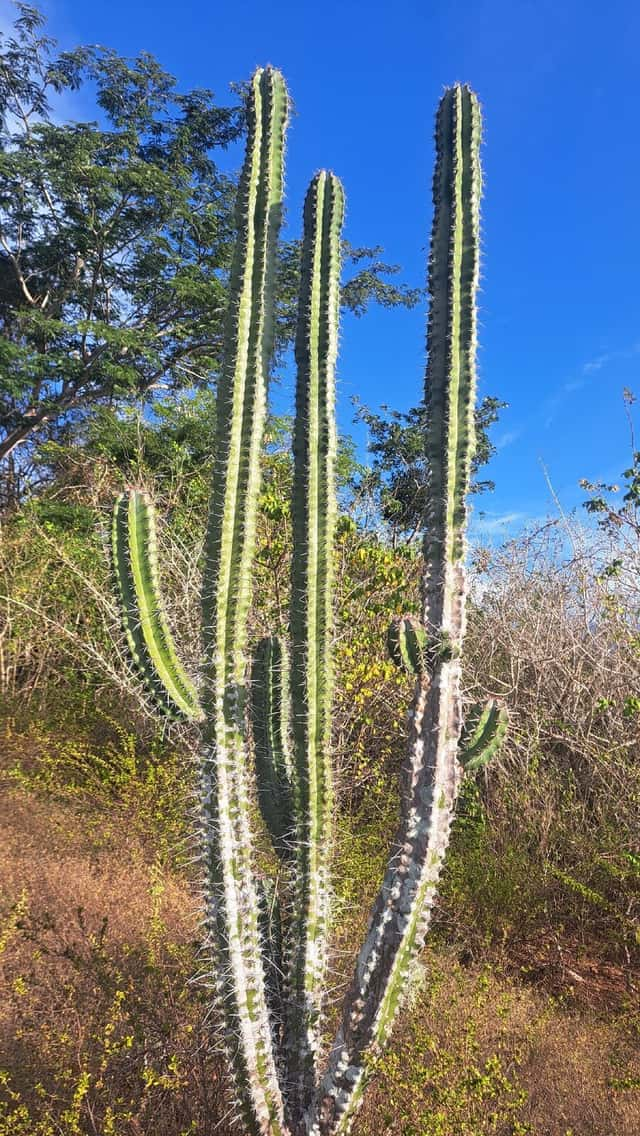
Stenocereus chacalapensis is a tree-like columnar cactus endemic to the southern coast of Oaxaca, Mexico, where it grows on slopes and in valleys at 20-230 m near Huatulco, Pochutla, Huamelula and San Isidro Chacalapa, the village it is named after. It usually reaches 10-15 m, with a distinct trunk and many upright gray-green branches up to 15 cm across, each with 7 ribs. Each areole has 10 to 14 gray to black spines up to 2.8 cm long. The fragrant, white, funnel-shaped flowers open at night, stay open into the next day and are pollinated by bats. The fruit is round, brown and very spiny. It is listed as Critically Endangered by the IUCN.
How to Propagate Chacalapa Pitayo?
Stem cutting
Wear thick gloves because of the spines. Warmth and a dry mix prevent the cut from rotting.
- 1 Cut a 20-40 cm branch segment with a clean knife
- 2 Let the cut end dry and callus in the shade for 1-2 weeks
- 3 Plant upright in dry, sandy mix, burying just a few centimetres
- 4 Start watering only after 2-3 weeks, once roots begin to form
Materials needed:
Seed
Seedlings grow very slowly. As it is a threatened species, use legally sourced seed.
- 1 Remove seeds from ripe fruit and wash off the pulp
- 2 Sow on moist sandy mix, barely covering them
- 3 Keep warm and bright under clear plastic
- 4 Ventilate gradually once seedlings appear
Materials needed:
How Big Does Chacalapa Pitayo Grow?
TLDR: Chacalapa Pitayo can reach up to 15.0m tall with Slow growth rate.
Max height
15.0m
Growth rate
Slow
Foliage
Evergreen
Plant Uses
Ornamental
Great for decoration
Is your plant showing symptoms?
Click on the symptom to discover possible causes:
What Diseases Commonly Affect Chacalapa Pitayo?
TLDR: Chacalapa Pitayo is susceptible to 3 known diseases. Monitor regularly for early detection.
Root Rot
Root rot is a serious fungal disease that affects the root system of plants, causing them to decay and die. It is primarily caused by overwatering, poor drainage, or soil-borne fungi such as Pythium, Phytophthora, Rhizoctonia, and Fusarium. The disease thrives in waterlogged conditions where roots are deprived of oxygen, making them susceptible to fungal infection.
Mealybugs
Mealybugs are small, soft-bodied insects covered with a white, waxy, cottony material. They are common pests of houseplants and outdoor plants in mild climates. These sap-sucking insects feed on plant tissue, causing damage, stunted growth, and can lead to plant death if left untreated. They produce sticky honeydew which attracts sooty mold.
Scale Insects
Scale insects are small sap-sucking pests that appear as brown, shell-like bumps on plant stems and leaves. There are over 25 species, divided into armored (hard) and unarmored (soft) scales. They feed by piercing plant tissue and extracting sap, which weakens the plant and can lead to yellowing, stunted growth, and even death if left untreated. They also excrete honeydew, which attracts ants and promotes sooty mold growth.
Meaning & Symbolism
A giant of the dry coastal forests of Oaxaca whose night flowers feed nectar bats. Today it stands for the fragility of endemic species, as it is Critically Endangered.
Fun Facts
It is named after San Isidro Chacalapa, the Oaxacan village where it was described
Its flowers open at night and are pollinated by the bat Choeronycteris mexicana
Helia Bravo first described it as Ritterocereus chacalapensis
Each branch has seven ribs
Frequently asked questions
How often should I water it?
Is it cold hardy?
Is Stenocereus chacalapensis toxic?
Why is it endangered?
Compare with similar plants
| Attribute | Difficulty | Light | Watering | Pet Safe |
|---|---|---|---|---|
| Field Maple | Easy | Bright indirect | 14d | ✓ |
| Iberian Houseleek | Easy | Direct sun | 14d | ✓ |
| Silver Birch | Easy | Direct sun | 14d | ✓ |
| Common Blanketflower | Easy | Direct sun | 10d | ✓ |





