Cactaceae
Chain Cactus (Rhipsalis paradoxa)
Rhipsalis paradoxa
Easy care: bright, indirect light with no more than about two hours of soft sun a day, a free-draining mix with bark or coir, and regular watering without sogginess. Ideal at 18-26 °C; keep it above 10 °C. Feed lightly in spring and summer. It looks best in a hanging pot. Watch for mealybugs.
Every 7 days
Partial shade
10° - °C
% - %
Categories
What is Chain cactus?
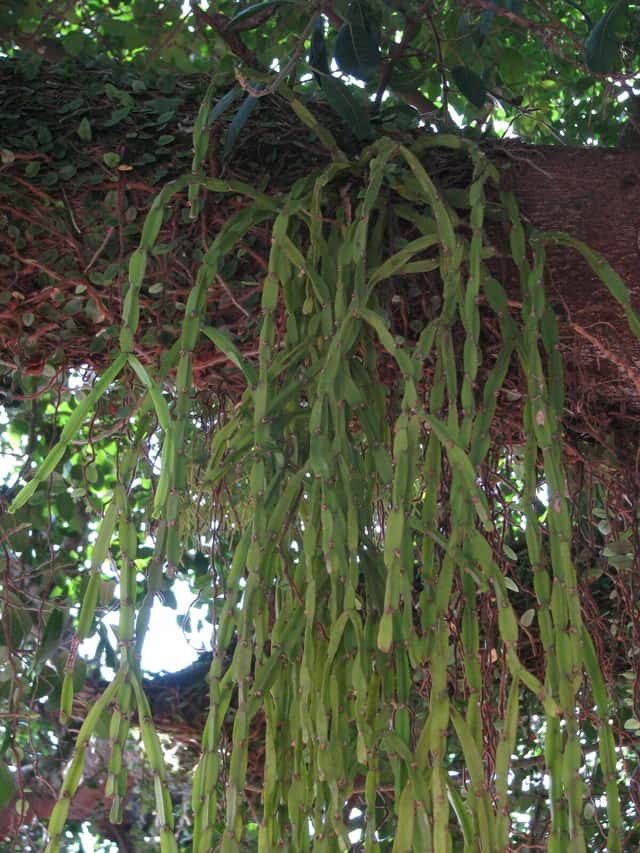
Chain cactus (Rhipsalis paradoxa) is a easy-care plant from the Cactaceae family. Rhipsalis paradoxa is an epiphytic cactus endemic to Brazil, from the moist forests of the Northeast, Southeast and South, where it grows on tree trunks and branches without soil. It has no visible spines: the green stems are made of angular segments that alternate in position like the links of a ch...
Chain cactus grows up to 4.0m, spread of 50cm, watering every 7 days. It is suitable for indoor environments and safe for pets.
Unlike many tropical plants, Chain cactus tolerates watering mistakes. Best for beginners. Unlike many popular species, Chain cactus is safe to keep around pets. Without adequate drainage, root rot can develop within 14 days.
How to Care for Chain cactus?
TLDR: Chain cactus needs Partial shade, watering every 7 days, and temperatures between 10-30°C with 40-70% humidity.
How Often Should You Water Chain cactus?
During the growing season keep the mix lightly moist: water when the top third has dried, usually about once a week. In lower light and in winter, let it dry more between waterings. Yellowing means too much water; limp, crispy stems mean too little.
How Much Light Does Chain cactus Need?
Bright, indirect light near a window with a sheer curtain. A few hours of morning sun are fine, but strong midday sun scorches the stems. It tolerates low light if watered less often.
What Is the Best Soil for Chain cactus?
A light, airy epiphyte mix: cactus and succulent mix with pine bark, coir or perlite. It must drain fast.
What Pot Should You Use for Chain cactus?
A hanging pot or basket with good drainage holes, plastic or clay; repot every 3 years in spring. If it is flowering, wait until it finishes.
Care Schedule
Fertilize
Every 30 days
Repot
Every 1095 days
What Is Chain cactus and Where Does It Come From?
Rhipsalis paradoxa is an epiphytic cactus endemic to Brazil, from the moist forests of the Northeast, Southeast and South, where it grows on tree trunks and branches without soil. It has no visible spines: the green stems are made of angular segments that alternate in position like the links of a chain, and they cascade downward. In cultivation the stems reach 2.5-4 m long (up to 5 m given space). From late winter to early spring it opens small white flowers along the stems, followed by small fruit. It is a forest cactus: it likes filtered light and a little more moisture than desert cacti.
How to Propagate Chain cactus?
Stem section cuttings
Plant several cuttings in one pot for a fuller plant sooner.
- 1 Cut a piece of stem with a few segments using clean scissors
- 2 Let the cut dry for 1-2 days until it calluses
- 3 Insert the bottom 2-3 cm into a light, slightly moist mix
- 4 Keep in indirect light and water sparingly until new growth appears
Materials needed:
Seeds
Much slower than cuttings; use it when you want many plants.
- 1 Remove the seeds from ripe fruit and clean off the pulp
- 2 Sow on the surface of fine, moist mix
- 3 Cover with clear plastic and keep somewhere bright and warm, out of direct sun
Materials needed:
How Big Does Chain cactus Grow?
TLDR: Chain cactus can reach up to 4.0m tall with Medium growth rate.
Max height
4.0m
Spread
50cm
Growth rate
Medium
Foliage
Evergreen
Plant Uses
Ornamental
Great for decoration
Is your plant showing symptoms?
Click on the symptom to discover possible causes:
What Diseases Commonly Affect Chain cactus?
TLDR: Chain cactus is susceptible to 2 known diseases. Monitor regularly for early detection.
Mealybugs
Mealybugs are small, soft-bodied insects covered with a white, waxy, cottony material. They are common pests of houseplants and outdoor plants in mild climates. These sap-sucking insects feed on plant tissue, causing damage, stunted growth, and can lead to plant death if left untreated. They produce sticky honeydew which attracts sooty mold.
Root Rot
Root rot is a serious fungal disease that affects the root system of plants, causing them to decay and die. It is primarily caused by overwatering, poor drainage, or soil-borne fungi such as Pythium, Phytophthora, Rhizoctonia, and Fusarium. The disease thrives in waterlogged conditions where roots are deprived of oxygen, making them susceptible to fungal infection.
Fun Facts
It is a spineless cactus that lives hanging from trees
Paradoxa refers to its odd segments, which alternate in position like links in a chain
In cultivation the stems can grow longer than 4 metres
Frequently asked questions
How often should I water Rhipsalis paradoxa?
Does chain cactus like sun?
Is Rhipsalis paradoxa toxic to cats and dogs?
How do I propagate chain cactus?
Compare with similar plants
| Attribute | Difficulty | Light | Watering | Pet Safe |
|---|---|---|---|---|
| Field Maple | Easy | Bright indirect | 14d | ✓ |
| Iberian Houseleek | Easy | Direct sun | 14d | ✓ |
| Silver Birch | Easy | Direct sun | 14d | ✓ |
| Common Blanketflower | Easy | Direct sun | 10d | ✓ |