Phyllanthaceae
Chamberbitter (Phyllanthus urinaria)
Phyllanthus urinaria
An easy warm-season plant: full sun, moist, well-drained soil. Seeds need soil above 24 °C to germinate, and the plant completes its life cycle in a few months, dying back at the first frost. Keep it from setting seed if you do not want it all over your garden.
Every 4 days
Direct sun
10° - 35°C
50% - 80%
Categories
What is Chamberbitter?
Chamberbitter (Phyllanthus urinaria) is a easy-care plant from the Phyllanthaceae family. Chamberbitter (Phyllanthus urinaria) is an annual herb in the Phyllanthaceae family, native to tropical Asia. It forms mounds 30–60 cm tall with reddish stems and flattened side branches that look like compound leaves, lined with small oblong leaflets. The flowers are tiny and greenish-white, and th...
Chamberbitter grows up to 60cm, spread of 40cm, watering every 4 days, 10°C – 35°C, 50–80% humidity. It is not suitable for indoor environments and safe for pets.
Unlike many tropical plants, Chamberbitter tolerates watering mistakes. Best for beginners. Unlike many popular species, Chamberbitter is safe to keep around pets.
How to Care for Chamberbitter?
TLDR: Chamberbitter needs Direct sun, watering every 4 days, and temperatures between 10-35°C with 50-80% humidity.
How Often Should You Water Chamberbitter?
Keep the soil lightly moist, watering every 3–5 days in hot weather. It tolerates short dry spells but grows best with steady moisture.
How Much Light Does Chamberbitter Need?
Full sun (6+ hours a day) is best; it tolerates part shade but becomes sparse.
What Is the Best Soil for Chamberbitter?
Ordinary loamy, well-drained garden soil with pH 6.5–8. No feeding needed.
What Pot Should You Use for Chamberbitter?
A 15–20 cm clay or plastic pot with drainage holes; a pot also helps contain self-seeding.
What Is Chamberbitter and Where Does It Come From?
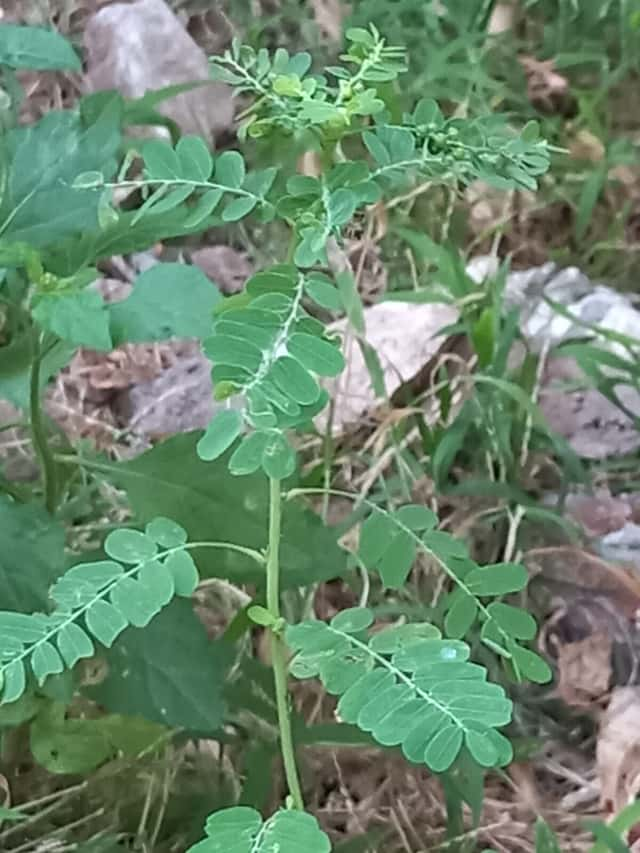
Chamberbitter (Phyllanthus urinaria) is an annual herb in the Phyllanthaceae family, native to tropical Asia. It forms mounds 30–60 cm tall with reddish stems and flattened side branches that look like compound leaves, lined with small oblong leaflets. The flowers are tiny and greenish-white, and the round fruits sit stalkless under the branches; when ripe they burst and fling their seeds. In much of the southern United States it is treated as an invasive weed of lawns, beds and nursery pots.
How to Propagate Chamberbitter?
Seed sowing
It reseeds itself very readily; grow it in a pot if you do not want it spreading through the garden.
- 1 Collect ripe fruits before they burst, or gather fallen seed
- 2 Scatter the seeds on moist potting mix and cover lightly
- 3 Keep warm (above 24 °C), sunny and evenly moist
- 4 Transplant seedlings once they reach about 5 cm
Materials needed:
How Big Does Chamberbitter Grow?
TLDR: Chamberbitter can reach up to 60cm tall with Fast growth rate.
Max height
60cm
Spread
40cm
Growth rate
Fast
Plant Uses
Medicinal
Medicinal properties
Medicinal Uses
- Used in traditional Asian and South American medicine as a diuretic and for kidney stones (tea of the aerial parts)
- Traditionally used for liver complaints; not a substitute for medical advice
Is your plant showing symptoms?
Click on the symptom to discover possible causes:
Fun Facts
Its ripe fruits burst open and fling seeds away from the plant
It can still reproduce when mowed down to 5 cm, so mowing barely slows it
What looks like a compound leaf is actually a branch carrying many true leaves
Frequently asked questions
How do I tell chamberbitter from long-stalked phyllanthus?
Is chamberbitter toxic to pets?
Why does it keep appearing in my pots?
Does it survive winter?
Compare with similar plants
| Attribute | Difficulty | Light | Watering | Pet Safe |
|---|---|---|---|---|
| Field Maple | Easy | Bright indirect | 14d | ✓ |
| Iberian Houseleek | Easy | Direct sun | 14d | ✓ |
| Silver Birch | Easy | Direct sun | 14d | ✓ |
| Common Blanketflower | Easy | Direct sun | 10d | ✓ |





