Euphorbiaceae
Chaya (Cnidoscolus aconitifolius)
Cnidoscolus aconitifolius
A tough, productive, sun-loving plant that copes with heavy rain and dry spells and has few pests. Grow it from cuttings, let it establish in the first year, then harvest shoots and young leaves, pruning to keep it at an easy picking height. Wear gloves when handling.
Every 7 days
Direct sun
° - °C
% - %
Categories
What is Chaya?
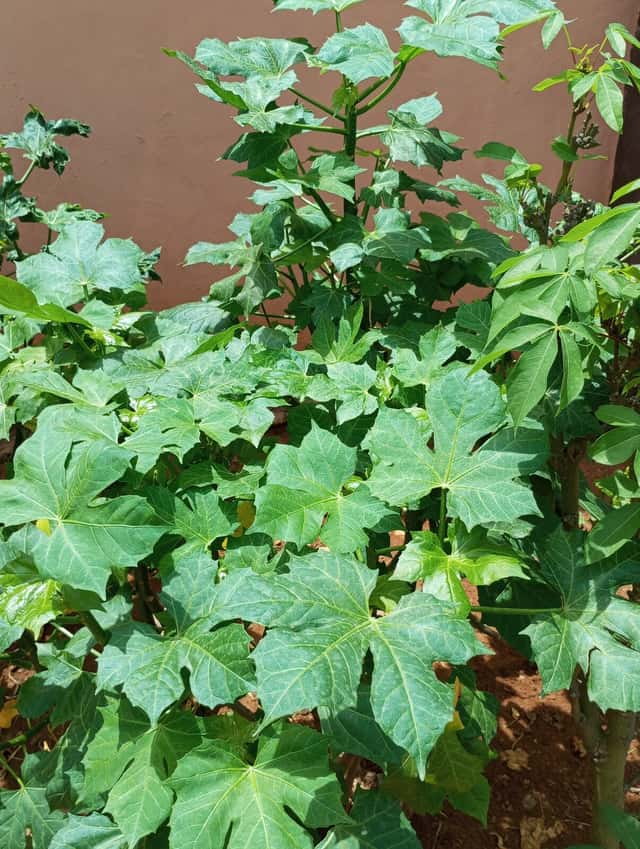
Chaya (Cnidoscolus aconitifolius) is a easy-care plant from the Euphorbiaceae family. Chaya (Cnidoscolus aconitifolius) is a perennial shrub in the spurge family, native to Mexico, probably the Yucatan Peninsula, and Central America. It grows fast to about 5 m, with large leaves 10-30 cm across, lobed like an open hand, and small white flowers in clusters above the foliage. Some form...
Chaya grows up to 5.0m, watering every 7 days. It is not suitable for indoor environments and safe for pets.
Unlike many tropical plants, Chaya tolerates watering mistakes. Best for beginners. Unlike many popular species, Chaya is safe to keep around pets.
How to Care for Chaya?
TLDR: Chaya needs Direct sun, watering every 7 days, and temperatures between 15-30°C with 40-70% humidity.
How Often Should You Water Chaya?
Water sparingly until cuttings root, without waterlogging. Once established, weekly watering in dry spells is enough; it tolerates drought but produces more leaves with regular water.
How Much Light Does Chaya Need?
Full sun and heat. In shade it grows and produces less.
What Is the Best Soil for Chaya?
It grows in many soil types as long as they drain well. Well-rotted manure in the planting hole improves growth.
What Pot Should You Use for Chaya?
A large, deep pot of at least 40 litres with good drainage if there is no room in the ground. Frequent pruning keeps it in size.
What Is Chaya and Where Does It Come From?
Chaya (Cnidoscolus aconitifolius) is a perennial shrub in the spurge family, native to Mexico, probably the Yucatan Peninsula, and Central America. It grows fast to about 5 m, with large leaves 10-30 cm across, lobed like an open hand, and small white flowers in clusters above the foliage. Some forms have stinging hairs; 'Chayamansa' has almost none. The leaves and shoots are a traditional Maya vegetable, used like spinach or chard, but they must be cooked, because raw they contain compounds that release cyanide.
How to Propagate Chaya?
Woody stem cuttings
Wear gloves: the sap irritates skin and some plants have stinging hairs. Too much water before rooting rots the cutting. A mix with rotted manure gives stronger plants.
- 1 Cut 15-60 cm woody stem pieces, preferably from the lower part of branches
- 2 Let the cut ends dry for a day or two
- 3 Plant top end up, burying about a third
- 4 Water sparingly until new shoots appear
Materials needed:
How Big Does Chaya Grow?
TLDR: Chaya can reach up to 5.0m tall with Fast growth rate.
Max height
5.0m
Growth rate
Fast
Warning: Toxic Plant
This plant can be toxic if ingested. Keep out of reach of:
Plant Uses
Edible
Can be consumed
Medicinal
Medicinal properties
Medicinal Uses
- Leaf infusion used in traditional Maya medicine for kidney stones, high blood pressure and diabetes (folk use, not clinically proven; always prepare boiled)
Culinary Uses
- Young leaves and shoot tips boiled for 15-20 minutes and used like spinach in stews, soups, tamales and eggs
- Never eat raw or only quickly stir-fried, and do not cook in aluminium pans
Is your plant showing symptoms?
Click on the symptom to discover possible causes:
Fun Facts
The Maya have grown it since pre-Columbian times
Studies report more protein, iron and calcium in its leaves than in spinach
It rarely sets seed in cultivation, so it is spread almost only by cuttings
Frequently asked questions
Can you eat chaya raw?
How do I plant chaya?
When can I start harvesting?
Does chaya sting?
Compare with similar plants
| Attribute | Difficulty | Light | Watering | Pet Safe |
|---|---|---|---|---|
| Field Maple | Easy | Bright indirect | 14d | ✓ |
| Iberian Houseleek | Easy | Direct sun | 14d | ✓ |
| Silver Birch | Easy | Direct sun | 14d | ✓ |
| Common Blanketflower | Easy | Direct sun | 10d | ✓ |





