Lamiaceae
Chia (Salvia hispanica)
Salvia hispanica
Grow chia in full sun with moderate watering, letting the soil dry out between waterings. It is a hardy, drought-tolerant plant but sensitive to waterlogging, which can cause root rot.
Every 7 days
Direct sun
15° - 32°C
% - %
Categories
What is Chia?
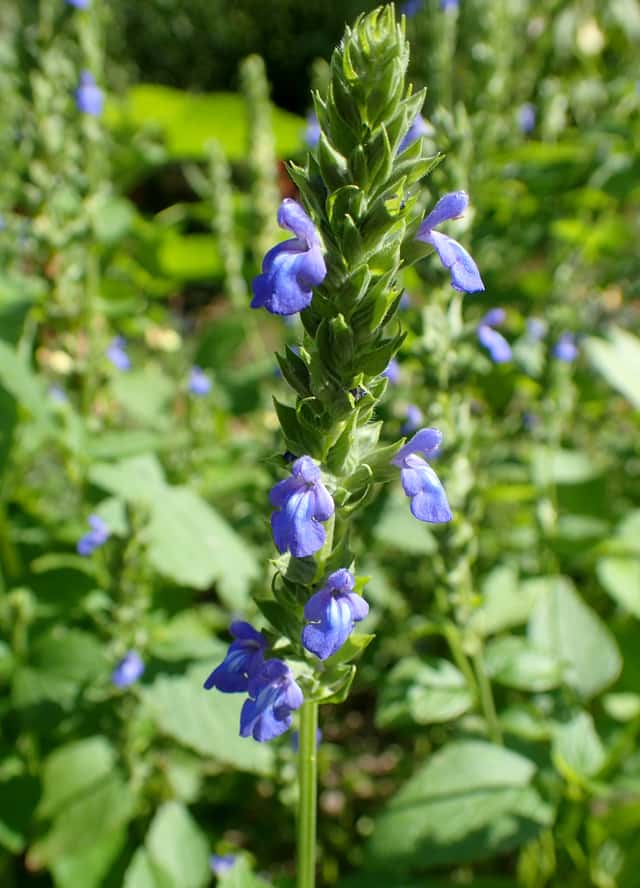
Chia (Salvia hispanica) is a easy-care plant from the Lamiaceae family. Chia (Salvia hispanica) is an annual herb in the Lamiaceae family, native to central and southern Mexico. Cultivated for centuries by the Aztecs, it is now known worldwide for its fiber- and omega-3-rich seeds. The plant grows upright stems with dark green leaves and small purple or white flowers cl...
Chia grows up to 1.8m, watering every 7 days, 15°C – 32°C. It is suitable for indoor environments and safe for pets.
Unlike many tropical plants, Chia tolerates watering mistakes. Best for beginners. Unlike many popular species, Chia is safe to keep around pets. Without adequate drainage, root rot can develop within 14 days.
How to Care for Chia?
TLDR: Chia needs Direct sun, watering every 7 days, and temperatures between 15-32°C with 40-70% humidity.
How Often Should You Water Chia?
Water only when the top few centimeters of soil feel dry. Avoid letting water sit in the saucer or pot, since excess moisture encourages root rot.
How Much Light Does Chia Need?
Prefers abundant direct sunlight, at least 6 to 8 hours a day. Indoors, place it near a bright, sunny window.
What Is the Best Soil for Chia?
Use a light, well-draining soil mix, combining regular potting soil with perlite or coarse sand to prevent waterlogging.
What Pot Should You Use for Chia?
Terracotta or ceramic pot with drainage holes, medium size
Care Schedule
Repot
Every 365 days
What Is Chia and Where Does It Come From?
Chia (Salvia hispanica) is an annual herb in the Lamiaceae family, native to central and southern Mexico. Cultivated for centuries by the Aztecs, it is now known worldwide for its fiber- and omega-3-rich seeds. The plant grows upright stems with dark green leaves and small purple or white flowers clustered in spikes during summer and fall.
How to Propagate Chia?
Direct sowing
Chia seeds germinate quickly; avoid overwatering the soil to prevent damping-off of seedlings.
- 1 Scatter seeds over moist, well-draining soil
- 2 Cover lightly with a thin layer of soil
- 3 Keep the soil consistently moist until germination
- 4 Move seedlings to their final full-sun spot once 5-10 cm tall
Materials needed:
How Big Does Chia Grow?
TLDR: Chia can reach up to 1.8m tall with Fast growth rate.
Max height
1.8m
Growth rate
Fast
Foliage
Deciduous
Plant Uses
Edible
Can be consumed
Ornamental
Great for decoration
Culinary Uses
- Seeds used in puddings, smoothies, baked goods, and as an egg substitute in recipes
Is your plant showing symptoms?
Click on the symptom to discover possible causes:
What Diseases Commonly Affect Chia?
TLDR: Chia is susceptible to 6 known diseases. Monitor regularly for early detection.
Powdery Mildew
Powdery mildew is a common fungal disease caused by various fungi species including Erysiphe, Podosphaera, Oïdium, and Leveillula. It affects over 10,000 plant species worldwide. The disease thrives in warm, dry climates with high humidity and appears as a distinctive white powdery coating on plant surfaces.
Downy Mildew
Downy mildew is a fungal-like disease caused by oomycetes (water molds) that thrives in cool, wet conditions. It affects a wide range of plants, causing yellowing leaves with fuzzy white-gray growth underneath, leading to defoliation and reduced yields if left untreated.
Gray Mold (Botrytis Blight)
Gray mold, caused by the fungus Botrytis cinerea, is a widespread necrotrophic pathogen affecting over 1,400 plant species. It thrives in cool, humid conditions and attacks weakened or aging plant tissues, causing soft rot and characteristic gray fuzzy growth.
Root Rot
Root rot is a serious fungal disease that affects the root system of plants, causing them to decay and die. It is primarily caused by overwatering, poor drainage, or soil-borne fungi such as Pythium, Phytophthora, Rhizoctonia, and Fusarium. The disease thrives in waterlogged conditions where roots are deprived of oxygen, making them susceptible to fungal infection.
Meaning & Symbolism
Associated with resilience and vitality by Mesoamerican peoples, who used its seeds as an energy source for warriors and messengers.
Fun Facts
Chia seeds can absorb up to 12 times their weight in water
It was a staple food for Aztec warriors
The name "chia" comes from the Nahuatl word "chian", meaning oily
Frequently asked questions
How often should I water chia?
Does chia need direct sunlight?
Are seeds from a home-grown chia plant edible?
Is chia toxic to cats and dogs?
Compare with similar plants
| Attribute | Difficulty | Light | Watering | Pet Safe |
|---|---|---|---|---|
| Field Maple | Easy | Bright indirect | 14d | ✓ |
| Silver Birch | Easy | Direct sun | 14d | ✓ |
| Common Blanketflower | Easy | Direct sun | 10d | ✓ |
| Cushion Bush | Easy | Direct sun | 14d | ✓ |





