Fabaceae
Chickpea: Edible Plant
Cicer arietinum
A short-cycle crop (80-120 days) that requires full sun, loose, well-drained soil, and moderate watering: it tolerates drought well once established but needs slightly more moisture during flowering and pod filling, without waterlogging. It requires very little nitrogen fertilization thanks to its fixing capacity, although it benefits from phosphorus and potassium supplements.
Every 10 days
Direct sun
10° - 35°C
30% - 60%
Categories
What is Chickpea?
Chickpea (Cicer arietinum) is a easy-care plant from the Fabaceae family. Cicer arietinum, commonly known as the chickpea, is an annual herbaceous legume native to the Middle East, cultivated for over 7,500 years and currently one of the most important food crops in the world. It reaches between 20 and 60 cm in height, with branched stems covered in glandular hairs, pinna...
Chickpea grows up to 60cm, spread of 40cm, watering every 10 days, 10°C – 35°C, 30–60% humidity. It is not suitable for indoor environments and safe for pets.
Unlike many tropical plants, Chickpea tolerates watering mistakes. Best for beginners. Unlike many popular species, Chickpea is safe to keep around pets.
How to Care for Chickpea?
TLDR: Chickpea needs Direct sun, watering every 10 days, and temperatures between 10-35°C with 30-60% humidity.
How Often Should You Water Chickpea?
Water moderately and allow the top layer of soil to dry between waterings; excess moisture promotes root diseases. Slightly increase frequency during flowering and pod setting.
How Much Light Does Chickpea Need?
Requires full sun, a minimum of 6-8 hours of direct light daily; in partial shade, flowering and pod production are significantly reduced.
What Is the Best Soil for Chickpea?
Prefers loose, sandy-loam, well-drained soils with a pH between 6 and 8. Avoid heavy clay or waterlogged soils, which promote root rot.
What Pot Should You Use for Chickpea?
If grown in a pot, choose a deep container (minimum 25-30 cm) to accommodate its taproot, with good drainage at the base.
Care Schedule
Fertilize
Every 30 days
What Is Chickpea and Where Does It Come From?
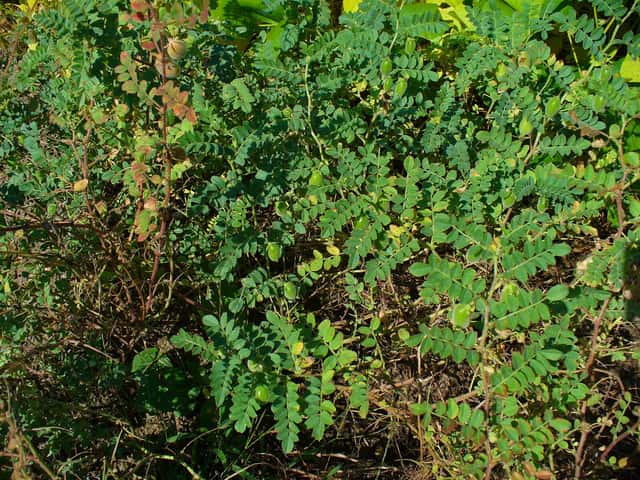
Cicer arietinum, commonly known as the chickpea, is an annual herbaceous legume native to the Middle East, cultivated for over 7,500 years and currently one of the most important food crops in the world. It reaches between 20 and 60 cm in height, with branched stems covered in glandular hairs, pinnate compound leaves, and white, pink, or violet flowers that give way to short, inflated pods containing one or two seeds. Like all legumes, it fixes atmospheric nitrogen through symbiosis with Rhizobium bacteria, improving the fertility of the soil where it is grown.
How to Propagate Chickpea?
Direct sowing
- Avoid transplanting, as the taproot is sensitive to movement; sow directly in its final location.
- Ensure soil temperature exceeds 10°C (50°F) when sowing for uniform germination.
- 1 Seed preparation
Soak seeds in water for 12-24 hours before sowing to accelerate germination.
- 2 Sowing
Plant at a depth of 3-5 cm in moist, well-drained soil once the risk of frost has passed.
- 3 Spacing
Maintain 10-15 cm between plants and 40-50 cm between rows to promote air circulation and reduce fungal diseases.
Materials needed:
How Big Does Chickpea Grow?
TLDR: Chickpea can reach up to 60cm tall with Fast growth rate.
Max height
60cm
Spread
40cm
Growth rate
Fast
Foliage
Deciduous
Plant Uses
Edible
Can be consumed
Medicinal
Medicinal properties
Medicinal Uses
- Source of soluble fiber that promotes digestive health and cholesterol control
- High content of plant protein and minerals such as iron, magnesium, and folate
- Traditionally used as a mild diuretic
Culinary Uses
- Hummus
- Stews and soups
- Chickpea flour for falafel and breads
- Roasted chickpeas as a snack
- Salads and braised dishes
Is your plant showing symptoms?
Click on the symptom to discover possible causes:
What Diseases Commonly Affect Chickpea?
TLDR: Chickpea is susceptible to 9 known diseases. Monitor regularly for early detection.
Fusarium Wilt
Fusarium wilt is a serious fungal disease caused by the soil-borne fungus Fusarium oxysporum. The fungus invades roots and blocks the water-conducting vessels (xylem) of the plant, causing progressive wilting and eventual death. Host-specific forms of the pathogen exist that attack different plant species.
Root Rot
Root rot is a serious fungal disease that affects the root system of plants, causing them to decay and die. It is primarily caused by overwatering, poor drainage, or soil-borne fungi such as Pythium, Phytophthora, Rhizoctonia, and Fusarium. The disease thrives in waterlogged conditions where roots are deprived of oxygen, making them susceptible to fungal infection.
Southern Blight
Southern blight is a devastating soilborne fungal disease caused by Athelia rolfsii (formerly Sclerotium rolfsii), affecting over 500 plant species including vegetables, ornamentals, and fruit crops. The fungus survives in soil through resting structures called sclerotia that resemble mustard seeds and can remain viable for years.
Gray Mold (Botrytis Blight)
Gray mold, caused by the fungus Botrytis cinerea, is a widespread necrotrophic pathogen affecting over 1,400 plant species. It thrives in cool, humid conditions and attacks weakened or aging plant tissues, causing soft rot and characteristic gray fuzzy growth.
Meaning & Symbolism
The chickpea symbolizes sustenance, humility, and resilience: a humble yet nutritious food that has sustained entire civilizations for millennia, also associated with the fertility of the earth due to its role as a nitrogen fixer.
Compare with similar plants
| Attribute | Difficulty | Light | Watering | Pet Safe |
|---|---|---|---|---|
| Field Maple | Easy | Bright indirect | 14d | ✓ |
| Silver Birch | Easy | Direct sun | 14d | ✓ |
| Common Blanketflower | Easy | Direct sun | 10d | ✓ |
| Cushion Bush | Easy | Direct sun | 14d | ✓ |





