Rutaceae
China Flower: Full Sun Plant
Adenandra uniflora
This fynbos plant requires full sun and very well-drained sandy soil enriched with compost. It appreciates sufficient watering during hot summers but cannot tolerate stagnant water. Its growth is slow: provide enough space so it is not smothered by more vigorous neighbors. A balanced 3:2:1 fertilizer can be applied sparingly. If the foliage yellows, an application of iron chelate is recommended.
Every 10 days
Direct sun
10° - 28°C
40% - 70%
Categories
What is China Flower?
China Flower (Adenandra uniflora) is a hard-care plant from the Rutaceae family. Adenandra uniflora is a small evergreen shrub in the Rutaceae family, endemic to the fynbos of the southwestern Cape Province in South Africa. It forms a low, spreading bush, 10 to 45 cm high, with thin woody stems tinged with red. Its small dark green foliage releases an aromatic scent when crushed...
China Flower grows up to 45cm, watering every 10 days, 10°C – 28°C, 40–70% humidity. It is not suitable for indoor environments and safe for pets.
Unlike easy-care plants, China Flower demands constant attention to humidity and light. Not recommended for beginners. Unlike many popular species, China Flower is safe to keep around pets.
How to Care for China Flower?
TLDR: China Flower needs Direct sun, watering every 10 days, and temperatures between 10-28°C with 40-70% humidity.
How Often Should You Water China Flower?
Water regularly but moderately during hot summers, allowing the soil to drain thoroughly between waterings.
How Much Light Does China Flower Need?
Plant in full sun to ensure abundant flowering.
What Is the Best Soil for China Flower?
Use sandy, well-drained soil enriched with compost, with low fertilizer input.
What Pot Should You Use for China Flower?
Terra cotta pot with large drainage holes and a very well-draining sandy substrate.
What Is China Flower and Where Does It Come From?
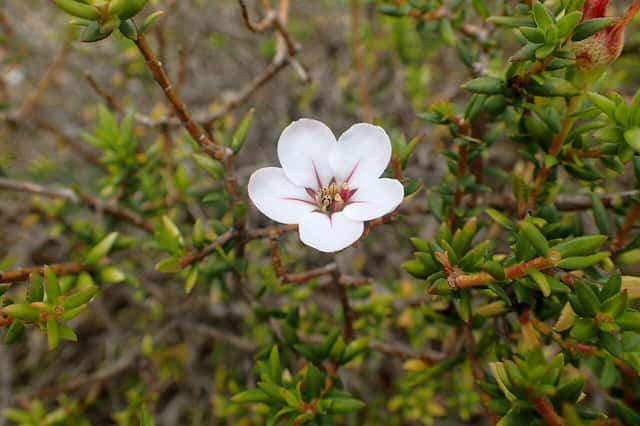
Adenandra uniflora is a small evergreen shrub in the Rutaceae family, endemic to the fynbos of the southwestern Cape Province in South Africa. It forms a low, spreading bush, 10 to 45 cm high, with thin woody stems tinged with red. Its small dark green foliage releases an aromatic scent when crushed, typical of most Rutaceae. From mid-winter to spring (July to October in its native habitat), it is covered with large white five-petaled flowers, which have red buds before opening. These flowers have a porcelain-like appearance and are lightly scented. In the wild, it grows in sandy soils and among sandstone outcrops, often in recently burned areas. It is valued as an ornamental plant for rock gardens or containers.
How to Propagate China Flower?
Sowing
Fresh seeds germinate best, usually within one to two months.
- 1 Sow fresh seeds in autumn in a sandy, well-draining mix.
- 2 Cover lightly and keep the substrate slightly moist.
- 3 Place the seedlings in a bright spot, avoiding excess water.
Materials needed:
Stem cuttings
Bottom heat significantly promotes rooting.
- 1 Take 50 to 70 mm tip cuttings.
- 2 Plant them in a well-drained sandy substrate.
- 3 Maintain a bottom heat of approximately 24°C until rooting occurs.
Materials needed:
How Big Does China Flower Grow?
TLDR: China Flower can reach up to 45cm tall with Slow growth rate.
Max height
45cm
Growth rate
Slow
Foliage
Evergreen
Plant Uses
Ornamental
Great for decoration
Is your plant showing symptoms?
Click on the symptom to discover possible causes:
What Diseases Commonly Affect China Flower?
TLDR: China Flower is susceptible to 3 known diseases. Monitor regularly for early detection.
Root Rot
Root rot is a serious fungal disease that affects the root system of plants, causing them to decay and die. It is primarily caused by overwatering, poor drainage, or soil-borne fungi such as Pythium, Phytophthora, Rhizoctonia, and Fusarium. The disease thrives in waterlogged conditions where roots are deprived of oxygen, making them susceptible to fungal infection.
Nutrient Deficiency
Nutrient deficiency occurs when a plant cannot access one or more essential mineral elements in sufficient quantities for healthy growth. Plants require 17 essential nutrients: macronutrients (N, P, K, Ca, Mg, S) and micronutrients (Fe, Zn, Mn, Cu, B, Mo, Cl). Each plays a unique role in metabolism, structure, and reproduction. Deficiencies arise from depleted soils, incorrect pH blocking uptake, poor watering practices leaching nutrients, root damage, or imbalanced fertilization. Understanding whether a nutrient is mobile or immobile determines where symptoms first appear: mobile nutrients (N, P, K, Mg) show symptoms on older leaves first, while immobile nutrients (Ca, Fe, Zn, Cu, B) show symptoms on new growth first.
Overwatering
Overwatering occurs when plants receive too much water, depriving roots of oxygen and causing root rot. This environmental stress is one of the most common causes of houseplant death, as waterlogged soil prevents roots from breathing and functioning properly.
Compare with similar plants
| Attribute | Difficulty | Light | Watering | Pet Safe |
|---|---|---|---|---|
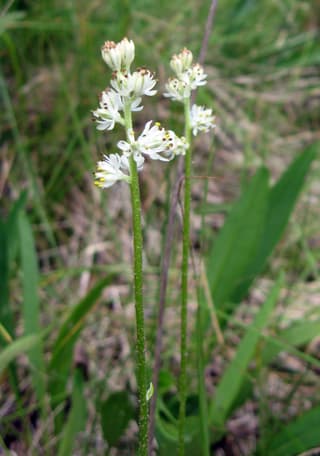
| Sticky false asphodel | Hard | Bright indirect | 1d | ✓ |
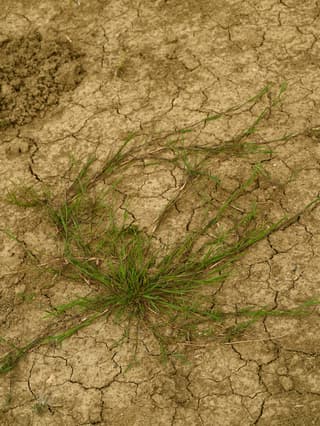
| Creeping bentgrass | Hard | Direct sun | 3d | ✓ |
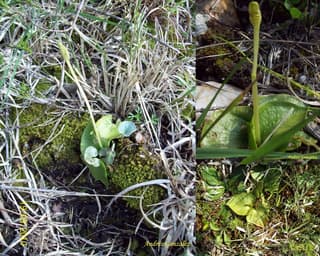
| Bulbous Adder's-tongue | Hard | Partial shade | 4d | ✓ |
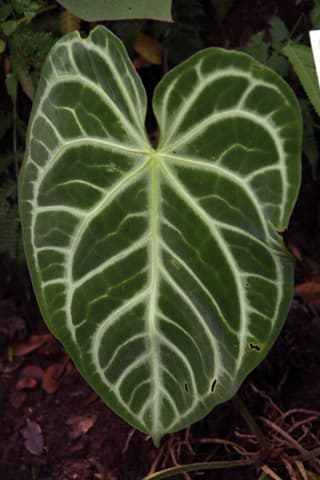
| Crystal Anthurium | Hard | Partial shade | 7d | ⚠️ |