Moraceae
Chinese Banyan (Ficus microcarpa): Complete Plant Care Guide
Ficus microcarpa
Moderate-difficulty plant that thrives in bright indirect light with consistent watering. Keep humidity above 60%, avoid cold drafts, and allow topsoil to dry slightly between waterings. Prune regularly to maintain shape. Fertilize monthly during the growing season.
Every 7 days
Bright indirect
10° - 35°C
60% - 75%
Categories
What is Chinese Banyan?
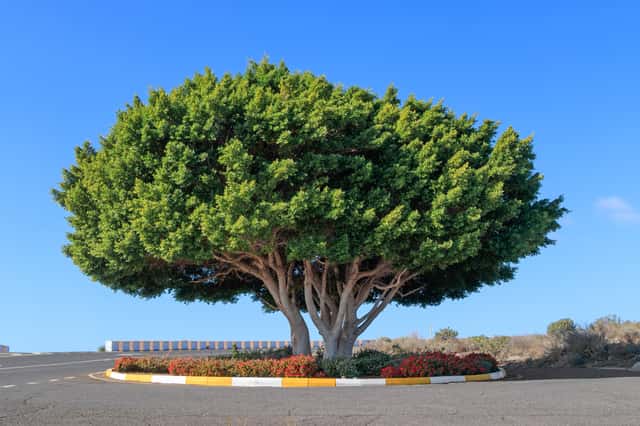
Chinese Banyan (Ficus microcarpa) is a medium-care plant from the Moraceae family. Ficus microcarpa, commonly known as the Chinese Banyan or Indian Laurel, is a large evergreen fig tree native to South and Southeast Asia and Australia. Renowned for its glossy dark-green leaves, distinctive aerial roots, and ability to form impressive canopies, it is widely planted as a street tree...
Chinese Banyan grows up to 30.0m, spread of 2500cm, watering every 7 days, 10°C – 35°C, 60–75% humidity. It is suitable for indoor environments and not safe for pets.
Without precautions, ingestion can cause irritation in pets. Keep out of reach of cats and dogs. Without adequate drainage, root rot can develop within 14 days.
How to Care for Chinese Banyan?
TLDR: Chinese Banyan needs Bright indirect, watering every 7 days, and temperatures between 10-35°C with 60-75% humidity.
How Often Should You Water Chinese Banyan?
Water every 7 days, allowing the top 2–3 cm of soil to dry out between waterings. Reduce frequency in winter. Never let roots sit in water — good drainage is essential to prevent root rot.
How Much Light Does Chinese Banyan Need?
Needs bright indirect light — ideally placed near a south or west-facing window. Can tolerate a few hours of morning sun. Avoid sudden changes in light position, as the plant is sensitive to environmental shifts and may drop leaves.
What Is the Best Soil for Chinese Banyan?
Use a rich, well-draining potting mix. A blend of loamy soil with perlite or coarse sand works well. Avoid compact or waterlogged soil. Slightly acidic to neutral pH (5.5–7.0) is ideal.
What Pot Should You Use for Chinese Banyan?
A heavy ceramic or terracotta pot with drainage holes is ideal for Chinese Banyan — the weight helps stabilise the large canopy. For bonsai training, a shallow bonsai pot with excellent drainage is preferred.
Care Schedule
Fertilize
Every 30 days
Misting
Every 3 days
Rotate
Every 30 days
Repot
Every 730 days
What Is Chinese Banyan and Where Does It Come From?
Ficus microcarpa, commonly known as the Chinese Banyan or Indian Laurel, is a large evergreen fig tree native to South and Southeast Asia and Australia. Renowned for its glossy dark-green leaves, distinctive aerial roots, and ability to form impressive canopies, it is widely planted as a street tree in warm climates and is a favourite bonsai subject worldwide. It is often confused with Ficus retusa, but Ficus microcarpa is the currently accepted name.
How to Propagate Chinese Banyan?
Air Layering
Air layering is the most reliable method for Ficus microcarpa. Keep the moss consistently moist but not waterlogged. Best done in spring when growth is active.
- 1 Select a healthy branch at least 1 cm thick
- 2 Remove bark in a 3–5 cm ring at the chosen point
- 3 Apply rooting hormone to the wound
- 4 Wrap with moist sphagnum moss and cover tightly with plastic film
- 5 Keep moss moist; roots should appear in 4–8 weeks
- 6 Cut below the rooted section and pot in well-draining mix
Materials needed:
Stem Cutting
Use gloves when cutting — the milky latex sap can irritate skin. Change water weekly if rooting in water. Success rates are lower than air layering.
- 1 Cut a healthy stem tip with 3–4 leaves using clean scissors
- 2 Remove lower leaves leaving 2 at the top
- 3 Dip cut end in rooting hormone
- 4 Insert into moist well-draining potting mix
- 5 Cover with a clear plastic bag to maintain humidity
- 6 Place in warm bright indirect light
Materials needed:
How Big Does Chinese Banyan Grow?
TLDR: Chinese Banyan can reach up to 30.0m tall with Medium growth rate.
Max height
30.0m
Spread
25.0m
Growth rate
Medium
Foliage
Evergreen
Warning: Toxic Plant
This plant can be toxic if ingested. Keep out of reach of:
Plant Uses
Ornamental
Great for decoration
Is your plant showing symptoms?
Click on the symptom to discover possible causes:
What Diseases Commonly Affect Chinese Banyan?
TLDR: Chinese Banyan is susceptible to 12 known diseases. Monitor regularly for early detection.
Root Rot
Root rot is a serious fungal disease that affects the root system of plants, causing them to decay and die. It is primarily caused by overwatering, poor drainage, or soil-borne fungi such as Pythium, Phytophthora, Rhizoctonia, and Fusarium. The disease thrives in waterlogged conditions where roots are deprived of oxygen, making them susceptible to fungal infection.
Overwatering
Overwatering occurs when plants receive too much water, depriving roots of oxygen and causing root rot. This environmental stress is one of the most common causes of houseplant death, as waterlogged soil prevents roots from breathing and functioning properly.
Spider Mites
Spider mites are tiny arachnids (less than 1/20 inch long) related to spiders and ticks that feed on plant sap. They thrive in hot, dry conditions and can cause significant damage to ornamental and vegetable plants. During severe infestations, crop losses can reach 14% or higher as these pests disrupt vital plant processes including photosynthesis, carbon dioxide absorption, and transpiration.
Low Humidity Stress
Low humidity stress occurs when indoor air becomes too dry, causing plants to lose moisture faster than they can absorb it through their roots. This is especially common during winter heating periods, near radiators and heating vents, or in air-conditioned spaces. Tropical plants are particularly susceptible to low humidity damage.
Meaning & Symbolism
In Asian traditions, the banyan tree symbolises longevity, resilience, and the interconnectedness of all living things. Its aerial roots reaching down to earth represent unity between the heavens and the ground.
Fun Facts
In its native tropical habitat, Ficus microcarpa can grow over 30 metres tall with a canopy spanning the same width.
Its aerial roots drop from branches and, over time, thicken into secondary trunks — allowing a single tree to spread across vast areas.
Ficus microcarpa is often confused with Ficus retusa, but it is the currently accepted botanical name for the species.
As a bonsai, this species has been cultivated for over a thousand years, particularly in Chinese and Japanese horticultural traditions.
Frequently asked questions
How often should I water a Chinese Banyan?
Why is my Chinese Banyan dropping leaves?
Is Chinese Banyan toxic to cats and dogs?
Can I grow Chinese Banyan as a bonsai?
How much light does a Chinese Banyan need?
Compare with similar plants
| Attribute | Difficulty | Light | Watering | Pet Safe |
|---|---|---|---|---|
| Dark Fieldcap | Medium | Low light | 2d | ⚠️ |
| Azalea | Medium | Partial shade | 3d | ⚠️ |
| Muriel's Bamboo | Medium | Partial shade | 3d | ✓ |
| Bougainvillea | Medium | Direct sun | 7d | ⚠️ |




