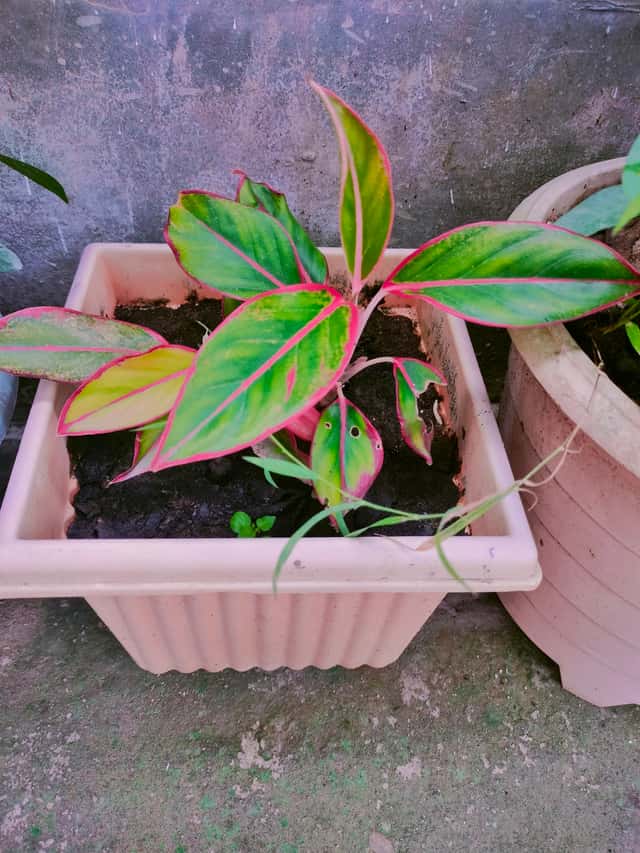
Araceae
Chinese Evergreen 'Crete': Perfect Indoor Houseplant
Aglaonema 'Crete'
Provide bright, indirect light for the best pink coloration, water when the top 2-5 cm of soil dries out, and keep humidity around 40-70% in a room between 16-27°C. Plant in a well-draining, organic-rich mix, feed monthly during spring and summer, and repot every 2-3 years.
Every 10 days
Partial shade
16° - 27°C
40% - 70%
Categories
What is Chinese Evergreen 'Crete'?
Chinese Evergreen 'Crete' (Aglaonema 'Crete') is a easy-care plant from the Araceae family. Aglaonema 'Crete' is a compact evergreen cultivar of Chinese evergreen (Araceae, Aglaonema) prized for its lance-shaped, dark green leaves splashed with vivid pink and burgundy-red variegation along the veins and margins, carried on pale pink stems. Native to the understory forests of tropical South...
Chinese Evergreen 'Crete' grows up to 50cm, watering every 10 days, 16°C – 27°C, 40–70% humidity. It is suitable for indoor environments and not safe for pets.
Unlike many tropical plants, Chinese Evergreen 'Crete' tolerates watering mistakes. Best for beginners. Without precautions, ingestion can cause irritation in pets. Keep out of reach of cats and dogs. Without adequate drainage, root rot can develop within 20 days.
How to Care for Chinese Evergreen 'Crete'?
TLDR: Chinese Evergreen 'Crete' needs Partial shade, watering every 10 days, and temperatures between 16-27°C with 40-70% humidity.
How Often Should You Water Chinese Evergreen 'Crete'?
Let the top 2-5 cm of soil dry before watering thoroughly and letting excess drain away; water roughly every 7-14 days, more often in summer heat and less in winter.
How Much Light Does Chinese Evergreen 'Crete' Need?
Place in bright, indirect light near an east- or north-facing window; the more light it gets (short of direct sun), the more vivid its pink variegation becomes, though it also tolerates medium and low light.
What Is the Best Soil for Chinese Evergreen 'Crete'?
Use a light, well-draining, organic-rich potting mix with a slightly acidic pH of about 5.5-6.5 to prevent waterlogging and root rot.
What Pot Should You Use for Chinese Evergreen 'Crete'?
A pot with ample drainage holes, terracotta or ceramic, works well since Aglaonema prefers to dry slightly between waterings and dislikes sitting in soggy soil.
Care Schedule
Fertilize
Every 30 days
Misting
Every 7 days
Rotate
Every 14 days
Repot
Every 730 days
What Is Chinese Evergreen 'Crete' and Where Does It Come From?
Aglaonema 'Crete' is a compact evergreen cultivar of Chinese evergreen (Araceae, Aglaonema) prized for its lance-shaped, dark green leaves splashed with vivid pink and burgundy-red variegation along the veins and margins, carried on pale pink stems. Native to the understory forests of tropical Southeast Asia, it thrives as a low-maintenance houseplant that tolerates a wide range of indoor light levels while showing its boldest color in bright, indirect light. Like other aroids, its tissues contain insoluble calcium oxalate crystals, making the whole plant mildly to moderately toxic if chewed or ingested.
How Big Does Chinese Evergreen 'Crete' Grow?
TLDR: Chinese Evergreen 'Crete' can reach up to 50cm tall with Medium growth rate.
Max height
50cm
Growth rate
Medium
Foliage
Evergreen
Warning: Toxic Plant
This plant can be toxic if ingested. Keep out of reach of:
Plant Uses
Ornamental
Great for decoration
Air Purifying
Improves air quality
Is your plant showing symptoms?
Click on the symptom to discover possible causes:
What Diseases Commonly Affect Chinese Evergreen 'Crete'?
TLDR: Chinese Evergreen 'Crete' is susceptible to 11 known diseases. Monitor regularly for early detection.
Root Rot
Root rot is a serious fungal disease that affects the root system of plants, causing them to decay and die. It is primarily caused by overwatering, poor drainage, or soil-borne fungi such as Pythium, Phytophthora, Rhizoctonia, and Fusarium. The disease thrives in waterlogged conditions where roots are deprived of oxygen, making them susceptible to fungal infection.
Overwatering
Overwatering occurs when plants receive too much water, depriving roots of oxygen and causing root rot. This environmental stress is one of the most common causes of houseplant death, as waterlogged soil prevents roots from breathing and functioning properly.
Mealybugs
Mealybugs are small, soft-bodied insects covered with a white, waxy, cottony material. They are common pests of houseplants and outdoor plants in mild climates. These sap-sucking insects feed on plant tissue, causing damage, stunted growth, and can lead to plant death if left untreated. They produce sticky honeydew which attracts sooty mold.
Leaf Spot
Leaf spot is a common fungal disease caused by various pathogens including Alternaria, Ascochyta, Colletotrichum, Septoria, and Venturia. It primarily affects leaves, causing discolored spots that can lead to premature leaf drop if left untreated.
Meaning & Symbolism
Long regarded as a lucky plant across East and Southeast Asia, Aglaonema is believed in Feng Shui to attract wealth, prosperity and protective energy.
Compare with similar plants
| Attribute | Difficulty | Light | Watering | Pet Safe |
|---|---|---|---|---|
| Field Maple | Easy | Bright indirect | 14d | ✓ |
| Silver Birch | Easy | Direct sun | 14d | ✓ |
| Common Blanketflower | Easy | Direct sun | 10d | ✓ |
| Cushion Bush | Easy | Direct sun | 14d | ✓ |





