Aquifoliaceae
Chinese Holly (Ilex cornuta) Care Guide
Ilex cornuta
Chinese holly is a low-maintenance, drought-tolerant evergreen shrub that thrives in full sun to partial shade and well-draining soil. Water regularly while young, then only during extended dry spells once established. Prune lightly to maintain shape and remove any dead wood.
Every 7 days
Bright indirect
-15° - 35°C
30% - 70%
Categories
What is Chinese Holly?
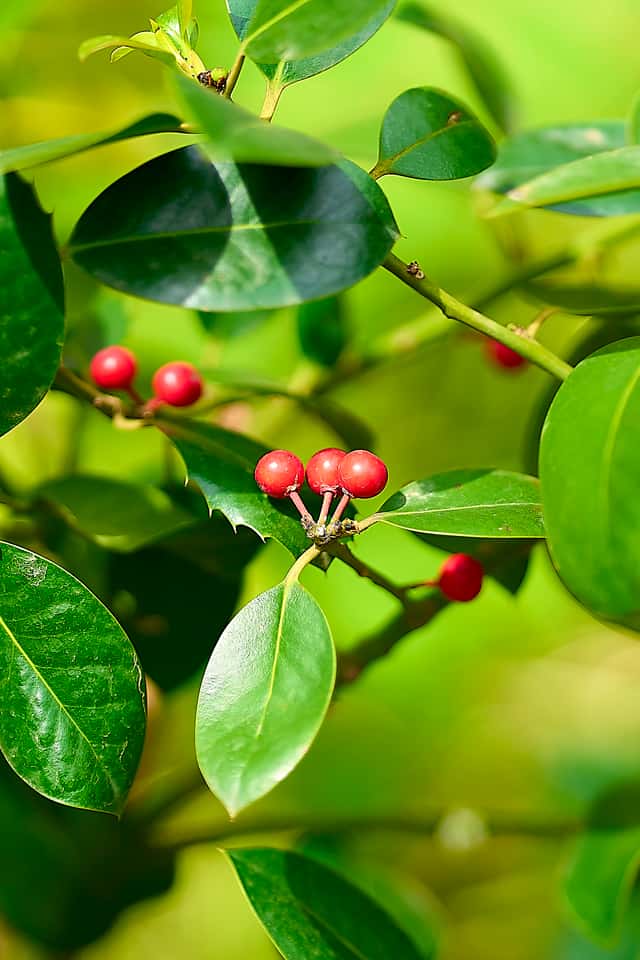
Chinese Holly (Ilex cornuta) is a easy-care plant from the Aquifoliaceae family. Ilex cornuta, commonly known as Chinese holly, is a dense, spiny-leaved evergreen shrub native to eastern China and Korea. Prized for its glossy, leathery foliage and bright red winter berries on female plants, it forms an excellent hedge, screen, or specimen shrub. The rectangular, spine-tipped lea...
Chinese Holly grows up to 4.5m, spread of 450cm, watering every 7 days, -15°C – 35°C, 30–70% humidity. It is not suitable for indoor environments and not safe for pets.
Unlike many tropical plants, Chinese Holly tolerates watering mistakes. Best for beginners. Without precautions, ingestion can cause irritation in pets. Keep out of reach of cats and dogs.
How to Care for Chinese Holly?
TLDR: Chinese Holly needs Bright indirect, watering every 7 days, and temperatures between -15-35°C with 30-70% humidity.
How Often Should You Water Chinese Holly?
Water deeply once a week during the first growing season to establish roots; afterward, this shrub is drought-tolerant and only needs supplemental water during prolonged dry spells.
How Much Light Does Chinese Holly Need?
Give it full sun to partial shade — 6+ hours of direct sun produces the densest foliage and best berry set, but it tolerates light shade.
What Is the Best Soil for Chinese Holly?
Plant in well-draining, slightly acidic to neutral soil; it adapts to clay, loam, or sandy soil as long as it isn't waterlogged.
What Pot Should You Use for Chinese Holly?
If grown in a container, use a large, sturdy pot with ample drainage holes — terracotta or heavy ceramic helps anchor this dense, top-heavy shrub.
Care Schedule
Fertilize
Every 180 days
What Is Chinese Holly and Where Does It Come From?
Ilex cornuta, commonly known as Chinese holly, is a dense, spiny-leaved evergreen shrub native to eastern China and Korea. Prized for its glossy, leathery foliage and bright red winter berries on female plants, it forms an excellent hedge, screen, or specimen shrub. The rectangular, spine-tipped leaves give it a distinctive, architectural look year-round.
How to Propagate Chinese Holly?
Semi-hardwood stem cutting
Use bottom heat and a humidity dome to speed rooting; semi-hardwood cuttings of holly can be slow, so be patient.
- 1 Take a 10-15 cm semi-hardwood cutting from a healthy branch in mid to late summer
- 2 Remove the lower leaves and dip the cut end in rooting hormone
- 3 Insert the cutting into a well-draining mix of perlite and peat
- 4 Keep the mix moist and place in bright, indirect light until roots form
Materials needed:
Seed propagation
Seed propagation is slow and unreliable due to holly's long, irregular dormancy; cuttings are preferred for consistent results.
- 1 Collect ripe red berries in fall and remove the pulp from the seeds
- 2 Stratify seeds in moist sand in a cold environment for several months
- 3 Sow stratified seeds in well-draining soil in spring
- 4 Keep soil consistently moist until germination
Materials needed:
How Big Does Chinese Holly Grow?
TLDR: Chinese Holly can reach up to 4.5m tall with Medium growth rate.
Max height
4.5m
Spread
4.5m
Growth rate
Medium
Foliage
Evergreen
Warning: Toxic Plant
This plant can be toxic if ingested. Keep out of reach of:
Plant Uses
Ornamental
Great for decoration
Is your plant showing symptoms?
Click on the symptom to discover possible causes:
What Diseases Commonly Affect Chinese Holly?
TLDR: Chinese Holly is susceptible to 4 known diseases. Monitor regularly for early detection.
Leaf Spot
Leaf spot is a common fungal disease caused by various pathogens including Alternaria, Ascochyta, Colletotrichum, Septoria, and Venturia. It primarily affects leaves, causing discolored spots that can lead to premature leaf drop if left untreated.
Scale Insects
Scale insects are small sap-sucking pests that appear as brown, shell-like bumps on plant stems and leaves. There are over 25 species, divided into armored (hard) and unarmored (soft) scales. They feed by piercing plant tissue and extracting sap, which weakens the plant and can lead to yellowing, stunted growth, and even death if left untreated. They also excrete honeydew, which attracts ants and promotes sooty mold growth.
Spider Mites
Spider mites are tiny arachnids (less than 1/20 inch long) related to spiders and ticks that feed on plant sap. They thrive in hot, dry conditions and can cause significant damage to ornamental and vegetable plants. During severe infestations, crop losses can reach 14% or higher as these pests disrupt vital plant processes including photosynthesis, carbon dioxide absorption, and transpiration.
Root Rot
Root rot is a serious fungal disease that affects the root system of plants, causing them to decay and die. It is primarily caused by overwatering, poor drainage, or soil-borne fungi such as Pythium, Phytophthora, Rhizoctonia, and Fusarium. The disease thrives in waterlogged conditions where roots are deprived of oxygen, making them susceptible to fungal infection.
Meaning & Symbolism
Chinese holly symbolizes protection and resilience — its spiny leaves are traditionally seen as a natural ward against evil, while its evergreen habit and winter berries represent endurance through hardship.
Fun Facts
The genus name 'Ilex' is Latin for holm oak, whose leaves resemble holly's.
Only female Ilex cornuta plants produce the iconic red berries — and only if a male plant is nearby to pollinate them.
Despite its fierce, spiny leaves, mature Chinese holly branches near the top of the shrub often develop smoother, spineless leaves.
Chinese holly is one of the most drought- and heat-tolerant hollies, making it a favorite in southern U.S. gardens.
Frequently asked questions
Is Chinese holly toxic to pets?
How much sun does Chinese holly need?
How often should I water Chinese holly?
Does Chinese holly need a male plant to produce berries?
Is Chinese holly toxic to humans?
Compare with similar plants
| Attribute | Difficulty | Light | Watering | Pet Safe |
|---|---|---|---|---|
| Field Maple | Easy | Bright indirect | 14d | ✓ |
| Silver Birch | Easy | Direct sun | 14d | ✓ |
| Common Blanketflower | Easy | Direct sun | 10d | ✓ |
| Cushion Bush | Easy | Direct sun | 14d | ✓ |





