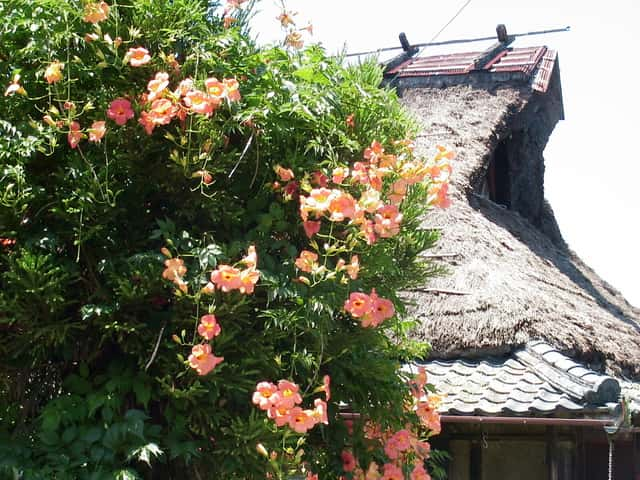
Bignoniaceae
Chinese Trumpet Vine: Complete Care Guide
Campsis grandiflora
Plant in full sun, ideally against a warm wall, in fertile, well-drained soil. It needs hot summers to flower well and can take a few years to start blooming. Prune in late winter or early spring and tie stems in to their support.
Every 7 days
Direct sun
-10° - °C
% - %
Categories
What is Chinese trumpet vine?
Chinese trumpet vine (Campsis grandiflora) is a easy-care plant from the Bignoniaceae family. Chinese trumpet vine (Campsis grandiflora) is a deciduous woody climber native to eastern China and Japan. It can reach 8 to 10 metres, with pinnate leaves of 7 to 9 toothed leaflets and clusters of large, trumpet-shaped orange-red flowers with yellowish throats from summer into autumn. It is less a...
Chinese trumpet vine grows up to 10.0m, spread of 400cm, watering every 7 days. It is not suitable for indoor environments and safe for pets.
Unlike many tropical plants, Chinese trumpet vine tolerates watering mistakes. Best for beginners. Unlike many popular species, Chinese trumpet vine is safe to keep around pets.
How to Care for Chinese trumpet vine?
TLDR: Chinese trumpet vine needs Direct sun, watering every 7 days, and temperatures between -10-30°C with 40-70% humidity.
How Often Should You Water Chinese trumpet vine?
Water about once a week in dry spells, keeping the soil lightly moist but never waterlogged. Once established it is drought tolerant.
How Much Light Does Chinese trumpet vine Need?
Full sun is essential for good flowering; it will grow in part shade but flowers sparsely.
What Is the Best Soil for Chinese trumpet vine?
Fertile, well-drained loam; it accepts acid, neutral or alkaline, clay or sandy soils. In very rich soil it may sucker from the roots.
What Pot Should You Use for Chinese trumpet vine?
Large, deep pot with good drainage and a sturdy support (trellis or pergola); it grows best planted in the ground
What Is Chinese trumpet vine and Where Does It Come From?
Chinese trumpet vine (Campsis grandiflora) is a deciduous woody climber native to eastern China and Japan. It can reach 8 to 10 metres, with pinnate leaves of 7 to 9 toothed leaflets and clusters of large, trumpet-shaped orange-red flowers with yellowish throats from summer into autumn. It is less aggressive and less cold hardy than its American relative Campsis radicans and produces few aerial roots, so it needs tying in to its support.
How to Propagate Chinese trumpet vine?
Layering
Stems that touch the ground often root on their own, which makes this very easy.
- 1 Choose a flexible stem close to the ground
- 2 Make a small cut in the bark and bury that section in the soil
- 3 Pin it down and keep the soil moist
- 4 Sever the new plant from the parent once it has rooted well
Materials needed:
Hardwood or root cuttings
Root cuttings also work well; keep them the right way up (top end upwards).
- 1 In winter, take 15-20 cm hardwood cuttings or sections of root
- 2 Insert them in a pot of free-draining compost
- 3 Keep in a sheltered spot and lightly moist
- 4 Pot on or plant out in spring once shoots appear
Materials needed:
Seed
Seed-raised plants can take several years to flower.
- 1 Collect the winged seeds from ripe pods
- 2 Sow in pots in autumn and keep in a cold frame
- 3 Keep the compost lightly moist
- 4 Plant out the seedlings once they are sturdy
Materials needed:
How Big Does Chinese trumpet vine Grow?
TLDR: Chinese trumpet vine can reach up to 10.0m tall with Fast growth rate.
Max height
10.0m
Spread
4.0m
Growth rate
Fast
Foliage
Deciduous
Plant Uses
Ornamental
Great for decoration
Medicinal
Medicinal properties
Medicinal Uses
- Flower used in traditional Chinese medicine for menstrual disorders
- Traditional use for rheumatic pain and skin complaints
Is your plant showing symptoms?
Click on the symptom to discover possible causes:
What Diseases Commonly Affect Chinese trumpet vine?
TLDR: Chinese trumpet vine is susceptible to 3 known diseases. Monitor regularly for early detection.
Powdery Mildew
Powdery mildew is a common fungal disease caused by various fungi species including Erysiphe, Podosphaera, Oïdium, and Leveillula. It affects over 10,000 plant species worldwide. The disease thrives in warm, dry climates with high humidity and appears as a distinctive white powdery coating on plant surfaces.
Leaf Spot
Leaf spot is a common fungal disease caused by various pathogens including Alternaria, Ascochyta, Colletotrichum, Septoria, and Venturia. It primarily affects leaves, causing discolored spots that can lead to premature leaf drop if left untreated.
Aphids
Aphids are small, soft-bodied, pear-shaped insects (1/16 to 1/8 inch long) that feed by sucking nutrient-rich sap from plants. They reproduce rapidly and can quickly weaken plants, causing distorted growth and transmitting plant viruses. Aphids come in various colors including green, black, red, yellow, brown, and gray. They secrete honeydew, a sticky substance that attracts ants and encourages sooty mold growth.
Fun Facts
The name Campsis comes from the Greek kampe, 'bent', after its curved stamens.
Its fresh spring growth is often damaged by late frosts.
Its flowers attract hummingbirds in the Americas.
Frequently asked questions
Why is my Chinese trumpet vine not flowering?
When should I prune Chinese trumpet vine?
How is it different from Campsis radicans?
Is Chinese trumpet vine toxic?
Compare with similar plants
| Attribute | Difficulty | Light | Watering | Pet Safe |
|---|---|---|---|---|
| Field Maple | Easy | Bright indirect | 14d | ✓ |
| Iberian Houseleek | Easy | Direct sun | 14d | ✓ |
| Silver Birch | Easy | Direct sun | 14d | ✓ |
| Common Blanketflower | Easy | Direct sun | 10d | ✓ |





