Cactaceae
Cholla (Cylindropuntia)
Cylindropuntia
A very easy, low-maintenance desert cactus: give it full sun (at least 6 hours a day), a sandy, fast-draining soil and water only when the soil is completely dry. Most species tolerate light frosts and some survive real winters if kept dry. Fertilizer is optional. The main danger is to you, not the plant: always handle it with tongs, thick gloves or folded newspaper.
Every 14 days
Direct sun
-7° - °C
% - %
Categories
What is Cholla?
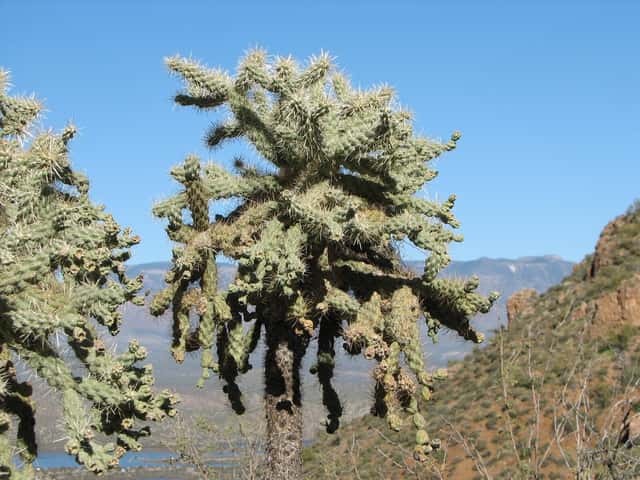
Cholla (Cylindropuntia) is a easy-care plant from the Cactaceae family. Cylindropuntia, the chollas, is a genus of about 35 cacti from the deserts of the southwestern United States, Mexico and the West Indies. Unlike their cousins the prickly pears, chollas have cylindrical, jointed stems, and their barbed spines are wrapped in a papery sheath. Joints of some species br...
Cholla grows up to 4.0m, spread of 400cm, watering every 14 days. It is suitable for indoor environments and safe for pets.
Unlike many tropical plants, Cholla tolerates watering mistakes. Best for beginners. Unlike many popular species, Cholla is safe to keep around pets. Without adequate drainage, root rot can develop within 28 days.
How to Care for Cholla?
TLDR: Cholla needs Direct sun, watering every 14 days, and temperatures between -7-30°C with 40-70% humidity.
How Often Should You Water Cholla?
Water deeply until water runs out of the drainage holes, then let the soil dry out completely before watering again: roughly every 1-3 weeks in spring and summer depending on heat. In autumn and winter cut back to once every 4-6 weeks, or stop entirely for plants kept cool. Never leave it standing in water; soft, yellowing or mushy stems are the classic sign of overwatering and root rot.
How Much Light Does Cholla Need?
Chollas need strong light: full sun outdoors, ideally 6-7 hours of direct sun a day. Indoors place it in the sunniest south- or west-facing window. In very hot climates, a little afternoon shade prevents sunburn, and plants moved from indoors to outdoors should be acclimatised gradually.
What Is the Best Soil for Cholla?
Use a gritty cactus and succulent mix, or improve ordinary soil with plenty of coarse sand, grit or pumice. It tolerates acidic, neutral and alkaline soils as long as drainage is excellent. Outdoors, plant in a raised or sloping spot where water never pools.
What Pot Should You Use for Cholla?
A heavy terracotta pot with drainage holes, wide enough to keep a top-heavy plant stable; unglazed clay helps the soil dry out quickly.
Care Schedule
Fertilize
Every 30 days
What Is Cholla and Where Does It Come From?
Cylindropuntia, the chollas, is a genus of about 35 cacti from the deserts of the southwestern United States, Mexico and the West Indies. Unlike their cousins the prickly pears, chollas have cylindrical, jointed stems, and their barbed spines are wrapped in a papery sheath. Joints of some species break off at the lightest touch and hitch a ride on passing animals, which is how they spread. In habitat the shrubby or tree-like forms reach 1-4 m; the best known are the jumping cholla (C. fulgida), with chains of hanging green fruit, the silvery teddy bear cholla (C. bigelovii) and the cold-hardy cane cholla (C. imbricata). In late spring and summer they open cup-shaped flowers in pink, magenta, purple, yellow, orange or green.
How to Propagate Cholla?
Stem joint cuttings
Chollas root very easily from fallen joints; that is how they spread in the wild. Never plant the cutting in wet soil before it has calloused, or it can rot.
- 1 Using tongs and thick gloves, remove a healthy stem joint at its natural break point or cut it cleanly with a knife.
- 2 Leave the joint in a dry, shaded place for 1-3 days until the cut end callouses.
- 3 Set it upright about 2-3 cm deep in dry cactus mix.
- 4 Keep it in bright light and give only a little water after a week.
- 5 Water normally once it resists a gentle tug, a sign it has rooted.
Materials needed:
Seed
Seed is slow and germination is irregular; cuttings are much faster and more reliable.
- 1 Clean seeds from ripe fruits.
- 2 Sow on the surface of a fine, moist cactus mix.
- 3 Cover the pot with clear plastic and keep warm in bright, indirect light.
- 4 Remove the cover gradually once seedlings appear.
Materials needed:
How Big Does Cholla Grow?
TLDR: Cholla can reach up to 4.0m tall with Medium growth rate.
Max height
4.0m
Spread
4.0m
Growth rate
Medium
Foliage
Evergreen
Plant Uses
Ornamental
Great for decoration
Edible
Can be consumed
Culinary Uses
- Flower buds, carefully de-spined and cooked, are a traditional food of the Tohono O'odham people
Is your plant showing symptoms?
Click on the symptom to discover possible causes:
What Diseases Commonly Affect Cholla?
TLDR: Cholla is susceptible to 6 known diseases. Monitor regularly for early detection.
Root Rot
Root rot is a serious fungal disease that affects the root system of plants, causing them to decay and die. It is primarily caused by overwatering, poor drainage, or soil-borne fungi such as Pythium, Phytophthora, Rhizoctonia, and Fusarium. The disease thrives in waterlogged conditions where roots are deprived of oxygen, making them susceptible to fungal infection.
Overwatering
Overwatering occurs when plants receive too much water, depriving roots of oxygen and causing root rot. This environmental stress is one of the most common causes of houseplant death, as waterlogged soil prevents roots from breathing and functioning properly.
Mealybugs
Mealybugs are small, soft-bodied insects covered with a white, waxy, cottony material. They are common pests of houseplants and outdoor plants in mild climates. These sap-sucking insects feed on plant tissue, causing damage, stunted growth, and can lead to plant death if left untreated. They produce sticky honeydew which attracts sooty mold.
Scale Insects
Scale insects are small sap-sucking pests that appear as brown, shell-like bumps on plant stems and leaves. There are over 25 species, divided into armored (hard) and unarmored (soft) scales. They feed by piercing plant tissue and extracting sap, which weakens the plant and can lead to yellowing, stunted growth, and even death if left untreated. They also excrete honeydew, which attracts ants and promotes sooty mold growth.
Meaning & Symbolism
Desert resilience and self-defence: the cholla thrives where little else grows, shelters birds among its spines and quietly reminds us to keep a safe distance.
Fun Facts
The jumping cholla does not really jump: its joints detach so easily that they seem to leap onto anyone brushing past.
Cactus wrens build their nests inside chollas, using the spines as protection from predators.
The dried, hollow woody skeleton of cholla is sold as cholla wood for aquariums and terrariums.
Frequently asked questions
How often should I water a cholla cactus?
Can a cholla survive frost?
Is cholla toxic to pets?
How do I remove cholla spines from skin?
Compare with similar plants
| Attribute | Difficulty | Light | Watering | Pet Safe |
|---|---|---|---|---|
| Field Maple | Easy | Bright indirect | 14d | ✓ |
| Iberian Houseleek | Easy | Direct sun | 14d | ✓ |
| Silver Birch | Easy | Direct sun | 14d | ✓ |
| Common Blanketflower | Easy | Direct sun | 10d | ✓ |
Choose & Compare
Sources & References
- Cylindropuntia - Wikipedia
- Cylindropuntia (Cholla) genus guide - Gardenia.net
- Cylindropuntia fulgida (Jumping Cholla) - Gardenia.net
- Growing Cylindropuntia Cholla - Planet Desert
- Cholla Cactus - Cylindropuntia cholla - Planet Desert
- Cholla cactus, its edible parts, and more - Dunbar Spring Neighborhood Foresters