Urticaceae
Clearweed: Edible Plant
Pilea pumila
An easygoing woodland annual that asks for consistently moist, rich soil and filtered light. Avoid letting it dry out or sit in soggy conditions, and it will self-seed readily each season.
Every 4 days
Partial shade
10° - 29°C
50% - 70%
Categories
What is Clearweed?
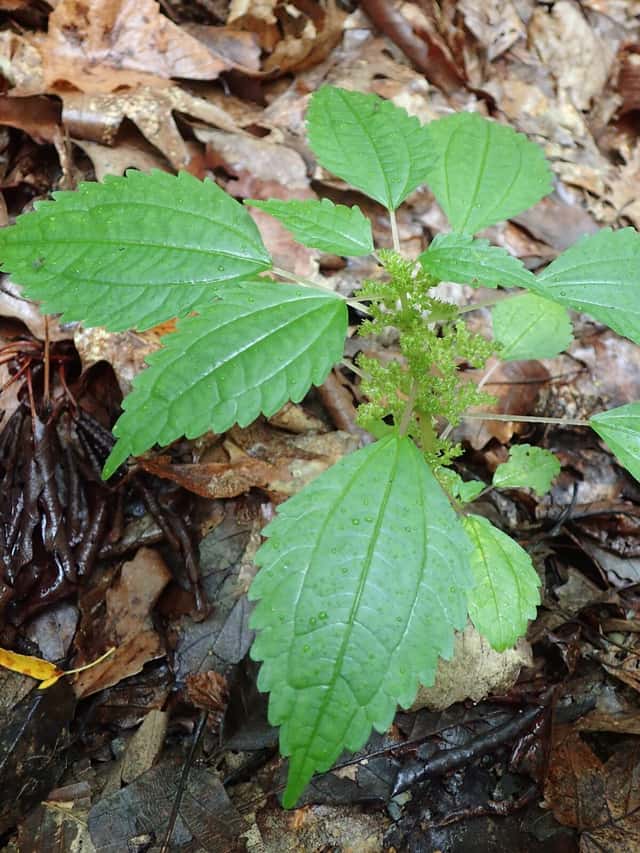
Clearweed (Pilea pumila) is a easy-care plant from the Urticaceae family. Clearweed is a delicate annual herb native to eastern North America and East Asia, prized for its translucent, glassy stems and bright green, coarsely toothed leaves. It thrives in the dappled shade of moist woodlands, where its tiny greenish-yellow flowers bloom from midsummer into fall.
Clearweed grows up to 70cm, spread of 30cm, watering every 4 days, 10°C – 29°C, 50–70% humidity. It is suitable for indoor environments and safe for pets.
Unlike many tropical plants, Clearweed tolerates watering mistakes. Best for beginners. Unlike many popular species, Clearweed is safe to keep around pets. Without adequate drainage, root rot can develop within 8 days.
How to Care for Clearweed?
TLDR: Clearweed needs Partial shade, watering every 4 days, and temperatures between 10-29°C with 50-70% humidity.
How Often Should You Water Clearweed?
Keep the soil evenly moist at all times; clearweed dislikes both drought and waterlogging, so water whenever the surface starts to feel dry.
How Much Light Does Clearweed Need?
Provide dappled sunlight or partial shade — bright but indirect light mimics its natural woodland understory habitat.
What Is the Best Soil for Clearweed?
Use a rich, organic loam that drains well but retains moisture; clearweed grows naturally in humus-rich forest soil.
What Pot Should You Use for Clearweed?
A shallow, wide pot with good drainage holes suits its shallow root system and spreading habit; unglazed terracotta helps prevent waterlogging.
What Is Clearweed and Where Does It Come From?
Clearweed is a delicate annual herb native to eastern North America and East Asia, prized for its translucent, glassy stems and bright green, coarsely toothed leaves. It thrives in the dappled shade of moist woodlands, where its tiny greenish-yellow flowers bloom from midsummer into fall.
How to Propagate Clearweed?
Seed sowing
Clearweed self-seeds readily, so established plantings will often return on their own each year.
- 1 Collect ripe achenes in fall or purchase seed
- 2 Scatter seed on moist, humus-rich soil in a shaded spot
- 3 Keep soil consistently moist until germination
- 4 Thin seedlings once they reach a few centimeters tall
Materials needed:
Stem cutting
Change the water every few days if rooting in water to prevent rot.
- 1 Cut a healthy 8-10 cm stem tip with several leaf nodes
- 2 Remove the lower leaves
- 3 Place the cutting in water or moist potting mix
- 4 Keep in bright, indirect light until roots form
Materials needed:
How Big Does Clearweed Grow?
TLDR: Clearweed can reach up to 70cm tall with Fast growth rate.
Max height
70cm
Spread
30cm
Growth rate
Fast
Foliage
Deciduous
Plant Uses
Medicinal
Medicinal properties
Edible
Can be consumed
Medicinal Uses
- Traditionally used by some Native American groups to relieve sinus congestion
- Applied as a poultice to soothe itching and skin irritation
- Used in East Asia as a mild diuretic
Culinary Uses
- Young shoots are edible but considered unpalatable; rarely used as a foraged green
Is your plant showing symptoms?
Click on the symptom to discover possible causes:
What Diseases Commonly Affect Clearweed?
TLDR: Clearweed is susceptible to 4 known diseases. Monitor regularly for early detection.
Aphids
Aphids are small, soft-bodied, pear-shaped insects (1/16 to 1/8 inch long) that feed by sucking nutrient-rich sap from plants. They reproduce rapidly and can quickly weaken plants, causing distorted growth and transmitting plant viruses. Aphids come in various colors including green, black, red, yellow, brown, and gray. They secrete honeydew, a sticky substance that attracts ants and encourages sooty mold growth.
Spider Mites
Spider mites are tiny arachnids (less than 1/20 inch long) related to spiders and ticks that feed on plant sap. They thrive in hot, dry conditions and can cause significant damage to ornamental and vegetable plants. During severe infestations, crop losses can reach 14% or higher as these pests disrupt vital plant processes including photosynthesis, carbon dioxide absorption, and transpiration.
Root Rot
Root rot is a serious fungal disease that affects the root system of plants, causing them to decay and die. It is primarily caused by overwatering, poor drainage, or soil-borne fungi such as Pythium, Phytophthora, Rhizoctonia, and Fusarium. The disease thrives in waterlogged conditions where roots are deprived of oxygen, making them susceptible to fungal infection.
Overwatering
Overwatering occurs when plants receive too much water, depriving roots of oxygen and causing root rot. This environmental stress is one of the most common causes of houseplant death, as waterlogged soil prevents roots from breathing and functioning properly.
Meaning & Symbolism
With its clear, glass-like stems, clearweed is often associated with transparency, quiet resilience, and the understated beauty of woodland undergrowth.
Compare with similar plants
| Attribute | Difficulty | Light | Watering | Pet Safe |
|---|---|---|---|---|
| Field Maple | Easy | Bright indirect | 14d | ✓ |
| Silver Birch | Easy | Direct sun | 14d | ✓ |
| Common Blanketflower | Easy | Direct sun | 10d | ✓ |
| Cushion Bush | Easy | Direct sun | 14d | ✓ |





