Apocynaceae
Climbing Milkweed (Funastrum cynanchoides)
Funastrum cynanchoides
An easy vine for hot, dry yards, including USDA zones 9b to 11. It likes sun, with afternoon shade where summers are fierce, and soil that drains fast, even poor soil. Once established it handles drought well. It needs room and something to climb, and it can turn weedy if the pods drop their seeds.
Every 10 days
Bright indirect
-9° - °C
% - %
Categories
What is Climbing Milkweed?
Climbing Milkweed (Funastrum cynanchoides) is a easy-care plant from the Apocynaceae family. Climbing milkweed (Funastrum cynanchoides) is a perennial desert vine in the Apocynaceae family, native to the southwestern US and northern Mexico. Its thin stems twine through shrubs and over fences, forming tangled curtains 10 to 15 ft (3-4.5 m) long. The leaves are narrow and arrow-shaped. From s...
Climbing Milkweed grows up to 4.5m, spread of 180cm, watering every 10 days. It is not suitable for indoor environments and safe for pets.
Unlike many tropical plants, Climbing Milkweed tolerates watering mistakes. Best for beginners. Unlike many popular species, Climbing Milkweed is safe to keep around pets.
How to Care for Climbing Milkweed?
TLDR: Climbing Milkweed needs Bright indirect, watering every 10 days, and temperatures between -9-30°C with 40-70% humidity.
How Often Should You Water Climbing Milkweed?
In the first year, water often, up to daily in extreme heat, so the roots can settle in. After that, a soak every 1 to 2 weeks in the growing season is enough. In winter, with no leaves, it needs very little.
How Much Light Does Climbing Milkweed Need?
Give it a bright spot in sun or part shade. Afternoon shade helps where summers run very hot.
What Is the Best Soil for Climbing Milkweed?
It does well in sandy, rocky or limestone soil that's low in organic matter, as long as water drains away. A pH of 6.6 to 8.5 is fine.
What Pot Should You Use for Climbing Milkweed?
A large pot with drainage holes and a support to climb will help keep this vine in check.
What Is Climbing Milkweed and Where Does It Come From?
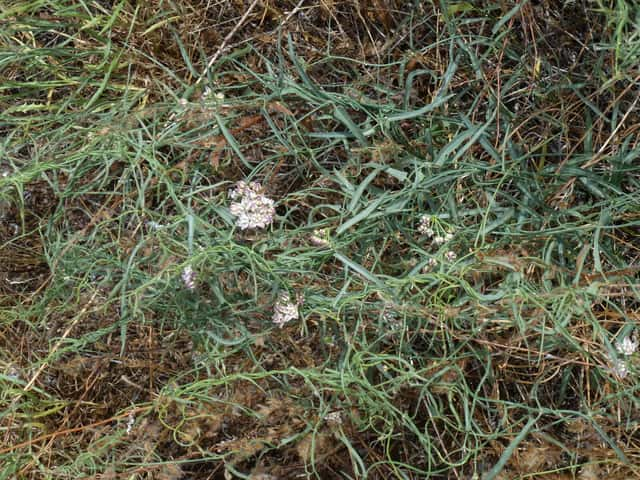
Climbing milkweed (Funastrum cynanchoides) is a perennial desert vine in the Apocynaceae family, native to the southwestern US and northern Mexico. Its thin stems twine through shrubs and over fences, forming tangled curtains 10 to 15 ft (3-4.5 m) long. The leaves are narrow and arrow-shaped. From spring into summer it bears round clusters of fragrant flowers, white to pinkish purple, with fringed petals. Pods up to 5 in (12 cm) long follow, packed with fluffy seeds that ride the wind. Broken stems leak a smelly milky sap. The plant drops its leaves in winter.
How to Propagate Climbing Milkweed?
Seed
Wear gloves when handling the plant, since the sap may irritate skin.
- 1 Pick dry pods before they split open
- 2 Take out the seeds and pull off the fluff
- 3 Scatter them on sandy soil and cover lightly
- 4 Keep slightly moist until seedlings come up
Materials needed:
Stem cutting
Wear gloves: cut stems leak sap.
- 1 In fall, cut a piece of healthy stem
- 2 Strip the lower leaves
- 3 Push the base into moist sandy soil
- 4 Keep in light shade until it roots
Materials needed:
How Big Does Climbing Milkweed Grow?
TLDR: Climbing Milkweed can reach up to 4.5m tall with Fast growth rate.
Max height
4.5m
Spread
1.8m
Growth rate
Fast
Foliage
Deciduous
Warning: Toxic Plant
This plant can be toxic if ingested. Keep out of reach of:
Plant Uses
Ornamental
Great for decoration
Is your plant showing symptoms?
Click on the symptom to discover possible causes:
What Diseases Commonly Affect Climbing Milkweed?
TLDR: Climbing Milkweed is susceptible to 1 known diseases. Monitor regularly for early detection.
Fun Facts
Monarch and queen caterpillars store the plant's toxins, which helps protect the adult butterflies from birds.
In desert cities this vine often turns up on neglected chain-link fences.
Frequently asked questions
Is climbing milkweed toxic?
How do I stop it from spreading?
Did my vine die over winter?
Does it attract butterflies?
Compare with similar plants
| Attribute | Difficulty | Light | Watering | Pet Safe |
|---|---|---|---|---|
| Field Maple | Easy | Bright indirect | 14d | ✓ |
| Iberian Houseleek | Easy | Direct sun | 14d | ✓ |
| Silver Birch | Easy | Direct sun | 14d | ✓ |
| Common Blanketflower | Easy | Direct sun | 10d | ✓ |
Choose & Compare
Sources & References
- Wikipedia - Funastrum cynanchoides
- Native Plant Society of Texas - Fringed Twinevine
- Garden Oracle - Funastrum cynanchoides
- Wildflowers of New Mexico - Funastrum cynanchoides
- iNaturalist - Funastrum cynanchoides (common name 'bejuco de reja')
- WorldSpecies - Funastrum cynanchoides, associated organisms (via search snippet)





