Cactaceae
Cochineal Cactus (Opuntia cochenillifera)
Opuntia cochenillifera
A tough cactus for full sun or part shade in sandy, well-drained soil. It tolerates drought and poor soil but grows better with regular water and feeding. Not hardy to hard frost.
Every 14 days
Direct sun
° - °C
% - %
Categories
What is Cochineal Cactus?
Cochineal Cactus (Opuntia cochenillifera) is a easy-care plant from the Cactaceae family. Cochineal cactus (Opuntia cochenillifera, also treated as Nopalea cochenillifera) is a tree-like cactus probably native to Mexico and now grown across the tropics, notably as livestock fodder in northeastern Brazil. It forms a trunk up to 20 cm across and reaches 3-4 m, with flat, fleshy, oval pads...
Cochineal Cactus grows up to 4.0m, watering every 14 days. It is not suitable for indoor environments and safe for pets.
Unlike many tropical plants, Cochineal Cactus tolerates watering mistakes. Best for beginners. Unlike many popular species, Cochineal Cactus is safe to keep around pets.
How to Care for Cochineal Cactus?
TLDR: Cochineal Cactus needs Direct sun, watering every 14 days, and temperatures between 15-30°C with 40-70% humidity.
How Often Should You Water Cochineal Cactus?
Water only when the soil is completely dry. In the ground rain is usually enough; in a pot, water about every two weeks in warm weather and hardly at all in winter.
How Much Light Does Cochineal Cactus Need?
Full sun is best; it also grows in part shade.
What Is the Best Soil for Cochineal Cactus?
Sandy, fertile, well-drained soil. It copes with poor soil, never with soggy soil.
What Pot Should You Use for Cochineal Cactus?
A large, heavy terracotta pot with drainage holes; it grows much bigger in the ground.
What Is Cochineal Cactus and Where Does It Come From?
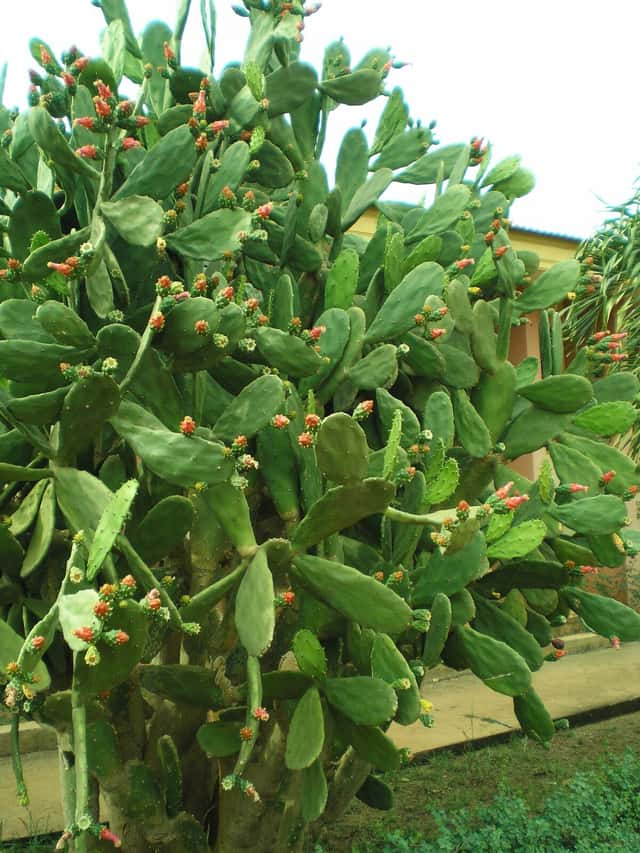
Cochineal cactus (Opuntia cochenillifera, also treated as Nopalea cochenillifera) is a tree-like cactus probably native to Mexico and now grown across the tropics, notably as livestock fodder in northeastern Brazil. It forms a trunk up to 20 cm across and reaches 3-4 m, with flat, fleshy, oval pads that are smaller than those of the common prickly pear. Spines are few or absent, but the areoles carry glochids, fine barbed bristles that lodge in skin. The red flowers have long pink stamens and, unusually for an Opuntia, are pollinated by hummingbirds. For centuries it has been the host plant for rearing the cochineal insect, the source of carmine red dye.
How to Propagate Cochineal Cactus?
Pad cuttings
Use thick gloves or tongs because of the glochids.
- 1 Cut a whole pad at the joint
- 2 Let it dry in shade for a few days until the cut callouses
- 3 Set it upright, one third buried, in dry sandy soil
- 4 Water only after a week
Materials needed:
Seed
Plants from seed grow much more slowly than from pads.
- 1 Remove seeds from ripe fruit and rinse
- 2 Sow on moist sandy mix
- 3 Keep warm and bright
Materials needed:
How Big Does Cochineal Cactus Grow?
TLDR: Cochineal Cactus can reach up to 4.0m tall with Medium growth rate.
Max height
4.0m
Foliage
Evergreen
Plant Uses
Ornamental
Great for decoration
Edible
Can be consumed
Culinary Uses
- Young pads eaten cooked or raw once the glochids are removed
- Red fruit eaten fresh
Is your plant showing symptoms?
Click on the symptom to discover possible causes:
What Diseases Commonly Affect Cochineal Cactus?
TLDR: Cochineal Cactus is susceptible to 1 known diseases. Monitor regularly for early detection.
Fun Facts
The name cochenillifera means 'cochineal-bearing'.
Unlike most prickly pears, its flowers are pollinated by hummingbirds.
In colonial times cochineal dye was one of Mexico's largest exports.
Frequently asked questions
Does cochineal cactus have spines?
Is it edible?
How is it different from the common prickly pear?
How do I propagate it?
Why is it called cochineal cactus?
Compare with similar plants
| Attribute | Difficulty | Light | Watering | Pet Safe |
|---|---|---|---|---|
| Field Maple | Easy | Bright indirect | 14d | ✓ |
| Iberian Houseleek | Easy | Direct sun | 14d | ✓ |
| Silver Birch | Easy | Direct sun | 14d | ✓ |
| Common Blanketflower | Easy | Direct sun | 10d | ✓ |
Choose & Compare
Sources & References
- Wikipedia (pt) - Opuntia cochenillifera (palma-miuda)
- Wikipedia (es) - Opuntia cochenillifera (nopal de la cochinilla)
- Wikipedia - Opuntia cochenillifera
- Manzanillo Sun - Cochineal Cactus, Nopalea cochenillifera (T. Clarkson, 2016)
- World of Succulents - Nopalea cochenillifera (Cochineal Nopal Cactus)
- Cactus Conservation Institute - Opuntia cochenillifera
- Agronomia Mesoamericana (2016) - forage cactus cultivars vs. Dactylopius opuntiae, Paraiba





