Primulaceae
Colicwood (Genus Myrsine)
Myrsine
Tough, slow-growing shrubs: full sun or part shade, any well-drained soil and little water once established. They take hard pruning and suit hedges and topiary.
Every 10 days
Bright indirect
-5° - °C
% - %
Categories
What is Colicwood?
Colicwood (Myrsine) is a easy-care plant from the Primulaceae family. Myrsine is a genus of about 280 evergreen shrubs and small trees in the primrose family (Primulaceae), found in tropical and subtropical regions worldwide. In the United States the genus is called colicwood, in New Zealand matipo or mapou and in Hawaii kōlea. The leaves are leathery and glossy; the...
Colicwood grows up to 6.0m, watering every 10 days. It is not suitable for indoor environments and safe for pets.
Unlike many tropical plants, Colicwood tolerates watering mistakes. Best for beginners. Unlike many popular species, Colicwood is safe to keep around pets.
How to Care for Colicwood?
TLDR: Colicwood needs Bright indirect, watering every 10 days, and temperatures between -5-30°C with 40-70% humidity.
How Often Should You Water Colicwood?
Water regularly in the first year so the plant settles in. After that, let the soil dry between waterings: it copes with dry spells but not with waterlogging.
How Much Light Does Colicwood Need?
Full sun or part shade. In hot climates it even takes deeper shade under trees.
What Is the Best Soil for Colicwood?
Any well-drained soil: clay, loam or sand, acid to slightly alkaline. Work in compost at planting and mulch afterwards.
What Pot Should You Use for Colicwood?
A large pot with drainage holes if grown in a container; it does best in the ground.
What Is Colicwood and Where Does It Come From?
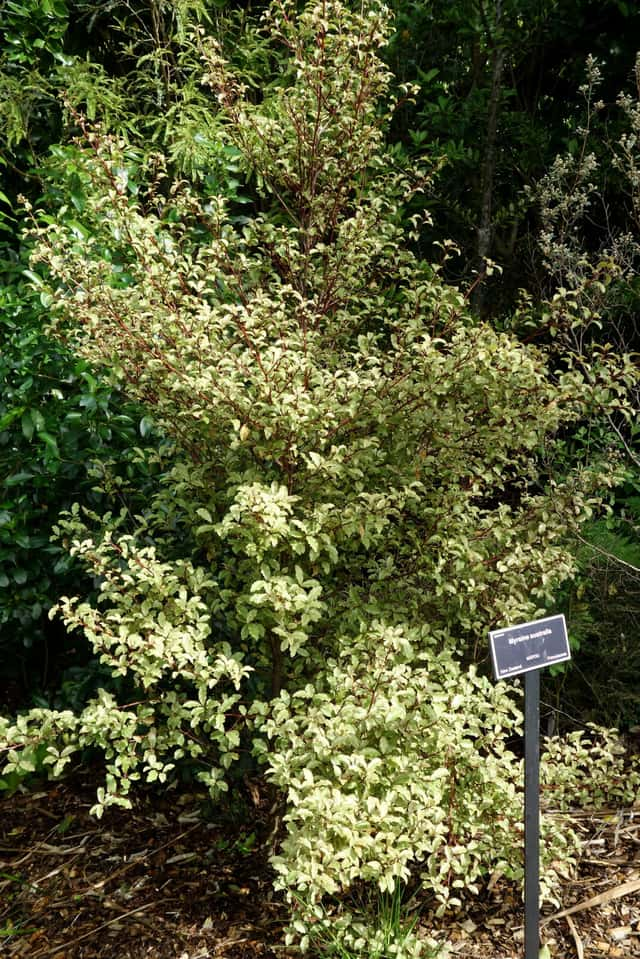
Myrsine is a genus of about 280 evergreen shrubs and small trees in the primrose family (Primulaceae), found in tropical and subtropical regions worldwide. In the United States the genus is called colicwood, in New Zealand matipo or mapou and in Hawaii kōlea. The leaves are leathery and glossy; the tiny white, cream or greenish flowers sit in clusters right on the branches, often below the leaves. The fruits are small one-seeded berries, purple-black, black or bluish, eaten by birds. Most species have separate male and female plants. Some, such as Myrsine africana (African boxwood) and Myrsine australis (red matipo), are grown as ornamental shrubs and hedges.
How to Propagate Colicwood?
Seed
Fresh seed germinates well; stored seed loses vigour. Cuttings root slowly and poorly, so seed is the better choice.
- 1 Collect ripe fruits from a female plant
- 2 Remove the pulp and rinse the seeds
- 3 Sow straight away, while fresh, in a light, moist mix
- 4 Keep in part shade and moist until they sprout
- 5 Plant out once the seedlings are sturdy
Materials needed:
How Big Does Colicwood Grow?
TLDR: Colicwood can reach up to 6.0m tall with Slow growth rate.
Max height
6.0m
Growth rate
Slow
Foliage
Evergreen
Plant Uses
Ornamental
Great for decoration
Is your plant showing symptoms?
Click on the symptom to discover possible causes:
What Diseases Commonly Affect Colicwood?
TLDR: Colicwood is susceptible to 1 known diseases. Monitor regularly for early detection.
Fun Facts
In many species the flowers and fruits grow on bare wood, below the leaves.
The fruit can take almost a year to ripen after flowering.
Rapanea, once a separate genus, has been merged into Myrsine.
Frequently asked questions
Does every Myrsine plant produce berries?
Can I use it as a hedge?
Does it need a lot of water?
Is it frost hardy?
Compare with similar plants
| Attribute | Difficulty | Light | Watering | Pet Safe |
|---|---|---|---|---|
| Field Maple | Easy | Bright indirect | 14d | ✓ |
| Iberian Houseleek | Easy | Direct sun | 14d | ✓ |
| Silver Birch | Easy | Direct sun | 14d | ✓ |
| Common Blanketflower | Easy | Direct sun | 10d | ✓ |





