Poaceae
Common Bamboo - How to Grow Bambusa vulgaris
Bambusa vulgaris
Common Bamboo is a robust plant that thrives in full sun. Water every 3-4 days during summer and reduce in winter. Prefers well-draining, slightly acidic soil. Fertilize every 30 days during the growing season. Prune every 90 days to maintain shape and remove old culms.
Every 4 days
Direct sun
10° - 35°C
60% - 90%
Categories
What is Common Bamboo?
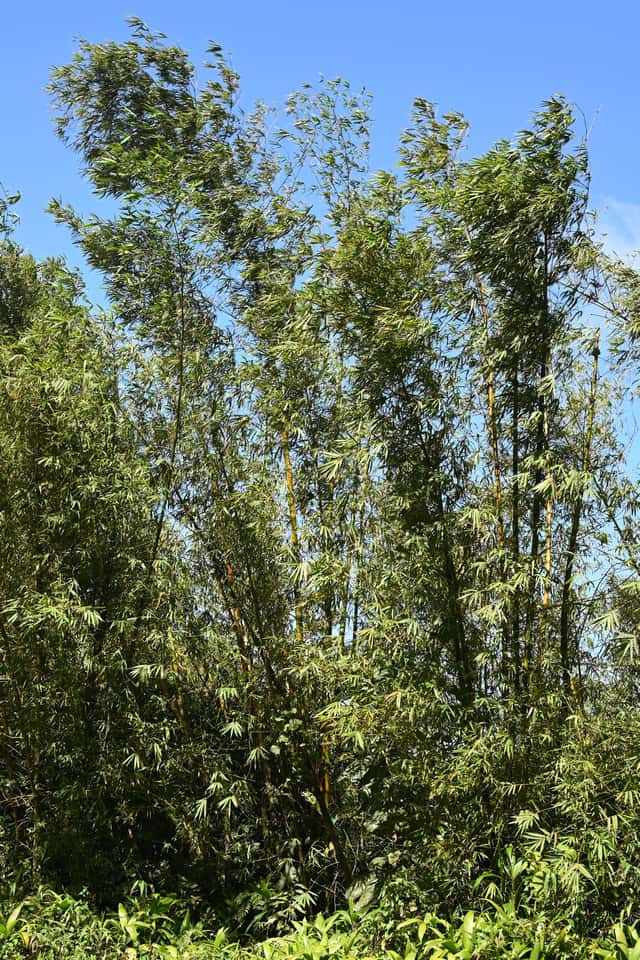
Common Bamboo (Bambusa vulgaris) is a easy-care plant from the Poaceae family. Bambusa vulgaris, commonly known as Common Bamboo or Golden Bamboo, is one of the most widely cultivated bamboo species in the world. Native to South and Southeast Asia, it has spread to tropical and subtropical regions across all continents. Its culms can reach up to 20 meters in height, featuring...
Common Bamboo grows up to 20.0m, spread of 900cm, watering every 4 days, 10°C – 35°C, 60–90% humidity. It is not suitable for indoor environments and safe for pets.
Unlike many tropical plants, Common Bamboo tolerates watering mistakes. Best for beginners. Unlike many popular species, Common Bamboo is safe to keep around pets.
How to Care for Common Bamboo?
TLDR: Common Bamboo needs Direct sun, watering every 4 days, and temperatures between 10-35°C with 60-90% humidity.
How Often Should You Water Common Bamboo?
Water deeply every 3-4 days, ensuring the soil stays moist but never waterlogged. During periods of intense heat, increase frequency. Always check drainage to prevent root rot.
How Much Light Does Common Bamboo Need?
Common Bamboo requires full sun, with at least 6-8 hours of direct light per day. Position outdoors in an open area or near south/west-facing windows when grown in containers.
What Is the Best Soil for Common Bamboo?
Use well-draining soil rich in organic matter. Mix garden soil with coarse sand and compost. Avoid clay soils that retain excessive moisture. Ideal pH is between 5.5 and 7.0.
What Pot Should You Use for Common Bamboo?
Large clay or concrete pot to control growth; in the garden, plant directly in the ground with rhizome barriers to limit spread
Care Schedule
Fertilize
Every 30 days
What Is Common Bamboo and Where Does It Come From?
Bambusa vulgaris, commonly known as Common Bamboo or Golden Bamboo, is one of the most widely cultivated bamboo species in the world. Native to South and Southeast Asia, it has spread to tropical and subtropical regions across all continents. Its culms can reach up to 20 meters in height, featuring a characteristic yellow-green coloration. It is an extremely fast-growing, versatile, and resilient plant used in construction, landscaping, and food production.
How to Propagate Common Bamboo?
Clump Division
Perform division in early spring for best results. Keep soil moist for the first few weeks after transplanting.
- 1 Select a healthy clump with multiple culms
- 2 Dig around the clump to expose rhizomes
- 3 Divide with a machete or shovel, ensuring each division has roots and at least 2-3 culms
- 4 Transplant immediately to the final location
- 5 Water abundantly after planting
Materials needed:
Culm Cutting
Use culms at least 1 year old for best results. Avoid very young or very old culms.
- 1 Cut segments of mature culm with 2-3 nodes
- 2 Apply rooting hormone to the cut ends
- 3 Bury horizontally in moist, well-draining substrate
- 4 Keep in a shaded, humid location until sprouting
- 5 Transplant when shoots reach 15-20 cm
Materials needed:
How Big Does Common Bamboo Grow?
TLDR: Common Bamboo can reach up to 20.0m tall with Fast growth rate.
Max height
20.0m
Spread
9.0m
Growth rate
Fast
Foliage
Evergreen
Warning: Toxic Plant
This plant can be toxic if ingested. Keep out of reach of:
Plant Uses
Ornamental
Great for decoration
Edible
Can be consumed
Medicinal
Medicinal properties
Ground Cover
Soil coverage
Medicinal Uses
- Leaves and roots used in traditional Asian medicine as anti-inflammatory agents and to treat fever
Culinary Uses
- Young shoots are edible after cooking to eliminate cyanogenic compounds; used in soups, stir-fries, and pickles in Asian cuisine
Is your plant showing symptoms?
Click on the symptom to discover possible causes:
What Diseases Commonly Affect Common Bamboo?
TLDR: Common Bamboo is susceptible to 11 known diseases. Monitor regularly for early detection.
Root Rot
Root rot is a serious fungal disease that affects the root system of plants, causing them to decay and die. It is primarily caused by overwatering, poor drainage, or soil-borne fungi such as Pythium, Phytophthora, Rhizoctonia, and Fusarium. The disease thrives in waterlogged conditions where roots are deprived of oxygen, making them susceptible to fungal infection.
Overwatering
Overwatering occurs when plants receive too much water, depriving roots of oxygen and causing root rot. This environmental stress is one of the most common causes of houseplant death, as waterlogged soil prevents roots from breathing and functioning properly.
Fusarium Wilt
Fusarium wilt is a serious fungal disease caused by the soil-borne fungus Fusarium oxysporum. The fungus invades roots and blocks the water-conducting vessels (xylem) of the plant, causing progressive wilting and eventual death. Host-specific forms of the pathogen exist that attack different plant species.
Rust
Rust is a common fungal disease caused by fungi in the order Pucciniales that affects a wide variety of plants. The disease gets its name from the characteristic orange, yellow, or reddish-brown pustules that appear on leaves, resembling metal rust. This obligate fungal parasite requires living plants to survive and can cause significant economic losses in agricultural crops.
Meaning & Symbolism
Symbolizes longevity, resilience, flexibility, and prosperity in many Asian cultures. Widely regarded as a symbol of sustainability and versatility worldwide.
Fun Facts
Bamboo can grow up to 91 cm per day under ideal conditions, making it one of the fastest-growing plants on Earth
Bambusa vulgaris has been used for centuries in bridge construction, scaffolding, and housing throughout Asia
Mature culms are stronger than many types of wood and can substitute steel in light construction
A single bamboo clump can absorb up to 12 tonnes of CO2 per year, helping combat climate change
Frequently asked questions
How often should I water Common Bamboo?
Is Common Bamboo toxic to pets?
How do I control the invasive growth of bamboo?
What is the best way to propagate Common Bamboo?
Can Common Bamboo be grown in a pot?
Compare with similar plants
| Attribute | Difficulty | Light | Watering | Pet Safe |
|---|---|---|---|---|
| Field Maple | Easy | Bright indirect | 14d | ✓ |
| Muriel's Bamboo | Medium | Partial shade | 3d | ✓ |
| Silver Birch | Easy | Direct sun | 14d | ✓ |
| Common Blanketflower | Easy | Direct sun | 10d | ✓ |





