Rhamnaceae
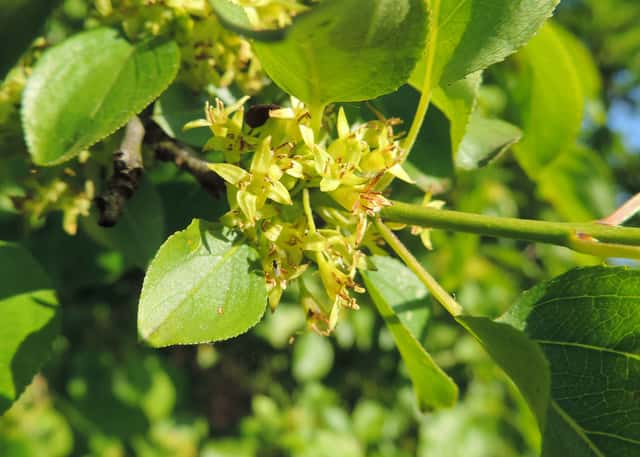
Common Buckthorn — Rhamnus cathartica
Rhamnus cathartica
Hardy and low-maintenance shrub, tolerant of poor soils, drought, and varying light conditions. Excellent for hedgerows and windbreaks. Do not plant near cereal crops (crown rust host). Grows vigorously — may require annual pruning to control spread.
Every 21 days
Bright indirect
-15° - 32°C
30% - 70%
Categories
What is Common Buckthorn?
Common Buckthorn (Rhamnus cathartica) is a medium-care plant from the Rhamnaceae family. Common Buckthorn (Rhamnus cathartica) is a deciduous shrub or small tree in the Rhamnaceae family, native to Europe and Western Asia. It features thorny, crooked branches and glossy black berries ripening in autumn. While ecologically valuable in its native range, it is considered highly invasive in...
Common Buckthorn grows up to 9.0m, spread of 610cm, watering every 21 days, -15°C – 32°C, 30–70% humidity. It is not suitable for indoor environments and not safe for pets.
Without precautions, ingestion can cause irritation in pets. Keep out of reach of cats and dogs.
How to Care for Common Buckthorn?
TLDR: Common Buckthorn needs Bright indirect, watering every 21 days, and temperatures between -15-32°C with 30-70% humidity.
How Often Should You Water Common Buckthorn?
Water every 3 weeks, allowing soil to dry between waterings. Sensitive to waterlogging — never let roots sit in standing water. Very drought-tolerant once established.
How Much Light Does Common Buckthorn Need?
Prefers full sun but tolerates partial shade well. More sunlight improves fruit production and overall vigor.
What Is the Best Soil for Common Buckthorn?
Adapts to clay, loam, and sandy soils. Prefers dry to moist calcareous (alkaline) well-draining soil. pH 6.0–8.0.
What Pot Should You Use for Common Buckthorn?
Not suitable for indoors. Plant directly in garden soil — a robust outdoor species only.
What Is Common Buckthorn and Where Does It Come From?
Common Buckthorn (Rhamnus cathartica) is a deciduous shrub or small tree in the Rhamnaceae family, native to Europe and Western Asia. It features thorny, crooked branches and glossy black berries ripening in autumn. While ecologically valuable in its native range, it is considered highly invasive in North America, forming dense thickets that outcompete native vegetation. WARNING: berries are TOXIC — they contain anthraquinones and emodin causing severe laxative effects. Toxic to cats, dogs, and humans.
How to Propagate Common Buckthorn?
Seed Sowing
Cold stratification is essential to break seed dormancy. Direct sowing in autumn also works well.
- 1 Collect ripe black berries in autumn
- 2 Cold-stratify seeds in refrigerator for 1-2 months
- 3 Sow in moist, well-draining seed compost
- 4 Keep in cool location until germination
Materials needed:
Semi-hardwood Cuttings
Maintain high humidity around cuttings using a plastic bag or propagator. Avoid direct sun.
- 1 Take semi-ripe cuttings in July/August, 10-15 cm long
- 2 Remove leaves from lower half
- 3 Apply rooting hormone to cut end
- 4 Insert in moist, well-draining compost in indirect bright light
Materials needed:
How Big Does Common Buckthorn Grow?
TLDR: Common Buckthorn can reach up to 9.0m tall with Fast growth rate.
Max height
9.0m
Spread
6.1m
Growth rate
Fast
Foliage
Deciduous
Warning: Toxic Plant
This plant can be toxic if ingested. Keep out of reach of:
Plant Uses
Ornamental
Great for decoration
Medicinal
Medicinal properties
Medicinal Uses
- Bark and fruit historically used as a powerful laxative (emodin and anthraquinones)
- Unripe berries yield green dye; ripe berries yield yellow and orange dyes
Is your plant showing symptoms?
Click on the symptom to discover possible causes:
What Diseases Commonly Affect Common Buckthorn?
TLDR: Common Buckthorn is susceptible to 4 known diseases. Monitor regularly for early detection.
Rust
Rust is a common fungal disease caused by fungi in the order Pucciniales that affects a wide variety of plants. The disease gets its name from the characteristic orange, yellow, or reddish-brown pustules that appear on leaves, resembling metal rust. This obligate fungal parasite requires living plants to survive and can cause significant economic losses in agricultural crops.
Aphids
Aphids are small, soft-bodied, pear-shaped insects (1/16 to 1/8 inch long) that feed by sucking nutrient-rich sap from plants. They reproduce rapidly and can quickly weaken plants, causing distorted growth and transmitting plant viruses. Aphids come in various colors including green, black, red, yellow, brown, and gray. They secrete honeydew, a sticky substance that attracts ants and encourages sooty mold growth.
Root Rot
Root rot is a serious fungal disease that affects the root system of plants, causing them to decay and die. It is primarily caused by overwatering, poor drainage, or soil-borne fungi such as Pythium, Phytophthora, Rhizoctonia, and Fusarium. The disease thrives in waterlogged conditions where roots are deprived of oxygen, making them susceptible to fungal infection.
Mosaic Virus
Mosaic virus is a group of plant viruses that cause mottled, patchy patterns on leaves and can affect a wide variety of plants. The virus creates characteristic yellow, white, and green mosaic patterns, often accompanied by stunted growth and deformed plant parts. This highly contagious disease spreads rapidly through insect vectors and contaminated tools.
Meaning & Symbolism
Protection, exorcism, and wish-granting — in European folklore, branches were hung to ward off evil spirits.
Fun Facts
It is the primary alternate host for crown rust of oats (Puccinia coronata), one of the most destructive cereal diseases
Berries have been used for centuries in European folk medicine as a laxative — 8-15 berries were the adult dose
Birds eat the berries without toxic effects, efficiently dispersing seeds across landscapes
Its wood produces a striking sap-green dye that was used historically in manuscript illumination
Frequently asked questions
Are Common Buckthorn berries poisonous?
How often should I water Common Buckthorn?
Is Common Buckthorn invasive?
Can I use Common Buckthorn as a hedge?
How do I propagate Common Buckthorn?
Compare with similar plants
| Attribute | Difficulty | Light | Watering | Pet Safe |
|---|---|---|---|---|
| Dark Fieldcap | Medium | Low light | 2d | ⚠️ |
| Azalea | Medium | Partial shade | 3d | ⚠️ |
| Muriel's Bamboo | Medium | Partial shade | 3d | ✓ |
| Bougainvillea | Medium | Direct sun | 7d | ⚠️ |




