Rosaceae
common pearlbush: Pet-Safe Plant
Exochorda racemosa
Plant in full sun to part shade in average, well-drained soil. Water regularly the first year to establish, then only during extended dry spells. Prune immediately after flowering (it blooms on old wood) to shape and rejuvenate; avoid pruning in late winter or you will remove the flower buds. Fertilize lightly in early spring. Tolerates a wide range of soils, including clay and slightly alkaline ground, but a deep taproot makes it best sited where it can stay long-term.
Every 10 days
Bright indirect
-31° - 35°C
30% - 70%
Categories
What is common pearlbush?
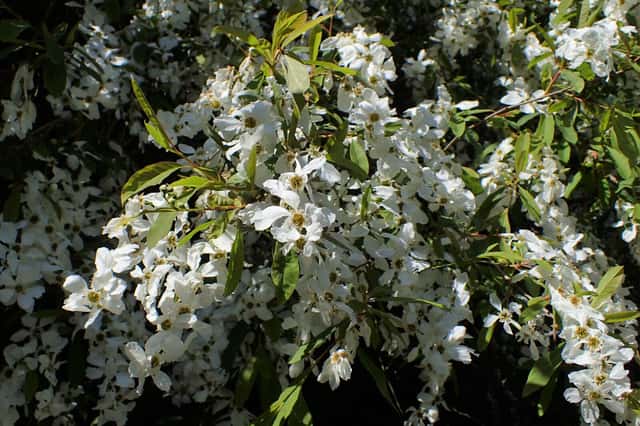
common pearlbush (Exochorda racemosa) is a easy-care plant from the Rosaceae family. A deciduous ornamental shrub native to China and Korea, common pearlbush is prized for its brief but spectacular spring display: masses of pure-white, five-petaled flowers open from round buds that resemble strings of pearls along arching branches. It grows 8-10 ft (2.4-3 m) tall and often wider, wi...
common pearlbush grows up to 3.0m, spread of 400cm, watering every 10 days, -31°C – 35°C, 30–70% humidity. It is not suitable for indoor environments and safe for pets.
Unlike many tropical plants, common pearlbush tolerates watering mistakes. Best for beginners. Unlike many popular species, common pearlbush is safe to keep around pets.
How to Care for common pearlbush?
TLDR: common pearlbush needs Bright indirect, watering every 10 days, and temperatures between -31-35°C with 30-70% humidity.
How Often Should You Water common pearlbush?
Keep soil evenly moist during the first growing season. Mature plants are drought-tolerant and only need supplemental watering during prolonged dry, hot spells — allow the top few inches of soil to dry between waterings.
How Much Light Does common pearlbush Need?
Give it at least 6 hours of direct sun for the fullest bloom; it tolerates partial shade (2-6 hours) but flowering will be lighter.
What Is the Best Soil for common pearlbush?
Prefers rich, well-drained soil that is slightly acidic to neutral, but adapts to average, clay, or mildly alkaline soils as long as drainage is good — soggy roots invite rot.
What Pot Should You Use for common pearlbush?
Best grown in-ground due to its deep taproot, which makes transplanting difficult; if container growing is unavoidable, use a large, deep pot with excellent drainage and expect to move it only while young.
Care Schedule
Fertilize
Every 60 days
What Is common pearlbush and Where Does It Come From?
A deciduous ornamental shrub native to China and Korea, common pearlbush is prized for its brief but spectacular spring display: masses of pure-white, five-petaled flowers open from round buds that resemble strings of pearls along arching branches. It grows 8-10 ft (2.4-3 m) tall and often wider, with a graceful, fountain-like habit. Medium-green, oval leaves show no notable fall color. Once established it is drought- and heat-tolerant, low-maintenance, and largely free of serious pests or diseases, making it a reliable backbone shrub for borders, foundation plantings, and mixed hedges.
How to Propagate common pearlbush?
How Big Does common pearlbush Grow?
TLDR: common pearlbush can reach up to 3.0m tall with Medium growth rate.
Max height
3.0m
Spread
4.0m
Growth rate
Medium
Foliage
Deciduous
Plant Uses
Ornamental
Great for decoration
Is your plant showing symptoms?
Click on the symptom to discover possible causes:
What Diseases Commonly Affect common pearlbush?
TLDR: common pearlbush is susceptible to 2 known diseases. Monitor regularly for early detection.
Aphids
Aphids are small, soft-bodied, pear-shaped insects (1/16 to 1/8 inch long) that feed by sucking nutrient-rich sap from plants. They reproduce rapidly and can quickly weaken plants, causing distorted growth and transmitting plant viruses. Aphids come in various colors including green, black, red, yellow, brown, and gray. They secrete honeydew, a sticky substance that attracts ants and encourages sooty mold growth.
Caterpillars
Caterpillars are the larval stage of moths and butterflies that feed voraciously on plant foliage, stems, flowers, and fruits. Common species include cabbage loopers, tomato hornworms, armyworms, and cutworms. These pests can cause extensive damage by consuming large amounts of plant tissue in a short time. They vary in size from small (1/4 inch) to large (5 inches), with colors ranging from green to brown, often featuring stripes or spots. Caterpillars are highly mobile and can quickly spread throughout gardens, making them one of the most destructive common pests.
Meaning & Symbolism
The pearl-like white flower buds have long symbolized purity, innocence, and new beginnings, echoing the shrub's role as one of the earliest heralds of spring in the garden.
Compare with similar plants
| Attribute | Difficulty | Light | Watering | Pet Safe |
|---|---|---|---|---|
| Field Maple | Easy | Bright indirect | 14d | ✓ |
| Silver Birch | Easy | Direct sun | 14d | ✓ |
| Common Blanketflower | Easy | Direct sun | 10d | ✓ |
| Cushion Bush | Easy | Direct sun | 14d | ✓ |





