Primulaceae
Common Primrose — Primula vulgaris
Primula vulgaris
Thrives in partial shade with consistently moist, humus-rich soil. Cold-hardy and well suited to woodland borders, shaded beds, or cool containers.
Every 4 days
Partial shade
5° - 24°C
50% - 70%
Categories
What is Common primrose?
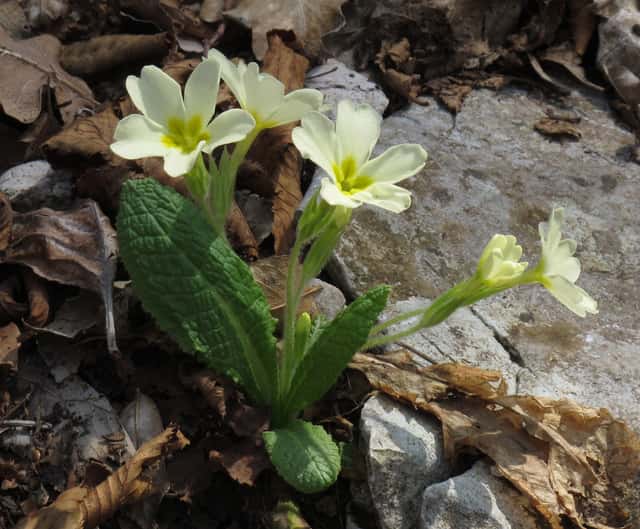
Common primrose (Primula vulgaris) is a easy-care plant from the Primulaceae family. Primula vulgaris, the common primrose, is a low-growing herbaceous perennial native to western and southern Europe. It forms a basal rosette of wrinkled, dark green leaves and produces solitary, pale yellow flowers with a deeper yellow eye, among the earliest blooms of late winter and early spring.
Common primrose grows up to 20cm, spread of 25cm, watering every 4 days, 5°C – 24°C, 50–70% humidity. It is suitable for indoor environments and safe for pets.
Unlike many tropical plants, Common primrose tolerates watering mistakes. Best for beginners. Unlike many popular species, Common primrose is safe to keep around pets. Without adequate drainage, root rot can develop within 8 days.
How to Care for Common primrose?
TLDR: Common primrose needs Partial shade, watering every 4 days, and temperatures between 5-24°C with 50-70% humidity.
How Often Should You Water Common primrose?
Keep soil evenly moist; water when the surface begins to dry out, but avoid waterlogging, which encourages root rot.
How Much Light Does Common primrose Need?
Best in partial shade or dappled light; strong direct sun, especially in the afternoon, scorches leaves and dries the plant out.
What Is the Best Soil for Common primrose?
Use a humus-rich, moisture-retentive but well-draining soil with a slightly acidic to neutral pH (5.5-7.0).
What Pot Should You Use for Common primrose?
A wide, shallow terracotta or ceramic pot with drainage holes suits the primrose's shallow root system.
Care Schedule
Fertilize
Every 30 days
Repot
Every 365 days
What Is Common primrose and Where Does It Come From?
Primula vulgaris, the common primrose, is a low-growing herbaceous perennial native to western and southern Europe. It forms a basal rosette of wrinkled, dark green leaves and produces solitary, pale yellow flowers with a deeper yellow eye, among the earliest blooms of late winter and early spring.
How to Propagate Common primrose?
Clump division
Divide every 2-3 years to renew vigor and prevent overly woody clumps at the center.
- 1 After flowering, in early summer, lift the plant from soil or pot
- 2 Split the clump into smaller sections, making sure each has roots and leaves
- 3 Replant immediately in rich, moist soil at the same spacing as before
- 4 Keep well watered until established
Materials needed:
Seed sowing
Primrose seed often needs 2-4 weeks of cold stratification in the refrigerator to germinate well.
- 1 Collect ripe seed soon after seed capsules form
- 2 Sow onto light, moist compost, covering lightly
- 3 Keep cool and shaded; seeds need cold exposure to germinate (stratification)
- 4 Transplant seedlings once they have 2-3 true leaves
Materials needed:
How Big Does Common primrose Grow?
TLDR: Common primrose can reach up to 20cm tall with Medium growth rate.
Max height
20cm
Spread
25cm
Growth rate
Medium
Foliage
Semi-evergreen
Warning: Toxic Plant
This plant can be toxic if ingested. Keep out of reach of:
Plant Uses
Ornamental
Great for decoration
Edible
Can be consumed
Medicinal Uses
- Roots and flowers traditionally used in folk infusions for coughs and colds (traditional use only, not a medical substitute)
Culinary Uses
- Edible flowers used to garnish salads and desserts
- Petals candied for confectionery
Is your plant showing symptoms?
Click on the symptom to discover possible causes:
What Diseases Commonly Affect Common primrose?
TLDR: Common primrose is susceptible to 6 known diseases. Monitor regularly for early detection.
Aphids
Aphids are small, soft-bodied, pear-shaped insects (1/16 to 1/8 inch long) that feed by sucking nutrient-rich sap from plants. They reproduce rapidly and can quickly weaken plants, causing distorted growth and transmitting plant viruses. Aphids come in various colors including green, black, red, yellow, brown, and gray. They secrete honeydew, a sticky substance that attracts ants and encourages sooty mold growth.
Slugs and Snails
Slugs and snails are mollusks that feed on plant tissue, causing irregular holes in leaves and damage to young seedlings. They are most active at night and in moist conditions, leaving characteristic silvery slime trails. These pests can quickly devastate gardens, especially during wet seasons.
Powdery Mildew
Powdery mildew is a common fungal disease caused by various fungi species including Erysiphe, Podosphaera, Oïdium, and Leveillula. It affects over 10,000 plant species worldwide. The disease thrives in warm, dry climates with high humidity and appears as a distinctive white powdery coating on plant surfaces.
Gray Mold (Botrytis Blight)
Gray mold, caused by the fungus Botrytis cinerea, is a widespread necrotrophic pathogen affecting over 1,400 plant species. It thrives in cool, humid conditions and attacks weakened or aging plant tissues, causing soft rot and characteristic gray fuzzy growth.
Meaning & Symbolism
Represents young love and the arrival of spring; in Victorian flower language it meant "I cannot live without you".
Fun Facts
The name "primrose" derives from the Latin "primus", meaning "first", referencing its early spring bloom.
It is a beloved symbol of spring in British folklore and literature.
Its flowers are edible and used to garnish salads and desserts.
Frequently asked questions
When does the common primrose bloom?
Can primrose grow in full sun?
How often should I water primrose?
Is primrose toxic to pets?
Compare with similar plants
| Attribute | Difficulty | Light | Watering | Pet Safe |
|---|---|---|---|---|
| Field Maple | Easy | Bright indirect | 14d | ✓ |
| Silver Birch | Easy | Direct sun | 14d | ✓ |
| Common Blanketflower | Easy | Direct sun | 10d | ✓ |
| Cushion Bush | Easy | Direct sun | 14d | ✓ |





