Fabaceae
Common Vetch: How to Grow Vicia sativa
Vicia sativa
Easy to grow from seed in full sun and well-drained, moderately fertile soil. Sow in autumn in mild climates or in early spring elsewhere, keep it watered while young, and cut or dig it in before it sets seed if you are using it as green manure.
Every 7 days
Direct sun
° - °C
% - %
Categories
What is Common vetch?
Common vetch (Vicia sativa) is a easy-care plant from the Fabaceae family. Common vetch (Vicia sativa) is a downy, scrambling annual legume from southern Europe and the Mediterranean, now grown widely as green manure, forage and a cover crop. It climbs with tendrils at the tips of its pinnate leaves, reaches about 40-75 cm, and bears magenta to pink pea flowers singly or i...
Common vetch grows up to 75cm, spread of 50cm, watering every 7 days. It is not suitable for indoor environments and safe for pets.
Unlike many tropical plants, Common vetch tolerates watering mistakes. Best for beginners. Unlike many popular species, Common vetch is safe to keep around pets.
How to Care for Common vetch?
TLDR: Common vetch needs Direct sun, watering every 7 days, and temperatures between 15-30°C with 40-70% humidity.
How Often Should You Water Common vetch?
Keep the soil evenly moist during germination and early growth, when it is not drought tolerant. Established plants need water only in dry spells. It handles brief waterlogging but not prolonged flooding.
How Much Light Does Common vetch Need?
Full sun. In shade it grows thin and flowers poorly.
What Is the Best Soil for Common vetch?
Most well-drained soils from sandy loam to clay of moderate fertility, ideally pH 6.0-7.0 (neutral to slightly alkaline is fine). No added nitrogen is needed.
What Pot Should You Use for Common vetch?
Best sown directly in the ground. For a container, use a wide pot with drainage holes and give it a small trellis or twigs to scramble up.
What Is Common vetch and Where Does It Come From?
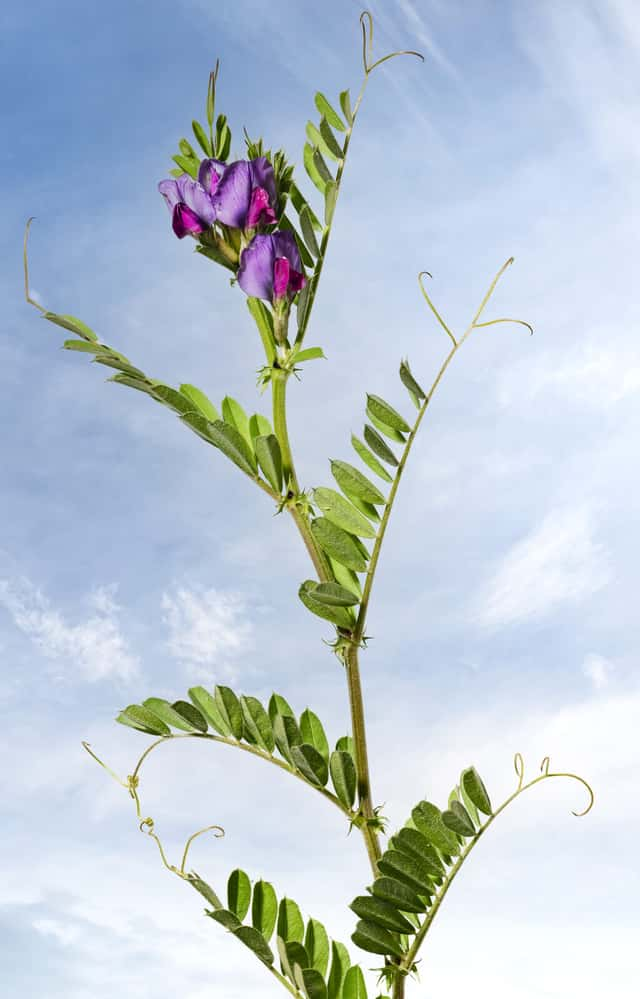
Common vetch (Vicia sativa) is a downy, scrambling annual legume from southern Europe and the Mediterranean, now grown widely as green manure, forage and a cover crop. It climbs with tendrils at the tips of its pinnate leaves, reaches about 40-75 cm, and bears magenta to pink pea flowers singly or in pairs from spring through summer, followed by flat pods. Like other legumes it fixes nitrogen and improves the soil for the next crop.
How to Propagate Common vetch?
Direct sowing
Sow in autumn in mild climates or in early spring where winters are harsh. Old or hard seed may need scarifying to germinate.
- 1 Rake the soil to a fine tilth in a sunny spot.
- 2 Sow seeds 2-5 cm deep, either broadcast or in rows.
- 3 Water in and keep the soil moist until seedlings are established.
- 4 For green manure, cut or dig the plants in at flowering, before seeds form.
Materials needed:
How Big Does Common vetch Grow?
TLDR: Common vetch can reach up to 75cm tall with Fast growth rate.
Max height
75cm
Spread
50cm
Growth rate
Fast
Foliage
Deciduous
Warning: Toxic Plant
This plant can be toxic if ingested. Keep out of reach of:
Plant Uses
Ground Cover
Soil coverage
Is your plant showing symptoms?
Click on the symptom to discover possible causes:
What Diseases Commonly Affect Common vetch?
TLDR: Common vetch is susceptible to 4 known diseases. Monitor regularly for early detection.
Rust
Rust is a common fungal disease caused by fungi in the order Pucciniales that affects a wide variety of plants. The disease gets its name from the characteristic orange, yellow, or reddish-brown pustules that appear on leaves, resembling metal rust. This obligate fungal parasite requires living plants to survive and can cause significant economic losses in agricultural crops.
Grey Mould
Aphids
Aphids are small, soft-bodied, pear-shaped insects (1/16 to 1/8 inch long) that feed by sucking nutrient-rich sap from plants. They reproduce rapidly and can quickly weaken plants, causing distorted growth and transmitting plant viruses. Aphids come in various colors including green, black, red, yellow, brown, and gray. They secrete honeydew, a sticky substance that attracts ants and encourages sooty mold growth.
Caterpillars
Caterpillars are the larval stage of moths and butterflies that feed voraciously on plant foliage, stems, flowers, and fruits. Common species include cabbage loopers, tomato hornworms, armyworms, and cutworms. These pests can cause extensive damage by consuming large amounts of plant tissue in a short time. They vary in size from small (1/4 inch) to large (5 inches), with colors ranging from green to brown, often featuring stripes or spots. Caterpillars are highly mobile and can quickly spread throughout gardens, making them one of the most destructive common pests.
Fun Facts
Tendrils at the tip of each leaf let it climb through grasses and cereal crops.
Farmers are advised not to graze vetch infected with rust, because it can cause abortion in pregnant cows and sheep.
It is one of the most common green manures because it adds nitrogen to the soil for the following crop.
Frequently asked questions
When should I sow common vetch?
How do I use vetch as green manure?
Are vetch seeds edible?
What pests and diseases affect common vetch?
Compare with similar plants
| Attribute | Difficulty | Light | Watering | Pet Safe |
|---|---|---|---|---|
| Field Maple | Easy | Bright indirect | 14d | ✓ |
| Iberian Houseleek | Easy | Direct sun | 14d | ✓ |
| Silver Birch | Easy | Direct sun | 14d | ✓ |
| Common Blanketflower | Easy | Direct sun | 10d | ✓ |





