Fabaceae
Cootamundra Wattle (Acacia baileyana)
Acacia baileyana
A tree for full sun, well-drained soil and little water once established. It copes with poor soil, drought and light frost (to about -5 °C). It self-seeds readily, so avoid planting near natural bushland. A light trim after flowering keeps it compact.
Every 14 days
Direct sun
-5° - °C
% - %
Categories
What is Cootamundra wattle?
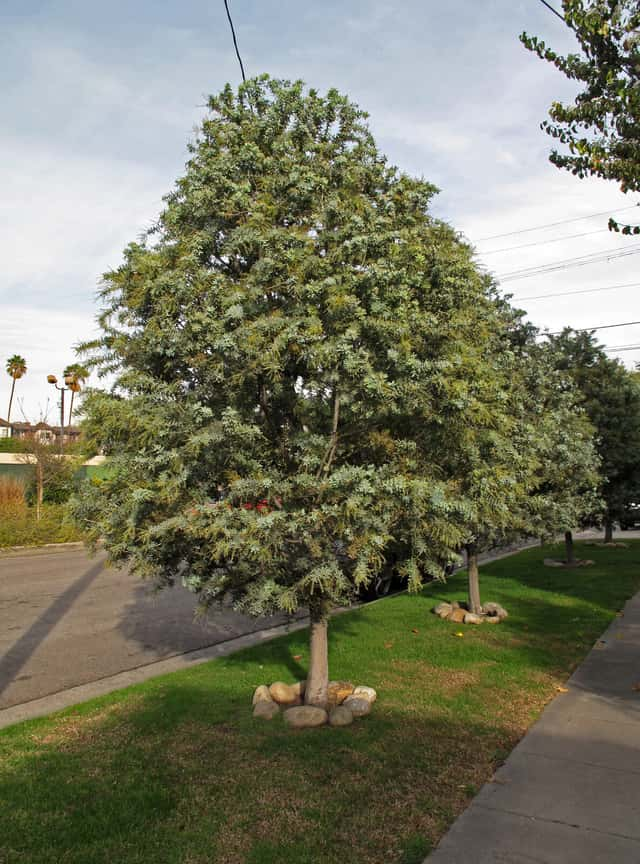
Cootamundra wattle (Acacia baileyana) is a easy-care plant from the Fabaceae family. Cootamundra wattle (Acacia baileyana) is a large shrub or small tree in the legume family (Fabaceae), endemic to a small area of New South Wales, Australia, around Temora and Cootamundra. It has very fine, feathery blue-grey foliage and smooth bark. From late winter into spring it is smothered in go...
Cootamundra wattle grows up to 8.0m, spread of 400cm, watering every 14 days. It is not suitable for indoor environments and safe for pets.
Unlike many tropical plants, Cootamundra wattle tolerates watering mistakes. Best for beginners. Unlike many popular species, Cootamundra wattle is safe to keep around pets.
How to Care for Cootamundra wattle?
TLDR: Cootamundra wattle needs Direct sun, watering every 14 days, and temperatures between -5-30°C with 40-70% humidity.
How Often Should You Water Cootamundra wattle?
In the first year, water deeply every 1–2 weeks in dry weather. Once established it is drought tolerant and only needs water during long dry spells. Avoid waterlogged soil.
How Much Light Does Cootamundra wattle Need?
Full sun, with 6 or more hours of direct light a day; it tolerates light shade but flowers less.
What Is the Best Soil for Cootamundra wattle?
Any well-drained soil — sandy, loamy or light clay — from acidic to neutral. It does not need rich soil.
What Pot Should You Use for Cootamundra wattle?
Best in the ground. In cold climates it can be grown in a large container with a free-draining, loam-based mix and protected in winter.
What Is Cootamundra wattle and Where Does It Come From?
Cootamundra wattle (Acacia baileyana) is a large shrub or small tree in the legume family (Fabaceae), endemic to a small area of New South Wales, Australia, around Temora and Cootamundra. It has very fine, feathery blue-grey foliage and smooth bark. From late winter into spring it is smothered in golden-yellow pompom flowers held in long sprays, often so densely that they hide the leaves. It grows fast to 6–8 m but is short-lived, around 20 years.
How to Propagate Cootamundra wattle?
Seed
The hard seed coat stops germination unless treated with hot water. Plant out young, as wattles dislike root disturbance.
- 1 Put the seeds in a bowl and cover with just-boiled water.
- 2 Leave them to soak overnight; swollen seeds are ready to sow.
- 3 Sow 0.5-1 cm deep in a sandy, free-draining mix.
- 4 Keep moist, warm (around 18 °C or more) and bright.
- 5 Pot seedlings on individually once they are a few centimetres tall.
Materials needed:
Semi-hardwood cutting
Growing from seed is much easier and more common.
- 1 In summer, take 8-10 cm semi-hardwood tip cuttings.
- 2 Strip the leaves from the lower half.
- 3 Dip the base in rooting hormone.
- 4 Insert in a sand and compost mix and keep moist and out of strong sun.
Materials needed:
How Big Does Cootamundra wattle Grow?
TLDR: Cootamundra wattle can reach up to 8.0m tall with Fast growth rate.
Max height
8.0m
Spread
4.0m
Growth rate
Fast
Foliage
Evergreen
Plant Uses
Ornamental
Great for decoration
Is your plant showing symptoms?
Click on the symptom to discover possible causes:
What Diseases Commonly Affect Cootamundra wattle?
TLDR: Cootamundra wattle is susceptible to 3 known diseases. Monitor regularly for early detection.
Scale Insects
Scale insects are small sap-sucking pests that appear as brown, shell-like bumps on plant stems and leaves. There are over 25 species, divided into armored (hard) and unarmored (soft) scales. They feed by piercing plant tissue and extracting sap, which weakens the plant and can lead to yellowing, stunted growth, and even death if left untreated. They also excrete honeydew, which attracts ants and promotes sooty mold growth.
Mealybugs
Mealybugs are small, soft-bodied insects covered with a white, waxy, cottony material. They are common pests of houseplants and outdoor plants in mild climates. These sap-sucking insects feed on plant tissue, causing damage, stunted growth, and can lead to plant death if left untreated. They produce sticky honeydew which attracts sooty mold.
Spider Mites
Spider mites are tiny arachnids (less than 1/20 inch long) related to spiders and ticks that feed on plant sap. They thrive in hot, dry conditions and can cause significant damage to ornamental and vegetable plants. During severe infestations, crop losses can reach 14% or higher as these pests disrupt vital plant processes including photosynthesis, carbon dioxide absorption, and transpiration.
Fun Facts
In the wild it grows only in a small area around the town of Cootamundra, New South Wales.
In Europe it is grown for the cut-flower trade.
Its flowers are a valuable food source for honey bees.
Frequently asked questions
How often should I water Cootamundra wattle?
When does it flower?
Is it frost hardy?
Can it become invasive?
Compare with similar plants
| Attribute | Difficulty | Light | Watering | Pet Safe |
|---|---|---|---|---|
| Field Maple | Easy | Bright indirect | 14d | ✓ |
| Iberian Houseleek | Easy | Direct sun | 14d | ✓ |
| Silver Birch | Easy | Direct sun | 14d | ✓ |
| Common Blanketflower | Easy | Direct sun | 10d | ✓ |





