Fabaceae
Coral Tree (Erythrina): How to Grow and Care for It
Erythrina
Fast-growing, sun-loving tree for warm climates. Plant in full sun in almost any well-drained soil, water moderately while young, and prune after flowering. Keep children and pets away from the toxic seeds.
Every 14 days
Direct sun
0° - 40°C
% - %
Categories
What is Coral Tree?
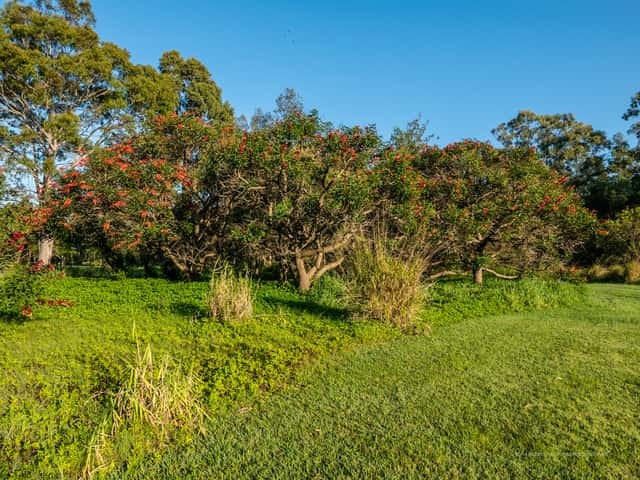
Coral Tree (Erythrina) is a easy-care plant from the Fabaceae family. Erythrina is a genus of about 110-130 trees and shrubs in the pea family, found in tropical and subtropical regions around the world. They are called coral trees for their clusters of bright red or orange flowers, which in many species open while the tree is bare, at the end of the dry or cool seaso...
Coral Tree grows up to 30.0m, watering every 14 days, 0°C – 40°C. It is not suitable for indoor environments and not safe for pets.
Unlike many tropical plants, Coral Tree tolerates watering mistakes. Best for beginners. Without precautions, ingestion can cause irritation in pets. Keep out of reach of cats and dogs.
How to Care for Coral Tree?
TLDR: Coral Tree needs Direct sun, watering every 14 days, and temperatures between 0-40°C with 40-70% humidity.
How Often Should You Water Coral Tree?
Water young trees every 1-2 weeks during the growing season. Established trees are fairly drought tolerant; give little or no water during the dry or leafless period, which also limits weak, rapid growth.
How Much Light Does Coral Tree Need?
Needs full sun. In shade it flowers poorly and grows leggy.
What Is the Best Soil for Coral Tree?
Tolerates almost any soil, sandy to loamy, as long as it drains well. Avoid places where water collects around the roots.
What Pot Should You Use for Coral Tree?
Best planted in the ground. Young plants can live in a large, heavy pot with drainage holes for a few years.
What Is Coral Tree and Where Does It Come From?
Erythrina is a genus of about 110-130 trees and shrubs in the pea family, found in tropical and subtropical regions around the world. They are called coral trees for their clusters of bright red or orange flowers, which in many species open while the tree is bare, at the end of the dry or cool season. Some species have pink, yellow or white flowers. The trunk and branches often carry short thorns, the leaves have three leaflets, and the pods hold red or red-and-black seeds. Sizes range from shrubs to trees about 30 m tall. All species contain toxic alkaloids, especially in the seeds. Well-known species include the cockspur coral tree (E. crista-galli), national flower of Argentina and Uruguay, and the Indian coral tree (E. variegata).
How to Propagate Coral Tree?
Stem cuttings
Many coral trees root so easily that thick branches planted as stakes grow into new trees; they are used this way as living fences.
- 1 Wearing gloves, cut a branch of young growth in late spring or early summer
- 2 Remove most of the leaves
- 3 Plant in well-drained mix or directly in the ground
- 4 Keep lightly moist in a warm, bright place until new shoots appear
Materials needed:
Seed
Handle seeds with gloves and keep them out of reach of children and pets: they are poisonous if swallowed.
- 1 Nick or sand the hard seed coat
- 2 Soak the seeds in water overnight
- 3 Sow 2 cm deep in warm, moist, well-drained soil
- 4 Keep warm and in light until they sprout
Materials needed:
How Big Does Coral Tree Grow?
TLDR: Coral Tree can reach up to 30.0m tall with Fast growth rate.
Max height
30.0m
Growth rate
Fast
Foliage
Deciduous
Warning: Toxic Plant
This plant can be toxic if ingested. Keep out of reach of:
Plant Uses
Ornamental
Great for decoration
Medicinal
Medicinal properties
Medicinal Uses
- Bark of some species used in traditional medicine as a sedative (not recommended without medical guidance; the plant is toxic)
Is your plant showing symptoms?
Click on the symptom to discover possible causes:
What Diseases Commonly Affect Coral Tree?
TLDR: Coral Tree is susceptible to 6 known diseases. Monitor regularly for early detection.
Root Rot
Root rot is a serious fungal disease that affects the root system of plants, causing them to decay and die. It is primarily caused by overwatering, poor drainage, or soil-borne fungi such as Pythium, Phytophthora, Rhizoctonia, and Fusarium. The disease thrives in waterlogged conditions where roots are deprived of oxygen, making them susceptible to fungal infection.
Leaf Spot
Leaf spot is a common fungal disease caused by various pathogens including Alternaria, Ascochyta, Colletotrichum, Septoria, and Venturia. It primarily affects leaves, causing discolored spots that can lead to premature leaf drop if left untreated.
Spider Mites
Spider mites are tiny arachnids (less than 1/20 inch long) related to spiders and ticks that feed on plant sap. They thrive in hot, dry conditions and can cause significant damage to ornamental and vegetable plants. During severe infestations, crop losses can reach 14% or higher as these pests disrupt vital plant processes including photosynthesis, carbon dioxide absorption, and transpiration.
Thrips
Thrips are tiny cigar-shaped insects (1/25-inch long) that damage plants by sucking plant juices and scraping at fruits, flowers, and leaves. With over 6,000 species and rapid reproduction (lifecycle as short as 14 days), they can quickly infest plants and transmit viruses like tomato spotted wilt virus.
Meaning & Symbolism
The ceibo (E. crista-galli) is the national flower of Argentina and Uruguay, the coastal coral tree is the official tree of Los Angeles, and in Hindu and Buddhist tradition the mandara tree of paradise is linked to Erythrina.
Fun Facts
Native Hawaiians made surfboards and canoe floats from the light wood of the wiliwili (Erythrina sandwicensis).
Coral trees are planted to shade coffee and cocoa crops and as living fences.
The cockspur coral tree, or ceibo, is the national flower of both Argentina and Uruguay.
Frequently asked questions
Is the coral tree poisonous?
Why did my coral tree lose all its leaves?
When should I prune it?
How cold can it take?
Compare with similar plants
| Attribute | Difficulty | Light | Watering | Pet Safe |
|---|---|---|---|---|
| Field Maple | Easy | Bright indirect | 14d | ✓ |
| Iberian Houseleek | Easy | Direct sun | 14d | ✓ |
| Silver Birch | Easy | Direct sun | 14d | ✓ |
| Common Blanketflower | Easy | Direct sun | 10d | ✓ |





