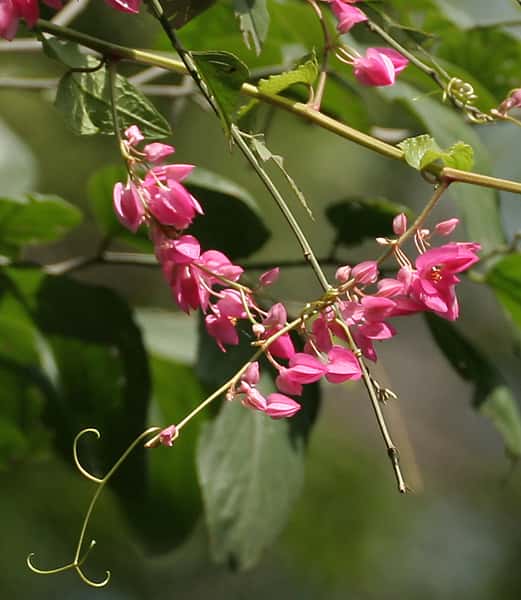
Polygonaceae
Coral Vine: Edible Plant
Antigonon leptopus
Coral vine is an easygoing, fast-growing vine that rewards minimal care with months of pink blooms. Give it full sun, a sturdy support to climb, and well-drained soil, then step back — it tolerates poor soil, heat, and drought once established. Cut it back hard in late winter to control its size.
Every 7 days
Direct sun
15° - 35°C
% - %
Categories
What is Coral Vine?
Coral Vine (Antigonon leptopus) is a easy-care plant from the Polygonaceae family. Coral vine is a vigorous, tendril-climbing perennial vine in the buckwheat family (Polygonaceae), native to the Pacific and Atlantic coastal plains of Mexico. It scrambles rapidly over fences, trellises, and hot walls using coiling tendrils, producing heart-to-arrowhead-shaped green leaves and long,...
Coral Vine grows up to 7.6m, spread of 150cm, watering every 7 days, 15°C – 35°C. It is not suitable for indoor environments and safe for pets.
Unlike many tropical plants, Coral Vine tolerates watering mistakes. Best for beginners. Unlike many popular species, Coral Vine is safe to keep around pets.
How to Care for Coral Vine?
TLDR: Coral Vine needs Direct sun, watering every 7 days, and temperatures between 15-35°C with 40-70% humidity.
How Often Should You Water Coral Vine?
Water new plants regularly to help them establish, then let the soil dry out between waterings. Mature coral vines are drought tolerant and generally need only occasional deep watering — about once a week during hot, dry stretches — since soggy soil invites root rot.
How Much Light Does Coral Vine Need?
Give coral vine full sun for the heaviest bloom; it will tolerate partial shade but flowers less. It even thrives against hot, reflected walls that would scorch many other vines.
What Is the Best Soil for Coral Vine?
This vine is not picky — it tolerates sandy, poor, or average soils — but performs best in fertile, well-drained soil with a slightly acidic to slightly alkaline pH (around 6.1-7.8). Good drainage matters more than fertility, since wet feet lead to root rot.
What Pot Should You Use for Coral Vine?
Best grown in the ground with a trellis, arbor, or fence to climb; if containerized, use a large pot with generous drainage holes since the plant forms bulky tubers and grows quickly.
Care Schedule
Fertilize
Every 45 days
Repot
Every 365 days
What Is Coral Vine and Where Does It Come From?
Coral vine is a vigorous, tendril-climbing perennial vine in the buckwheat family (Polygonaceae), native to the Pacific and Atlantic coastal plains of Mexico. It scrambles rapidly over fences, trellises, and hot walls using coiling tendrils, producing heart-to-arrowhead-shaped green leaves and long, cascading sprays of small coral-pink to white flowers that bloom nearly year-round in warm climates. Beneath the soil it forms fleshy, water-storing tubers that help it survive drought and resprout after being cut back or frozen to the ground. Prized for its nonstop color and toughness, coral vine is also listed as an invasive species in Florida and other subtropical regions.
How to Propagate Coral Vine?
How Big Does Coral Vine Grow?
TLDR: Coral Vine can reach up to 7.6m tall with Fast growth rate.
Max height
7.6m
Spread
1.5m
Growth rate
Fast
Foliage
Evergreen
Plant Uses
Ornamental
Great for decoration
Edible
Can be consumed
Medicinal
Medicinal properties
Medicinal Uses
- Traditional Mexican and Caribbean folk medicine uses hot tea brewed from the aerial parts to relieve cold and flu symptoms; leaf tea has been used to help manage diabetes and high blood pressure. Extracts show antioxidant, anti-inflammatory, and analgesic activity in preliminary studies, though it is not a validated clinical treatment.
Culinary Uses
- The starchy underground tubers have a nutty flavor and are boiled or roasted like a root vegetable in parts of Mexico. Leaves and flowers are sometimes battered and fried, and seeds can be roasted and ground as a flour substitute.
Is your plant showing symptoms?
Click on the symptom to discover possible causes:
What Diseases Commonly Affect Coral Vine?
TLDR: Coral Vine is susceptible to 2 known diseases. Monitor regularly for early detection.
Root Rot
Root rot is a serious fungal disease that affects the root system of plants, causing them to decay and die. It is primarily caused by overwatering, poor drainage, or soil-borne fungi such as Pythium, Phytophthora, Rhizoctonia, and Fusarium. The disease thrives in waterlogged conditions where roots are deprived of oxygen, making them susceptible to fungal infection.
Caterpillars
Caterpillars are the larval stage of moths and butterflies that feed voraciously on plant foliage, stems, flowers, and fruits. Common species include cabbage loopers, tomato hornworms, armyworms, and cutworms. These pests can cause extensive damage by consuming large amounts of plant tissue in a short time. They vary in size from small (1/4 inch) to large (5 inches), with colors ranging from green to brown, often featuring stripes or spots. Caterpillars are highly mobile and can quickly spread throughout gardens, making them one of the most destructive common pests.
Compare with similar plants
| Attribute | Difficulty | Light | Watering | Pet Safe |
|---|---|---|---|---|
| Field Maple | Easy | Bright indirect | 14d | ✓ |
| Silver Birch | Easy | Direct sun | 14d | ✓ |
| Common Blanketflower | Easy | Direct sun | 10d | ✓ |
| Cushion Bush | Easy | Direct sun | 14d | ✓ |





