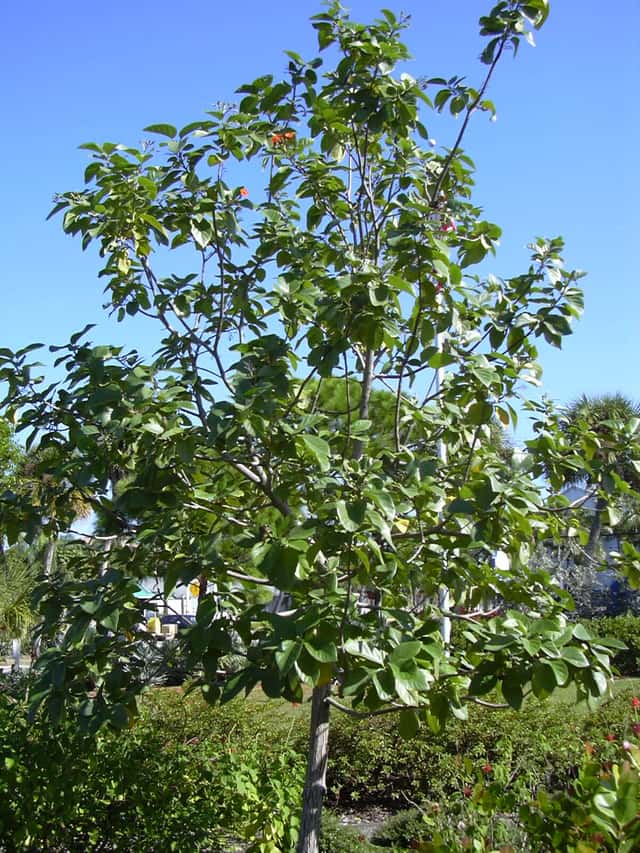
Cordiaceae
Cordia (Cordia)
Cordia
A sturdy outdoor tree or large shrub for warm climates: full sun, fast-draining soil and little water once established. Most cultivated cordias tolerate salt spray and drought but not frost, so they suit frost-free gardens (USDA zones 9 to 11).
Every 7 days
Bright indirect
2° - 40°C
30% - 80%
Categories
What is Cordia?
Cordia (Cordia) is a medium-care plant from the Cordiaceae family. Cordias are the plants of the genus Cordia, about 230 species of shrubs and trees from tropical and subtropical regions worldwide. Most have rough, often sandpapery leaves and clusters of funnel-shaped flowers, followed by small fleshy fruits with sticky pulp. The most planted are the geiger tree (C...
Cordia grows up to 8.0m, spread of 600cm, watering every 7 days, 2°C – 40°C, 30–80% humidity. It is not suitable for indoor environments and safe for pets.
Unlike many popular species, Cordia is safe to keep around pets.
How to Care for Cordia?
TLDR: Cordia needs Bright indirect, watering every 7 days, and temperatures between 2-40°C with 30-80% humidity.
How Often Should You Water Cordia?
Water every few days for the first months after planting, then about once a week in dry spells. Established plants handle drought well; the geiger tree drops leaves in a long drought and recovers when water returns. Avoid soggy soil.
How Much Light Does Cordia Need?
Plant in full sun for the most flowers; partial shade is accepted but flowering drops. Cordias take reflected heat from walls and paving well.
What Is the Best Soil for Cordia?
Any well-drained soil works: sand, loam or clay, acidic to alkaline (pH about 6 to 8.5). They do well in poor sandy and limestone coastal soils.
What Pot Should You Use for Cordia?
Best planted in the ground. Young plants can be kept for a few years in a large, heavy pot (40 litres or more) with drainage holes and a gritty mix.
What Is Cordia and Where Does It Come From?
Cordias are the plants of the genus Cordia, about 230 species of shrubs and trees from tropical and subtropical regions worldwide. Most have rough, often sandpapery leaves and clusters of funnel-shaped flowers, followed by small fleshy fruits with sticky pulp. The most planted are the geiger tree (C. sebestena), with orange-red flowers, the white-flowered Texas olive or anacahuita (C. boissieri), the coastal kou (C. subcordata) and the Assyrian plum (C. myxa), grown for its edible fruit.
How to Propagate Cordia?
Sowing seed
Germination is slow and uneven; fresh seed works best. Seedlings grow slowly at first.
- 1 Collect ripe fruits and remove the sticky pulp
- 2 Soak the seeds in warm water for a day
- 3 Sow 1-2 cm deep in a well-drained seed mix
- 4 Keep warm and lightly moist in bright light
- 5 Pot on seedlings once they have several leaves
Materials needed:
Air layering
Layering keeps the flower colour of a chosen plant, which seed does not always do.
- 1 Pick a healthy branch about as thick as a pencil or more
- 2 Remove a ring of bark 2-3 cm wide
- 3 Wrap the wound with moist sphagnum moss
- 4 Cover with plastic and tie both ends
- 5 Cut below the new roots and pot it up
Materials needed:
How Big Does Cordia Grow?
TLDR: Cordia can reach up to 8.0m tall with Medium growth rate.
Max height
8.0m
Spread
6.0m
Growth rate
Medium
Plant Uses
Ornamental
Great for decoration
Edible
Can be consumed
Medicinal
Medicinal properties
Medicinal Uses
- Fruit syrup of C. boissieri used in folk medicine for coughs
- Fruit pulp of C. myxa used as a demulcent and expectorant for sore throats
Culinary Uses
- Ripe fruits of C. myxa (lasora) eaten fresh, cooked or pickled
- Anacahuita fruit made into jelly (fresh fruit can cause dizziness)
Is your plant showing symptoms?
Click on the symptom to discover possible causes:
What Diseases Commonly Affect Cordia?
TLDR: Cordia is susceptible to 4 known diseases. Monitor regularly for early detection.
Spider Mites
Spider mites are tiny arachnids (less than 1/20 inch long) related to spiders and ticks that feed on plant sap. They thrive in hot, dry conditions and can cause significant damage to ornamental and vegetable plants. During severe infestations, crop losses can reach 14% or higher as these pests disrupt vital plant processes including photosynthesis, carbon dioxide absorption, and transpiration.
Scale Insects
Scale insects are small sap-sucking pests that appear as brown, shell-like bumps on plant stems and leaves. There are over 25 species, divided into armored (hard) and unarmored (soft) scales. They feed by piercing plant tissue and extracting sap, which weakens the plant and can lead to yellowing, stunted growth, and even death if left untreated. They also excrete honeydew, which attracts ants and promotes sooty mold growth.
Caterpillars
Caterpillars are the larval stage of moths and butterflies that feed voraciously on plant foliage, stems, flowers, and fruits. Common species include cabbage loopers, tomato hornworms, armyworms, and cutworms. These pests can cause extensive damage by consuming large amounts of plant tissue in a short time. They vary in size from small (1/4 inch) to large (5 inches), with colors ranging from green to brown, often featuring stripes or spots. Caterpillars are highly mobile and can quickly spread throughout gardens, making them one of the most destructive common pests.
Insect Chewing Damage
Damage caused by pests such as caterpillars, beetles, and grasshoppers that possess chewing mouthparts. They consume plant tissue, reducing the plant's photosynthetic capacity and creating wounds that serve as entry points for fungi and bacteria.
Meaning & Symbolism
The genus honours the German botanist Valerius Cordus (1515-1544). The white anacahuita is the official flower of Nuevo León, Mexico, and in Hawaii kou wood was carved into prized bowls.
Fun Facts
The sticky fruit pulp of some cordias has been used as glue and as birdlime.
Ziricote and bocote, two Cordia woods, are prized for guitars and drums.
The geiger tree was named by Audubon after John Geiger, a Key West ship pilot.
Frequently asked questions
How often should I water a cordia?
Can cordia survive frost?
Are cordia fruits edible?
Why are the leaves of my geiger tree full of holes?
Compare with similar plants
| Attribute | Difficulty | Light | Watering | Pet Safe |
|---|---|---|---|---|
| Dark Fieldcap | Medium | Low light | 2d | ⚠️ |
| Azalea | Medium | Partial shade | 3d | ⚠️ |
| Muriel's Bamboo | Medium | Partial shade | 3d | ✓ |
| Bougainvillea | Medium | Direct sun | 7d | ⚠️ |




