Caryophyllaceae
Dianthus plumarius (Cottage Pink) Care Guide
Dianthus plumarius
Cottage pink thrives in full sun with excellent drainage. Plant in neutral to slightly alkaline, loose soil and let it dry between waterings — wet feet quickly lead to crown and root rot. Feed lightly once a year in early spring, shear back after the first flush of bloom to encourage reflowering, and divide congested clumps every 2-3 years to keep plants vigorous.
Every 7 days
Direct sun
15° - 27°C
% - %
Categories
What is Cottage Pink?
Cottage Pink (Dianthus plumarius) is a easy-care plant from the Caryophyllaceae family. Dianthus plumarius, commonly called cottage pink or garden pink, is a low-growing evergreen perennial in the carnation family (Caryophyllaceae), native to the mountains of Central and Southern Europe from the Eastern Alps to the Balkans. It forms dense, grass-like mats of blue-gray foliage topped fr...
Cottage Pink grows up to 60cm, spread of 60cm, watering every 7 days, 15°C – 27°C. It is not suitable for indoor environments and not safe for pets.
Unlike many tropical plants, Cottage Pink tolerates watering mistakes. Best for beginners. Without precautions, ingestion can cause irritation in pets. Keep out of reach of cats and dogs.
How to Care for Cottage Pink?
TLDR: Cottage Pink needs Direct sun, watering every 7 days, and temperatures between 15-27°C with 40-70% humidity.
How Often Should You Water Cottage Pink?
Water deeply but infrequently, only when the top inch of soil is dry. Always water at the base of the plant — wet foliage encourages fungal disease.
How Much Light Does Cottage Pink Need?
Give at least 6 hours of direct sun daily for the best flowering and compact growth; it tolerates light afternoon shade in hot climates.
What Is the Best Soil for Cottage Pink?
Use loose, well-drained soil (sandy or loamy) with a neutral to slightly alkaline pH of 6.0-7.5. Avoid heavy clay and waterlogged spots.
What Pot Should You Use for Cottage Pink?
An unglazed terracotta pot with generous drainage holes suits cottage pink well, letting excess moisture evaporate through the porous walls; add coarse grit to the potting mix.
Care Schedule
Fertilize
Every 365 days
Repot
Every 913 days
What Is Cottage Pink and Where Does It Come From?
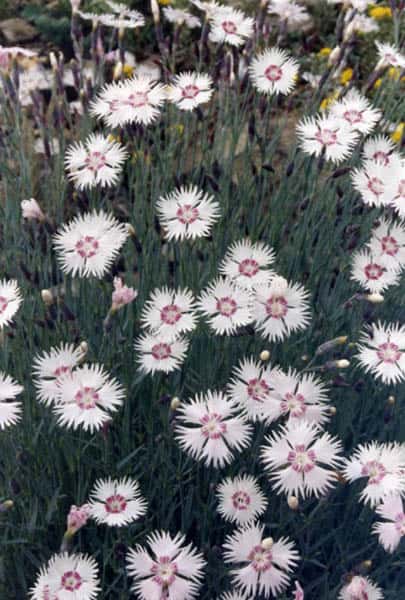
Dianthus plumarius, commonly called cottage pink or garden pink, is a low-growing evergreen perennial in the carnation family (Caryophyllaceae), native to the mountains of Central and Southern Europe from the Eastern Alps to the Balkans. It forms dense, grass-like mats of blue-gray foliage topped from late spring through summer with fragrant, clove-scented single or double flowers in shades of pink, red, and white, often with fringed (feathered) petal edges and a contrasting eye. A classic cottage-garden plant since Elizabethan times, it is prized for borders, rock gardens, and edging.
How to Propagate Cottage Pink?
Division
Divide every 2-3 years to keep clumps vigorous and prevent the center from dying out.
- 1 Lift the clump in early spring before new growth accelerates
- 2 Gently pull or cut the mat into rooted sections with several shoots each
- 3 Replant divisions immediately at the same depth, spaced 20-30 cm apart
- 4 Water well until established
Materials needed:
Stem (Pipings) Cutting
Pipings root readily without hormone powder; keep humidity moderate to avoid rot.
- 1 Take 7-10 cm non-flowering shoot tips (pipings) in early summer
- 2 Strip the lower leaves and trim just below a node
- 3 Insert into a free-draining mix of sand and compost
- 4 Keep in bright, indirect light and consistently moist until rooted
Materials needed:
Seed
Plants grown from seed usually flower in their second year.
- 1 Sow seeds indoors 6-8 weeks before the last frost, or direct-sow in spring
- 2 Press seeds lightly into the soil surface, barely covering them
- 3 Keep at 18-21°C and evenly moist until germination
- 4 Transplant seedlings once they have several true leaves
Materials needed:
How Big Does Cottage Pink Grow?
TLDR: Cottage Pink can reach up to 60cm tall with Medium growth rate.
Max height
60cm
Spread
60cm
Growth rate
Medium
Foliage
Evergreen
Warning: Toxic Plant
This plant can be toxic if ingested. Keep out of reach of:
Plant Uses
Ornamental
Great for decoration
Edible
Can be consumed
Culinary Uses
- Edible petals used to garnish salads and desserts
- Infused into syrups and cordials
- Used to flavor sparkling wine and vinegar
Is your plant showing symptoms?
Click on the symptom to discover possible causes:
What Diseases Commonly Affect Cottage Pink?
TLDR: Cottage Pink is susceptible to 13 known diseases. Monitor regularly for early detection.
Crown Rot
Crown rot is a serious fungal disease that attacks the crown (base) of the plant where the stem meets the soil. It is caused by various fungal pathogens including Phytophthora, Fusarium, and Rhizoctonia. The disease thrives in waterlogged conditions and can quickly spread to kill the entire plant if not addressed promptly.
Root Rot
Root rot is a serious fungal disease that affects the root system of plants, causing them to decay and die. It is primarily caused by overwatering, poor drainage, or soil-borne fungi such as Pythium, Phytophthora, Rhizoctonia, and Fusarium. The disease thrives in waterlogged conditions where roots are deprived of oxygen, making them susceptible to fungal infection.
Gray Mold (Botrytis Blight)
Gray mold, caused by the fungus Botrytis cinerea, is one of the most common fungal diseases in plants. It affects over 200 plant species, including ornamentals, vegetables, fruits, and houseplants. The disease thrives in cool, humid conditions with poor air circulation, causing grayish spots and soft rot on infected tissues.
Rust
Rust is a common fungal disease caused by fungi in the order Pucciniales that affects a wide variety of plants. The disease gets its name from the characteristic orange, yellow, or reddish-brown pustules that appear on leaves, resembling metal rust. This obligate fungal parasite requires living plants to survive and can cause significant economic losses in agricultural crops.
Meaning & Symbolism
Represents admiration and gratitude; a traditional cottage-garden favorite associated with affection since Victorian times.
Fun Facts
The genus name Dianthus comes from the Greek for 'flower of the gods'.
Its fringed, feather-like petals inspired the species name plumarius, Latin for 'feathered'.
Cottage pink is one of the parent species behind modern garden carnations and border pinks.
Frequently asked questions
Is Dianthus plumarius toxic to cats and dogs?
How often should I water cottage pink?
Why is my cottage pink not flowering?
Can I eat cottage pink flowers?
Compare with similar plants
| Attribute | Difficulty | Light | Watering | Pet Safe |
|---|---|---|---|---|
| Field Maple | Easy | Bright indirect | 14d | ✓ |
| Silver Birch | Easy | Direct sun | 14d | ✓ |
| Common Blanketflower | Easy | Direct sun | 10d | ✓ |
| Cushion Bush | Easy | Direct sun | 14d | ✓ |
Choose & Compare
Sources & References
- Dianthus plumarius - NC State Extension Gardener Plant Toolbox
- Growing Dianthus In The Garden - Gardening Know How
- Dianthus Flowers: Growing Tips, Varieties & Care Guide - Garden Design
- Dianthus Pests - Plant Addicts
- Dianthus plumarius - PFAF Plant Database
- Dianthus Flower Meaning and Symbolism of Each Color - Florgeous
- Planting and Growing Dianthus (Pinks) - Almanac
- Tips for Growing Dianthus - Garden Lovers Club





