Ranunculaceae
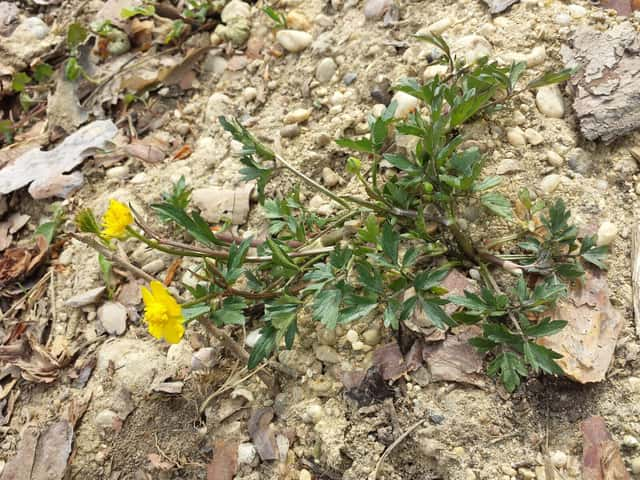
Creeping Buttercup (Ranunculus repens)
Ranunculus repens
Very easy and vigorous: give it sun or light shade and damp soil and it will spread on its own. It copes with waterlogging and, thanks to deep roots, with short dry spells. Keep it away from beds and lawns you want to protect, and wear gloves, as the sap irritates skin.
Every 4 days
Bright indirect
-30° - °C
% - %
Categories
What is Creeping buttercup?
Creeping buttercup (Ranunculus repens) is a easy-care plant from the Ranunculaceae family. Creeping buttercup (Ranunculus repens) is a low perennial in the buttercup family (Ranunculaceae), native to Europe, temperate Asia and north-west Africa and naturalised in damp grassland around the world. Its leaves are split into three toothed, lobed leaflets, often with pale markings, and its ste...
Creeping buttercup grows up to 50cm, spread of 100cm, watering every 4 days. It is not suitable for indoor environments and not safe for pets.
Unlike many tropical plants, Creeping buttercup tolerates watering mistakes. Best for beginners. Without precautions, ingestion can cause irritation in pets. Keep out of reach of cats and dogs.
How to Care for Creeping buttercup?
TLDR: Creeping buttercup needs Bright indirect, watering every 4 days, and temperatures between -30-30°C with 40-70% humidity.
How Often Should You Water Creeping buttercup?
Keep the soil moist; water every few days in dry weather, especially in containers. It tolerates wet, poorly drained ground.
How Much Light Does Creeping buttercup Need?
Full sun to partial shade. It flowers best with several hours of sun a day.
What Is the Best Soil for Creeping buttercup?
Damp, heavy or clay soil suits it best, from acidic to slightly alkaline. Compacted, poorly drained lawns favour it; improving drainage makes it less vigorous.
What Pot Should You Use for Creeping buttercup?
Best in the ground. In a pot, use a wide container with drainage and keep the compost moist; this also keeps its runners under control.
What Is Creeping buttercup and Where Does It Come From?
Creeping buttercup (Ranunculus repens) is a low perennial in the buttercup family (Ranunculaceae), native to Europe, temperate Asia and north-west Africa and naturalised in damp grassland around the world. Its leaves are split into three toothed, lobed leaflets, often with pale markings, and its stems and leaves are lightly hairy. From late spring through summer it carries glossy, five-petalled yellow flowers. It spreads fast by rooting runners and is better known as a lawn and pasture weed than as a garden plant, though double and variegated forms are grown as ground cover.
How to Propagate Creeping buttercup?
Rooted runners
Runners root on their own wherever they touch soil, so it is almost impossible to fail. Plant it where its spread will not become a problem.
- 1 Find a runner that has already rooted at a node
- 2 Cut the runner on both sides of the young plant
- 3 Lift it with its roots
- 4 Replant at the same depth in moist soil and water well
Materials needed:
Seed
Seed stays viable in the soil for years, which is why it keeps coming back in lawns.
- 1 Sow seed on the surface of moist compost
- 2 Press it lightly without covering deeply
- 3 Keep moist in a bright spot
- 4 Plant out seedlings when they have a few leaves
Materials needed:
How Big Does Creeping buttercup Grow?
TLDR: Creeping buttercup can reach up to 50cm tall with Fast growth rate.
Max height
50cm
Spread
1.0m
Growth rate
Fast
Foliage
Semi-evergreen
Warning: Toxic Plant
This plant can be toxic if ingested. Keep out of reach of:
Plant Uses
Ground Cover
Soil coverage
Ornamental
Great for decoration
Is your plant showing symptoms?
Click on the symptom to discover possible causes:
What Diseases Commonly Affect Creeping buttercup?
TLDR: Creeping buttercup is susceptible to 3 known diseases. Monitor regularly for early detection.
Powdery Mildew
Powdery mildew is a common fungal disease caused by various fungi species including Erysiphe, Podosphaera, Oïdium, and Leveillula. It affects over 10,000 plant species worldwide. The disease thrives in warm, dry climates with high humidity and appears as a distinctive white powdery coating on plant surfaces.
Rust
Rust is a common fungal disease caused by fungi in the order Pucciniales that affects a wide variety of plants. The disease gets its name from the characteristic orange, yellow, or reddish-brown pustules that appear on leaves, resembling metal rust. This obligate fungal parasite requires living plants to survive and can cause significant economic losses in agricultural crops.
Gray Mold (Botrytis Blight)
Gray mold, caused by the fungus Botrytis cinerea, is a widespread necrotrophic pathogen affecting over 1,400 plant species. It thrives in cool, humid conditions and attacks weakened or aging plant tissues, causing soft rot and characteristic gray fuzzy growth.
Fun Facts
A single plant can cover several square metres in a season through its runners.
Grazing animals usually avoid it fresh, but it loses its toxicity when dried in hay.
The glossy shine of buttercup petals comes from a special reflective cell layer.
Frequently asked questions
Is creeping buttercup toxic to dogs and cats?
How does creeping buttercup spread?
How do I get rid of it in my lawn?
When does it flower?
Compare with similar plants
| Attribute | Difficulty | Light | Watering | Pet Safe |
|---|---|---|---|---|
| Field Maple | Easy | Bright indirect | 14d | ✓ |
| Iberian Houseleek | Easy | Direct sun | 14d | ✓ |
| Silver Birch | Easy | Direct sun | 14d | ✓ |
| Common Blanketflower | Easy | Direct sun | 10d | ✓ |





