Oxalidaceae
Creeping Woodsorrel (Oxalis corniculata): Complete Care Guide
Oxalis corniculata
Easy-care plant that tolerates a wide range of light and soil conditions. Water weekly, avoiding waterlogging. Grows rapidly and can become invasive — control by removing seed pods before they burst.
Every 7 days
Bright indirect
-15° - 35°C
40% - 80%
Categories
What is Creeping Woodsorrel?
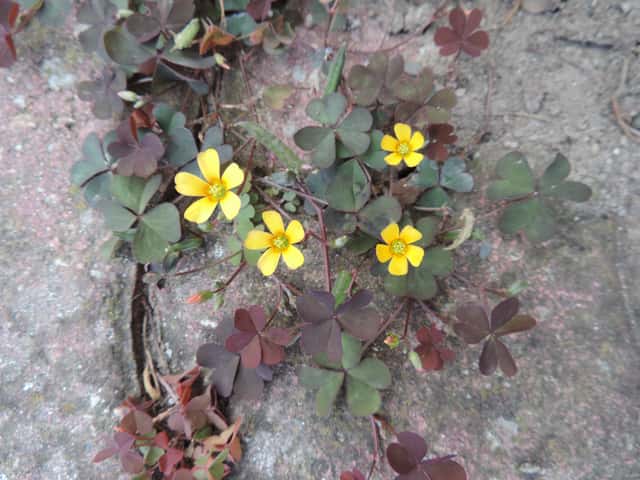
Creeping Woodsorrel (Oxalis corniculata) is a easy-care plant from the Oxalidaceae family. Oxalis corniculata, commonly known as Creeping Woodsorrel, is a low-growing cosmopolitan weed in the Oxalidaceae family. It produces delicate five-petalled yellow flowers and trifoliate heart-shaped leaves that close at night. Found worldwide in gardens, pots, and disturbed soils, it spreads aggress...
Creeping Woodsorrel grows up to 10cm, spread of 50cm, watering every 7 days, -15°C – 35°C, 40–80% humidity. It is suitable for indoor environments and not safe for pets.
Unlike many tropical plants, Creeping Woodsorrel tolerates watering mistakes. Best for beginners. Without precautions, ingestion can cause irritation in pets. Keep out of reach of cats and dogs. Without adequate drainage, root rot can develop within 14 days.
How to Care for Creeping Woodsorrel?
TLDR: Creeping Woodsorrel needs Bright indirect, watering every 7 days, and temperatures between -15-35°C with 40-80% humidity.
How Often Should You Water Creeping Woodsorrel?
Water every 7 days or when the top 2-3 cm of soil is dry. Avoid overwatering, which promotes root rot and uncontrolled stolon spread.
How Much Light Does Creeping Woodsorrel Need?
Thrives in full sun to partial shade. Indoors, place near a bright window. Tolerates light shade but flowers best with a few hours of direct sun.
What Is the Best Soil for Creeping Woodsorrel?
Adapts to well-drained soils ranging from sandy to clay. Prefers pH 5.0–7.5. Avoid compacted or waterlogged soils.
What Pot Should You Use for Creeping Woodsorrel?
Terracotta or plastic pots with adequate drainage holes. Avoid deep pots — the plant has shallow roots.
What Is Creeping Woodsorrel and Where Does It Come From?
Oxalis corniculata, commonly known as Creeping Woodsorrel, is a low-growing cosmopolitan weed in the Oxalidaceae family. It produces delicate five-petalled yellow flowers and trifoliate heart-shaped leaves that close at night. Found worldwide in gardens, pots, and disturbed soils, it spreads aggressively via stolons, rhizomes, and seeds that can be catapulted up to 5 meters. It contains soluble calcium oxalates, making it mildly toxic to cats and dogs in large quantities.
How to Propagate Creeping Woodsorrel?
Seed propagation
Seeds can be ejected up to 5 meters by the plant. Collect carefully to prevent unwanted dispersal.
- 1 Collect seed capsules before they burst open spontaneously
- 2 Sow seeds shallowly on moist, well-drained substrate
- 3 Keep in a bright location and water lightly until germination
Materials needed:
Stolon division
Division is the fastest and most reliable multiplication method.
- 1 Separate a healthy stolon with visible roots
- 2 Plant directly into a new pot with moist substrate
- 3 Water lightly and keep in a well-lit location
Materials needed:
How Big Does Creeping Woodsorrel Grow?
TLDR: Creeping Woodsorrel can reach up to 10cm tall with Fast growth rate.
Max height
10cm
Spread
50cm
Growth rate
Fast
Foliage
Semi-evergreen
Warning: Toxic Plant
This plant can be toxic if ingested. Keep out of reach of:
Plant Uses
Ornamental
Great for decoration
Edible
Can be consumed
Ground Cover
Soil coverage
Culinary Uses
- Young leaves and flowers can be eaten in small amounts in salads or as a garnish, with a pleasant lemony flavor from oxalic acid. Avoid excess consumption.
Is your plant showing symptoms?
Click on the symptom to discover possible causes:
What Diseases Commonly Affect Creeping Woodsorrel?
TLDR: Creeping Woodsorrel is susceptible to 6 known diseases. Monitor regularly for early detection.
Spider Mites
Spider mites are tiny arachnids (less than 1/20 inch long) related to spiders and ticks that feed on plant sap. They thrive in hot, dry conditions and can cause significant damage to ornamental and vegetable plants. During severe infestations, crop losses can reach 14% or higher as these pests disrupt vital plant processes including photosynthesis, carbon dioxide absorption, and transpiration.
Whiteflies
Whiteflies are small, soft-bodied, winged insects closely related to aphids and mealybugs. They are moth-like in appearance, about 1/16 inch long, triangular in shape, and gray-white in color. These sap-sucking pests feed on plant tissue, causing yellowing, stunted growth, and wilting. They also excrete honeydew, which attracts ants and promotes sooty mold growth. Whiteflies can transmit serious plant viruses.
Aphids
Aphids are small, soft-bodied, pear-shaped insects (1/16 to 1/8 inch long) that feed by sucking nutrient-rich sap from plants. They reproduce rapidly and can quickly weaken plants, causing distorted growth and transmitting plant viruses. Aphids come in various colors including green, black, red, yellow, brown, and gray. They secrete honeydew, a sticky substance that attracts ants and encourages sooty mold growth.
Anthracnose
Anthracnose is a fungal disease caused by fungi in the genus Colletotrichum that affects many plants, including vegetables, fruits, and trees. The disease thrives in cool, wet conditions, causing dark, sunken lesions on leaves, stems, flowers, and fruits.
Fun Facts
Creeping Woodsorrel can catapult its seeds up to 5 meters (16 feet) away when the seed pods burst.
The plant folds its leaves at night and reopens them in the morning — a behavior called nyctinasty.
Despite being considered a weed in many countries, it is thought to be native to the Mediterranean region.
The oxalic acid in its leaves is the same compound that gives rhubarb and spinach their characteristic sour taste.
Frequently asked questions
Is Creeping Woodsorrel toxic to cats and dogs?
How often should I water Creeping Woodsorrel?
Can I grow Creeping Woodsorrel in a pot?
How do I stop Creeping Woodsorrel from spreading?
Are the leaves of Creeping Woodsorrel edible?
Compare with similar plants
| Attribute | Difficulty | Light | Watering | Pet Safe |
|---|---|---|---|---|
| Field Maple | Easy | Bright indirect | 14d | ✓ |
| Silver Birch | Easy | Direct sun | 14d | ✓ |
| Common Blanketflower | Easy | Direct sun | 10d | ✓ |
| Cushion Bush | Easy | Direct sun | 14d | ✓ |





