Cucurbitaceae
Cretan Bryony (Bryonia cretica)
Bryonia cretica
It usually shows up on its own and isn't really a garden plant. If it came up in your yard and you have kids or pets, the safest thing is to remove it wearing gloves. In a wilder corner it only needs sun and a shrub or fence to climb.
Every 10 days
Bright indirect
° - °C
% - %
Categories
What is Cretan bryony?
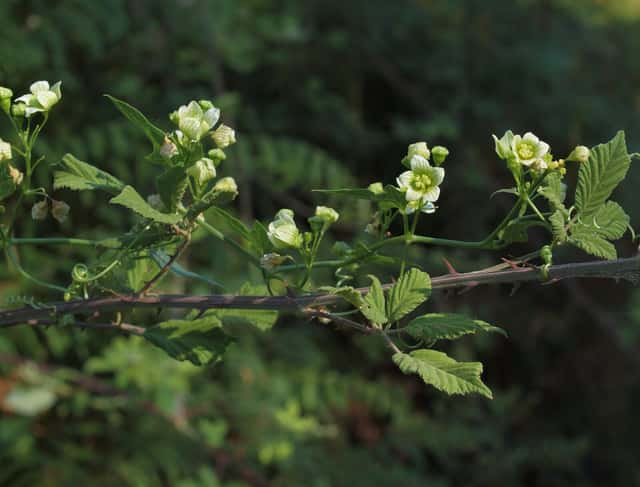
Cretan bryony (Bryonia cretica) is a easy-care plant from the Cucurbitaceae family. Cretan bryony is a wild climbing vine in the cucumber family, common across Europe, North Africa and the Middle East. It scrambles over fences, shrubs and hedges with spiraling tendrils and reaches about 4 m. The leaves are rough with five points. From spring into summer it has small greenish-white...
Cretan bryony grows up to 4.0m, spread of 300cm, watering every 10 days. It is not suitable for indoor environments and not safe for pets.
Unlike many tropical plants, Cretan bryony tolerates watering mistakes. Best for beginners. Without precautions, ingestion can cause irritation in pets. Keep out of reach of cats and dogs.
How to Care for Cretan bryony?
TLDR: Cretan bryony needs Bright indirect, watering every 10 days, and temperatures between 15-30°C with 40-70% humidity.
How Often Should You Water Cretan bryony?
It rarely needs watering, because the thick tuber stores water. Only a young plant needs a drink, about every 10 days in dry weather.
How Much Light Does Cretan bryony Need?
It prefers sun but also grows in part shade along hedges and woodland edges.
What Is the Best Soil for Cretan bryony?
Almost any soil that drains well, ideally neutral or slightly alkaline.
What Pot Should You Use for Cretan bryony?
Not a plant for pots. The tuber runs deep, and the plant is poisonous.
What Is Cretan bryony and Where Does It Come From?
Cretan bryony is a wild climbing vine in the cucumber family, common across Europe, North Africa and the Middle East. It scrambles over fences, shrubs and hedges with spiraling tendrils and reaches about 4 m. The leaves are rough with five points. From spring into summer it has small greenish-white flowers with darker veins, followed by small berries that ripen to shiny red. The top dies back in winter, but a thick tuber underground sends up new growth. It is poisonous, especially the berries and root.
How to Propagate Cretan bryony?
Seed
It usually spreads on its own through seed carried by birds. You need both a male and a female plant nearby to get seed.
- 1 Wear gloves to collect ripe berries
- 2 Sow as soon as they ripen, in a tray in a sheltered spot
- 3 Move seedlings into small individual pots
- 4 Plant out after the last frost
Materials needed:
How Big Does Cretan bryony Grow?
TLDR: Cretan bryony can reach up to 4.0m tall with Fast growth rate.
Max height
4.0m
Spread
3.0m
Growth rate
Fast
Foliage
Deciduous
Warning: Toxic Plant
This plant can be toxic if ingested. Keep out of reach of:
Is your plant showing symptoms?
Click on the symptom to discover possible causes:
Fun Facts
The name Bryonia comes from a Greek word meaning sprouter.
An old root can reach 75 cm long.
In New Zealand it is an unwanted organism because it smothers native plants.
Frequently asked questions
Is Cretan bryony poisonous?
It came up in my yard. Should I pull it or leave it?
How do I get rid of it?
Why did it vanish in winter and come back?
Compare with similar plants
| Attribute | Difficulty | Light | Watering | Pet Safe |
|---|---|---|---|---|
| Field Maple | Easy | Bright indirect | 14d | ✓ |
| Iberian Houseleek | Easy | Direct sun | 14d | ✓ |
| Silver Birch | Easy | Direct sun | 14d | ✓ |
| Common Blanketflower | Easy | Direct sun | 10d | ✓ |
Choose & Compare
Sources & References
- Wikipedia - Bryonia cretica
- RHS - Bryony
- RHS - Bryonia dioica plant entry (search snippet)
- PFAF - Bryonia dioica
- Cretan Flora - Bryonia cretica subsp. cretica
- Environment Canterbury - White bryony
- POWO - Bryonia cretica subsp. dioica (search snippet)
- Wikipedia PT - Bryonia dioica (common names)
- Wikipedia ES - Bryonia dioica (common names, toxicity)





