Asparagaceae
Curly Spider Plant (Chlorophytum comosum 'Bonnie')
Chlorophytum comosum 'Bonnie'
An easy plant: bright light without harsh midday sun, water when the top of the mix dries, and a pot with drainage. Feed lightly in spring and summer. Brown tips usually come from fluoride in the water, too much fertilizer or very dry air.
Every 7 days
Partial shade
13° - 29°C
40% - 60%
Categories
What is Curly Spider Plant?
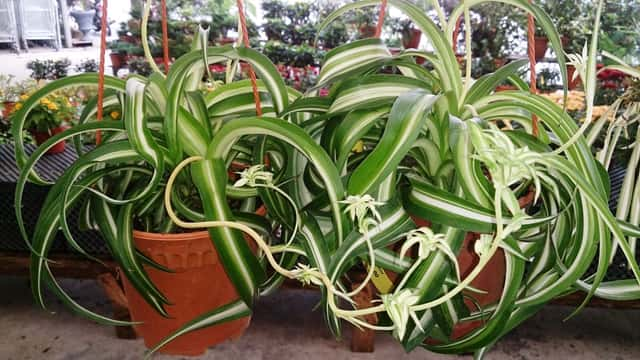
Curly Spider Plant (Chlorophytum comosum 'Bonnie') is a easy-care plant from the Asparagaceae family. 'Bonnie' is a cultivar of the spider plant (Chlorophytum comosum) whose leaves curl into loose ringlets instead of growing straight. It is more compact than the common spider plant, forming a clump 20 to 30 cm tall and up to 45 cm wide. It comes in an all-green form and a variegated form with a crea...
Curly Spider Plant grows up to 30cm, spread of 45cm, watering every 7 days, 13°C – 29°C, 40–60% humidity. It is suitable for indoor environments and safe for pets.
Unlike many tropical plants, Curly Spider Plant tolerates watering mistakes. Best for beginners. Unlike many popular species, Curly Spider Plant is safe to keep around pets. Without adequate drainage, root rot can develop within 14 days.
How to Care for Curly Spider Plant?
TLDR: Curly Spider Plant needs Partial shade, watering every 7 days, and temperatures between 13-29°C with 40-60% humidity.
How Often Should You Water Curly Spider Plant?
Water when the top 2-3 cm of the mix are dry and let the excess drain away. Never leave it standing in water. The drier the mix gets between waterings, the curlier the leaves. Water less in winter. If your tap water is fluoridated, use filtered water or rainwater.
How Much Light Does Curly Spider Plant Need?
Bright, indirect light near a window. It takes 2-3 hours of gentle sun, but strong midday sun scorches the leaves. In low light it grows slowly and the cream stripe may fade.
What Is the Best Soil for Curly Spider Plant?
Indoor potting mix lightened with perlite (about 3 parts mix to 1 part perlite), so it drains well.
What Pot Should You Use for Curly Spider Plant?
A pot with a drainage hole or a hanging basket to show off the trailing plantlets. It likes being slightly root-bound but grows fast, so move it up a size when roots fill the pot.
Care Schedule
Fertilize
Every 21 days
Repot
Every 365 days
What Is Curly Spider Plant and Where Does It Come From?
'Bonnie' is a cultivar of the spider plant (Chlorophytum comosum) whose leaves curl into loose ringlets instead of growing straight. It is more compact than the common spider plant, forming a clump 20 to 30 cm tall and up to 45 cm wide. It comes in an all-green form and a variegated form with a cream stripe down the center of each leaf. Like other spider plants, it sends out long runners with baby plants at the tips, which cascade nicely from a hanging basket. Its thick roots store water, so it forgives a missed watering.
How to Propagate Curly Spider Plant?
Plantlets (spiderettes)
You can also cut the plantlet off and root it in water; pot it up when the roots are about 2 cm long.
- 1 Pick a plantlet on a runner that already shows small root nubs
- 2 Pin it onto a small pot of moist mix while still attached to the mother plant
- 3 Keep the mix lightly moist until it roots
- 4 Cut the runner once the plantlet is firmly anchored
Materials needed:
Division
Divide when you repot.
- 1 Take the plant out of its pot
- 2 Split the clump into sections, each with leaves and roots
- 3 Pot each section in fresh mix
- 4 Water and keep in indirect light
Materials needed:
How Big Does Curly Spider Plant Grow?
TLDR: Curly Spider Plant can reach up to 30cm tall with Fast growth rate.
Max height
30cm
Spread
45cm
Growth rate
Fast
Foliage
Evergreen
Plant Uses
Ornamental
Great for decoration
Air Purifying
Improves air quality
Is your plant showing symptoms?
Click on the symptom to discover possible causes:
What Diseases Commonly Affect Curly Spider Plant?
TLDR: Curly Spider Plant is susceptible to 10 known diseases. Monitor regularly for early detection.
Leaf Tip Necrosis
Leaf tip necrosis, also known as tip burn, is a non-infectious environmental condition where the tips and edges of leaves turn brown, dry, and crispy. This occurs due to various stress factors affecting the plant's ability to maintain healthy tissue at the leaf extremities.
Root Rot
Root rot is a serious fungal disease that affects the root system of plants, causing them to decay and die. It is primarily caused by overwatering, poor drainage, or soil-borne fungi such as Pythium, Phytophthora, Rhizoctonia, and Fusarium. The disease thrives in waterlogged conditions where roots are deprived of oxygen, making them susceptible to fungal infection.
Overwatering
Overwatering occurs when plants receive too much water, depriving roots of oxygen and causing root rot. This environmental stress is one of the most common causes of houseplant death, as waterlogged soil prevents roots from breathing and functioning properly.
Salt Buildup
Salt buildup (also called salt accumulation or fertilizer salt deposits) is an environmental condition where mineral salts accumulate in the soil over time, creating a toxic environment for plant roots. The most visible sign is a white or yellowish crusty layer on the soil surface or around pot edges.
Fun Facts
Its thick roots store water and nutrients, which is why it survives a missed watering.
Too much fertilizer makes it produce fewer plantlets.
It is one of the most compact spider plants, good for desks and shelves.
Frequently asked questions
Why are the leaves of 'Bonnie' curly?
Why does my curly spider plant get brown tips?
Is the curly spider plant toxic to cats and dogs?
How do I propagate it?
Compare with similar plants
| Attribute | Difficulty | Light | Watering | Pet Safe |
|---|---|---|---|---|
| Field Maple | Easy | Bright indirect | 14d | ✓ |
| Iberian Houseleek | Easy | Direct sun | 14d | ✓ |
| Silver Birch | Easy | Direct sun | 14d | ✓ |
| Common Blanketflower | Easy | Direct sun | 10d | ✓ |





