Euphorbiaceae
Cypress Spurge (Euphorbia cyparissias) Growing Guide
Euphorbia cyparissias
A tough, fast-growing perennial that works well as ground cover on dry, sunny beds and banks. It needs almost no care but spreads aggressively by its roots: plant it where it can be contained. The latex is toxic and irritates the skin.
Every 10 days
Bright indirect
° - °C
% - %
Categories
What is Cypress Spurge?
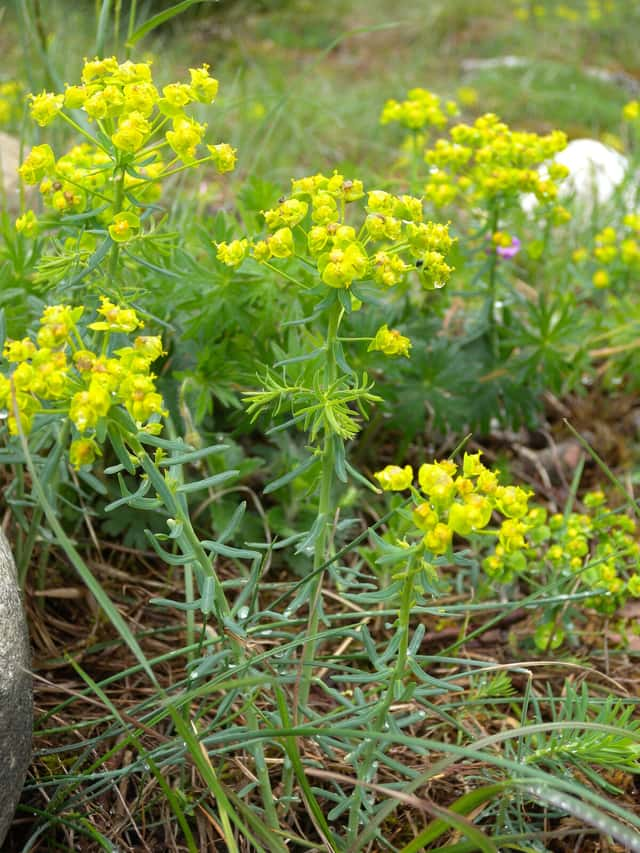
Cypress Spurge (Euphorbia cyparissias) is a easy-care plant from the Euphorbiaceae family. Euphorbia cyparissias is a herbaceous perennial in the Euphorbiaceae family, native to Europe, where it grows in dry meadows, rocky slopes and roadsides. It reaches 20 to 40 cm tall, with upright stems covered in narrow, linear leaves up to 4 cm long that resemble a tiny cypress. In spring and early...
Cypress Spurge grows up to 40cm, spread of 45cm, watering every 10 days. It is not suitable for indoor environments and not safe for pets.
Unlike many tropical plants, Cypress Spurge tolerates watering mistakes. Best for beginners. Without precautions, ingestion can cause irritation in pets. Keep out of reach of cats and dogs.
How to Care for Cypress Spurge?
TLDR: Cypress Spurge needs Bright indirect, watering every 10 days, and temperatures between 15-30°C with 40-70% humidity.
How Often Should You Water Cypress Spurge?
Water about every 10 days while the plant establishes; after that, only during long dry spells. Waterlogged soil and standing water will kill it.
How Much Light Does Cypress Spurge Need?
Grow in full sun for compact foliage and plenty of bracts; it tolerates a little partial shade.
What Is the Best Soil for Cypress Spurge?
Any well-drained soil works, including sandy, rocky and poor soils; avoid heavy, wet ground.
What Pot Should You Use for Cypress Spurge?
Does well in containers, which also keeps it from spreading: use a wide terracotta pot with a drainage hole and a gritty mix.
What Is Cypress Spurge and Where Does It Come From?
Euphorbia cyparissias is a herbaceous perennial in the Euphorbiaceae family, native to Europe, where it grows in dry meadows, rocky slopes and roadsides. It reaches 20 to 40 cm tall, with upright stems covered in narrow, linear leaves up to 4 cm long that resemble a tiny cypress. In spring and early summer it bears clusters of yellow-green bracts that later turn red or purple. It spreads by buds on its roots, forming dense colonies; it was brought to North America as an ornamental in the 1860s and is now listed as a noxious weed in several states.
How to Propagate Cypress Spurge?
Division
Wash tools and hands after handling the plant, as the latex irritates skin and eyes.
- 1 Wear gloves to protect yourself from the latex
- 2 Dig up a section of the colony with roots
- 3 Split it into pieces with shoots and roots
- 4 Replant in well-drained soil and water in
Materials needed:
Seed sowing
The fruits burst and throw seeds up to 5 m; collect them before they open.
- 1 Sow in well-drained soil in spring
- 2 Cover lightly
- 3 Keep slightly moist until germination
Materials needed:
How Big Does Cypress Spurge Grow?
TLDR: Cypress Spurge can reach up to 40cm tall with Fast growth rate.
Max height
40cm
Spread
45cm
Growth rate
Fast
Foliage
Deciduous
Warning: Toxic Plant
This plant can be toxic if ingested. Keep out of reach of:
Plant Uses
Ornamental
Great for decoration
Ground Cover
Soil coverage
Is your plant showing symptoms?
Click on the symptom to discover possible causes:
What Diseases Commonly Affect Cypress Spurge?
TLDR: Cypress Spurge is susceptible to 4 known diseases. Monitor regularly for early detection.
Rust
Rust is a common fungal disease caused by fungi in the order Pucciniales that affects a wide variety of plants. The disease gets its name from the characteristic orange, yellow, or reddish-brown pustules that appear on leaves, resembling metal rust. This obligate fungal parasite requires living plants to survive and can cause significant economic losses in agricultural crops.
Flea beetle damage
Flea beetles are small, jumping insects that feed on the leaves of many vegetable crops. They chew numerous small, circular holes, creating a characteristic 'shothole' appearance. While established plants can often tolerate the damage, young seedlings are highly susceptible and can be stunted or killed if the infestation is severe.
Caterpillars
Caterpillars are the larval stage of moths and butterflies that feed voraciously on plant foliage, stems, flowers, and fruits. Common species include cabbage loopers, tomato hornworms, armyworms, and cutworms. These pests can cause extensive damage by consuming large amounts of plant tissue in a short time. They vary in size from small (1/4 inch) to large (5 inches), with colors ranging from green to brown, often featuring stripes or spots. Caterpillars are highly mobile and can quickly spread throughout gardens, making them one of the most destructive common pests.
Root Rot
Root rot is a serious fungal disease that affects the root system of plants, causing them to decay and die. It is primarily caused by overwatering, poor drainage, or soil-borne fungi such as Pythium, Phytophthora, Rhizoctonia, and Fusarium. The disease thrives in waterlogged conditions where roots are deprived of oxygen, making them susceptible to fungal infection.
Fun Facts
Its name comes from the narrow leaves, which look like those of a cypress.
The fruits burst open and fling seeds up to 5 m away.
Caterpillars of the spurge hawk-moth (Hyles euphorbiae) eat the leaves without being harmed by the latex.
Frequently asked questions
Is Euphorbia cyparissias toxic to cats and dogs?
Is cypress spurge invasive?
How much water does Euphorbia cyparissias need?
Is it cold hardy?
Compare with similar plants
| Attribute | Difficulty | Light | Watering | Pet Safe |
|---|---|---|---|---|
| Field Maple | Easy | Bright indirect | 14d | ✓ |
| Iberian Houseleek | Easy | Direct sun | 14d | ✓ |
| Silver Birch | Easy | Direct sun | 14d | ✓ |
| Common Blanketflower | Easy | Direct sun | 10d | ✓ |





