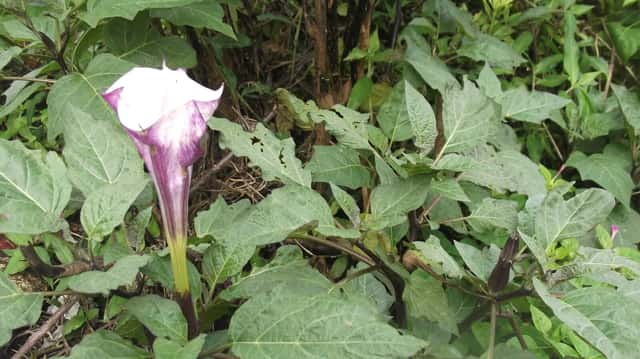
Solanaceae
Devil's Trumpet (Datura metel)
Datura metel
Easy to grow: full sun, well-drained soil and moderate watering. It tolerates drought once established. Every part is highly poisonous: wear gloves when handling it, plant it away from children and pets, and remove seed capsules where you do not want new plants.
Every 7 days
Bright indirect
° - °C
% - %
Categories
What is Devil's trumpet?
Devil's trumpet (Datura metel) is a easy-care plant from the Solanaceae family. Devil's trumpet (Datura metel) is a member of the nightshade family, probably native to the Greater Antilles and long naturalised in India and warm regions worldwide. In cold climates it grows as an annual; where it does not freeze it becomes a short-lived shrubby perennial 1 to 1.8 m tall. It has l...
Devil's trumpet grows up to 1.8m, spread of 120cm, watering every 7 days. It is not suitable for indoor environments and not safe for pets.
Unlike many tropical plants, Devil's trumpet tolerates watering mistakes. Best for beginners. Without precautions, ingestion can cause irritation in pets. Keep out of reach of cats and dogs.
How to Care for Devil's trumpet?
TLDR: Devil's trumpet needs Bright indirect, watering every 7 days, and temperatures between 15-30°C with 40-70% humidity.
How Often Should You Water Devil's trumpet?
Water when the top few centimeters of soil are dry, about once a week in summer. Once established it handles dry spells. Plants in pots need water more often.
How Much Light Does Devil's trumpet Need?
Full sun or light partial shade. In shade it grows weak and flowers poorly.
What Is the Best Soil for Devil's trumpet?
Well-drained soil, ideally rich in organic matter. It tolerates sandy and alkaline soil.
What Pot Should You Use for Devil's trumpet?
A large pot, 40 cm or more, with drainage holes. In cold-winter areas a pot lets you overwinter the plant somewhere cool and sheltered.
What Is Devil's trumpet and Where Does It Come From?
Devil's trumpet (Datura metel) is a member of the nightshade family, probably native to the Greater Antilles and long naturalised in India and warm regions worldwide. In cold climates it grows as an annual; where it does not freeze it becomes a short-lived shrubby perennial 1 to 1.8 m tall. It has large oval leaves, sometimes tinged purple, and hollow stems that may be green or almost black. The upward-facing trumpet flowers are 15 to 20 cm long, open in late afternoon and scent the night air. They can be white, cream, yellow or purple, single or with two or three corollas nested inside each other, as in the form 'Fastuosa'. The fruit is a capsule covered in spiny warts. The whole plant is highly poisonous.
How to Propagate Devil's trumpet?
Seed
Plants self-seed and the seeds stay viable in soil for years. Cut capsules before they split if you do not want volunteers.
- 1 Wear gloves: the seeds are highly toxic
- 2 Sow in small pots 6-8 weeks before the last frost, or directly outdoors once warm
- 3 Cover lightly and keep moist and warm
- 4 Plant out 90 cm apart
Materials needed:
How Big Does Devil's trumpet Grow?
TLDR: Devil's trumpet can reach up to 1.8m tall with Medium growth rate.
Max height
1.8m
Spread
1.2m
Warning: Toxic Plant
This plant can be toxic if ingested. Keep out of reach of:
Plant Uses
Ornamental
Great for decoration
Is your plant showing symptoms?
Click on the symptom to discover possible causes:
What Diseases Commonly Affect Devil's trumpet?
TLDR: Devil's trumpet is susceptible to 4 known diseases. Monitor regularly for early detection.
Whiteflies
Whiteflies are small, soft-bodied, winged insects closely related to aphids and mealybugs. They are moth-like in appearance, about 1/16 inch long, triangular in shape, and gray-white in color. These sap-sucking pests feed on plant tissue, causing yellowing, stunted growth, and wilting. They also excrete honeydew, which attracts ants and promotes sooty mold growth. Whiteflies can transmit serious plant viruses.
Mealybugs
Mealybugs are small, soft-bodied insects covered with a white, waxy, cottony material. They are common pests of houseplants and outdoor plants in mild climates. These sap-sucking insects feed on plant tissue, causing damage, stunted growth, and can lead to plant death if left untreated. They produce sticky honeydew which attracts sooty mold.
Spider Mites
Spider mites are tiny arachnids (less than 1/20 inch long) related to spiders and ticks that feed on plant sap. They thrive in hot, dry conditions and can cause significant damage to ornamental and vegetable plants. During severe infestations, crop losses can reach 14% or higher as these pests disrupt vital plant processes including photosynthesis, carbon dioxide absorption, and transpiration.
Viruses
Viral diseases are infectious conditions caused by tiny intracellular parasites that require host cells to survive. Viruses are typically transmitted to plants by insects and mites. Some viruses are severe plant pathogens, such as Rose Rosette Virus or Tobacco Rattle Virus.
Meaning & Symbolism
In Hinduism it is sacred to Shiva and called the "crown of Shiva"; its flowers and fruits are offered to him.
Fun Facts
The name Datura comes from the Hindi word dhatura.
Some forms have two or three corollas nested inside each other.
Its seeds can sprout after many years in the soil.
Frequently asked questions
Is devil's trumpet poisonous?
What is the difference between Datura and Brugmansia?
When does it flower?
What pests attack it?
Compare with similar plants
| Attribute | Difficulty | Light | Watering | Pet Safe |
|---|---|---|---|---|
| Field Maple | Easy | Bright indirect | 14d | ✓ |
| Iberian Houseleek | Easy | Direct sun | 14d | ✓ |
| Silver Birch | Easy | Direct sun | 14d | ✓ |
| Common Blanketflower | Easy | Direct sun | 10d | ✓ |





