Aizoaceae
Dewplant (Disphyma)
Disphyma
Easy: full sun or part shade, free-draining soil (it takes sand, poor and salty soil) and little water once established. It handles light frost and salty wind. The main risk is waterlogged soil.
Every 14 days
Bright indirect
° - °C
% - %
Categories
What is Dewplant?
Dewplant (Disphyma) is a easy-care plant from the Aizoaceae family. Disphyma is a small genus of creeping succulents in the family Aizoaceae, with four species from New Zealand, Australia and the Cape region of South Africa. They grow mostly on the coast: cliffs, rock stacks, cobble beaches and the edges of salt flats. The branches lie flat and root at the nodes, fo...
Dewplant grows up to 30cm, spread of 100cm, watering every 14 days. It is not suitable for indoor environments and safe for pets.
Unlike many tropical plants, Dewplant tolerates watering mistakes. Best for beginners. Unlike many popular species, Dewplant is safe to keep around pets.
How to Care for Dewplant?
TLDR: Dewplant needs Bright indirect, watering every 14 days, and temperatures between 15-30°C with 40-70% humidity.
How Often Should You Water Dewplant?
Once established, water only when the soil is dry, roughly every 2 weeks in warm weather. In winter or cold, wet weather, hardly water at all. In pots, never leave water in the saucer.
How Much Light Does Dewplant Need?
Full sun is best; part shade is fine. In low light it flowers less and the stems get sparse.
What Is the Best Soil for Dewplant?
Light, free-draining soil. It does well in sand, rocky, poor or saline soil at any pH. Avoid heavy soil that stays wet.
What Pot Should You Use for Dewplant?
A wide, shallow pot or trough with a drainage hole, so the stems can spread and trail over the edge.
What Is Dewplant and Where Does It Come From?
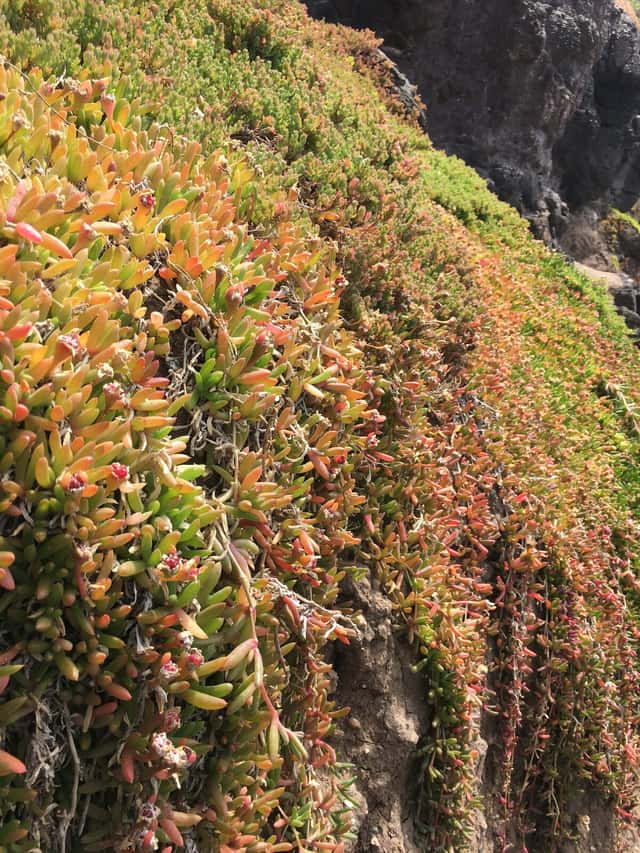
Disphyma is a small genus of creeping succulents in the family Aizoaceae, with four species from New Zealand, Australia and the Cape region of South Africa. They grow mostly on the coast: cliffs, rock stacks, cobble beaches and the edges of salt flats. The branches lie flat and root at the nodes, forming mats up to about 30 cm tall and 1 m wide. The fleshy leaves are round to almost triangular in cross-section. The daisy-like flowers are purple, pink or white and appear mainly in spring and summer.
How to Propagate Dewplant?
Rooted stem piece
Stems root on their own where they touch the ground, so this is the quickest way to get new plants.
- 1 Cut a piece of stem that already has roots at the nodes
- 2 Plant it straight into sandy soil
- 3 Water lightly until it settles
Materials needed:
Seed
Fresh seed germinates best.
- 1 Use fresh seed
- 2 Scatter on a sandy mix without burying deeply
- 3 Keep lightly moist and in good light
Materials needed:
How Big Does Dewplant Grow?
TLDR: Dewplant can reach up to 30cm tall with Medium growth rate.
Max height
30cm
Spread
1.0m
Foliage
Evergreen
Plant Uses
Ornamental
Great for decoration
Ground Cover
Soil coverage
Edible
Can be consumed
Culinary Uses
- Leaves used in stir fries, soups and pickles in Australia
Is your plant showing symptoms?
Click on the symptom to discover possible causes:
What Diseases Commonly Affect Dewplant?
TLDR: Dewplant is susceptible to 4 known diseases. Monitor regularly for early detection.
Root Rot
Root rot is a serious fungal disease that affects the root system of plants, causing them to decay and die. It is primarily caused by overwatering, poor drainage, or soil-borne fungi such as Pythium, Phytophthora, Rhizoctonia, and Fusarium. The disease thrives in waterlogged conditions where roots are deprived of oxygen, making them susceptible to fungal infection.
Overwatering
Overwatering occurs when plants receive too much water, depriving roots of oxygen and causing root rot. This environmental stress is one of the most common causes of houseplant death, as waterlogged soil prevents roots from breathing and functioning properly.
Mealybugs
Mealybugs are small, soft-bodied insects covered with a white, waxy, cottony material. They are common pests of houseplants and outdoor plants in mild climates. These sap-sucking insects feed on plant tissue, causing damage, stunted growth, and can lead to plant death if left untreated. They produce sticky honeydew which attracts sooty mold.
Slugs and Snails
Slugs and snails are mollusks that feed on plant tissue, causing irregular holes in leaves and damage to young seedlings. They are most active at night and in moist conditions, leaving characteristic silvery slime trails. These pests can quickly devastate gardens, especially during wet seasons.
Fun Facts
The New Zealand species is called horokaka in Maori.
It forms natural hybrids with ice plants of the genus Carpobrotus.
Its stems root at the nodes and help hold the soil in place.
Frequently asked questions
How often should I water a dewplant?
Does it need sun?
Can it take salt spray and saline soil?
How do I propagate it?
Compare with similar plants
| Attribute | Difficulty | Light | Watering | Pet Safe |
|---|---|---|---|---|
| Field Maple | Easy | Bright indirect | 14d | ✓ |
| Iberian Houseleek | Easy | Direct sun | 14d | ✓ |
| Silver Birch | Easy | Direct sun | 14d | ✓ |
| Common Blanketflower | Easy | Direct sun | 10d | ✓ |





