Convolvulaceae
Distimake (Woodrose Genus)
Distimake
Easy, vigorous vines for sun, heat and a sturdy support. They do not tolerate frost. Prune often to keep growth in check and do not let seeds spread near natural areas.
Every 4 days
Bright indirect
° - °C
% - %
Categories
What is Woodroses (genus Distimake)?
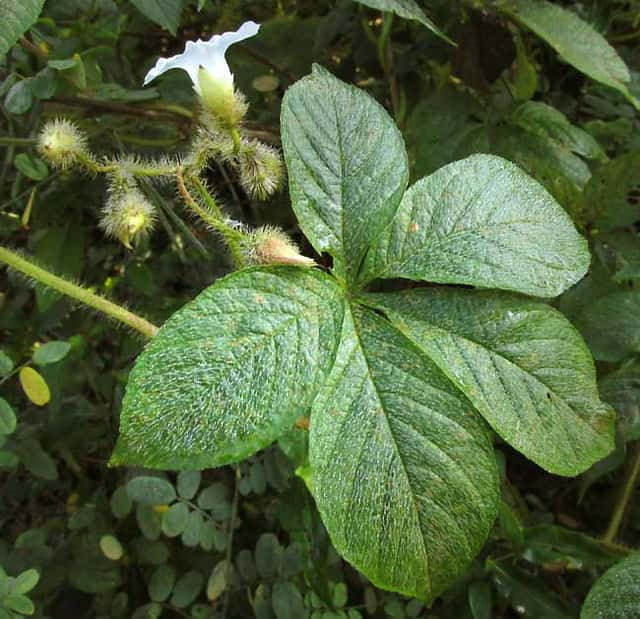
Woodroses (genus Distimake) (Distimake) is a easy-care plant from the Convolvulaceae family. Distimake is a genus of climbing vines in the morning glory family (Convolvulaceae), with about 50 species from the tropics and subtropics. Until 2017 these plants were placed in Merremia, and many are still sold under that name. The leaves are usually deeply lobed or divided like the fingers of a h...
Woodroses (genus Distimake) grows up to watering every 4 days. It is not suitable for indoor environments and safe for pets.
Unlike many tropical plants, Woodroses (genus Distimake) tolerates watering mistakes. Best for beginners. Unlike many popular species, Woodroses (genus Distimake) is safe to keep around pets.
How to Care for Woodroses (genus Distimake)?
TLDR: Woodroses (genus Distimake) needs Bright indirect, watering every 4 days, and temperatures between 15-30°C with 40-70% humidity.
How Often Should You Water Woodroses (genus Distimake)?
Moderate watering: water when the top layer of soil is dry, about every 3-5 days in hot weather. Avoid waterlogged soil.
How Much Light Does Woodroses (genus Distimake) Need?
Full sun is best; they tolerate part shade but flower less. The flowers open in sun and close on cloudy days.
What Is the Best Soil for Woodroses (genus Distimake)?
Ordinary, well-drained garden soil. In pots, use a light mix with some sand.
What Pot Should You Use for Woodroses (genus Distimake)?
A large, deep pot with a trellis or stake; in cold climates, grow in a pot and bring indoors for winter.
What Is Woodroses (genus Distimake) and Where Does It Come From?
Distimake is a genus of climbing vines in the morning glory family (Convolvulaceae), with about 50 species from the tropics and subtropics. Until 2017 these plants were placed in Merremia, and many are still sold under that name. The leaves are usually deeply lobed or divided like the fingers of a hand, and the funnel-shaped flowers open in sun, mostly white or yellow. The best known is D. tuberosus, the woodrose, with yellow flowers and dry seed pods that look like wooden roses, used in dried arrangements. D. dissectus, white with a purple throat, is also grown. Several species grow very fast and have become invasive on Pacific islands, in Hawaii and in Florida.
How to Propagate Woodroses (genus Distimake)?
Seed
Without nicking, seeds can take months to germinate. Seeds stay viable for years.
- 1 Sand or nick the hard seed coat
- 2 Soak in warm water for 12-24 hours
- 3 Sow 1-2 cm deep in moist mix
- 4 Keep warm, around 27 °C, until germination
Materials needed:
How Big Does Woodroses (genus Distimake) Grow?
TLDR: Woodroses (genus Distimake) can reach up to ?cm tall with Fast growth rate.
Growth rate
Fast
Plant Uses
Ornamental
Great for decoration
Is your plant showing symptoms?
Click on the symptom to discover possible causes:
What Diseases Commonly Affect Woodroses (genus Distimake)?
TLDR: Woodroses (genus Distimake) is susceptible to 3 known diseases. Monitor regularly for early detection.
Aphids
Aphids are small, soft-bodied, pear-shaped insects (1/16 to 1/8 inch long) that feed by sucking nutrient-rich sap from plants. They reproduce rapidly and can quickly weaken plants, causing distorted growth and transmitting plant viruses. Aphids come in various colors including green, black, red, yellow, brown, and gray. They secrete honeydew, a sticky substance that attracts ants and encourages sooty mold growth.
Whiteflies
Whiteflies are small, soft-bodied, winged insects closely related to aphids and mealybugs. They are moth-like in appearance, about 1/16 inch long, triangular in shape, and gray-white in color. These sap-sucking pests feed on plant tissue, causing yellowing, stunted growth, and wilting. They also excrete honeydew, which attracts ants and promotes sooty mold growth. Whiteflies can transmit serious plant viruses.
Spider Mites
Spider mites are tiny arachnids (less than 1/20 inch long) related to spiders and ticks that feed on plant sap. They thrive in hot, dry conditions and can cause significant damage to ornamental and vegetable plants. During severe infestations, crop losses can reach 14% or higher as these pests disrupt vital plant processes including photosynthesis, carbon dioxide absorption, and transpiration.
Fun Facts
The dry fruit of woodrose (D. tuberosus) looks like a rose carved from wood and is used in dried arrangements.
Rafinesque coined the name Distimake in 1838, but it only came back into use in 2017.
The flowers open in sun and close when the weather turns cloudy.
Frequently asked questions
Are Distimake and Merremia the same?
Are they cold hardy?
Why won't the seeds germinate?
Are they invasive?
Compare with similar plants
| Attribute | Difficulty | Light | Watering | Pet Safe |
|---|---|---|---|---|
| Field Maple | Easy | Bright indirect | 14d | ✓ |
| Iberian Houseleek | Easy | Direct sun | 14d | ✓ |
| Silver Birch | Easy | Direct sun | 14d | ✓ |
| Common Blanketflower | Easy | Direct sun | 10d | ✓ |
Choose & Compare
Sources & References
- Wikipedia - Distimake
- Phytotaxa - Merremia s.l. recircumscription (Simoes & Staples 2017 context)
- Rheedea - Distimake (Convolvulaceae) expanded: five additional species from the Neotropics and Eastern Africa
- Atlas of Florida Plants (USF) - Distimake
- Wikipedia - Distimake tuberosus
- Hawaii Invasive Species Council - Wood rose
- Top Tropicals - Merremia tuberosa (Large Woodrose)





