Solanaceae
Downy Thorn-Apple (Datura innoxia)
Datura innoxia
If you keep one, wear gloves to handle it and keep it well away from children and pets. It wants sun, soil that drains and not much water. Cut off the seed pods before they open so it doesn't spread. With small children or pets at home, the safest choice is not to grow it.
Every 7 days
Bright indirect
° - °C
% - %
Categories
What is Downy thorn-apple?
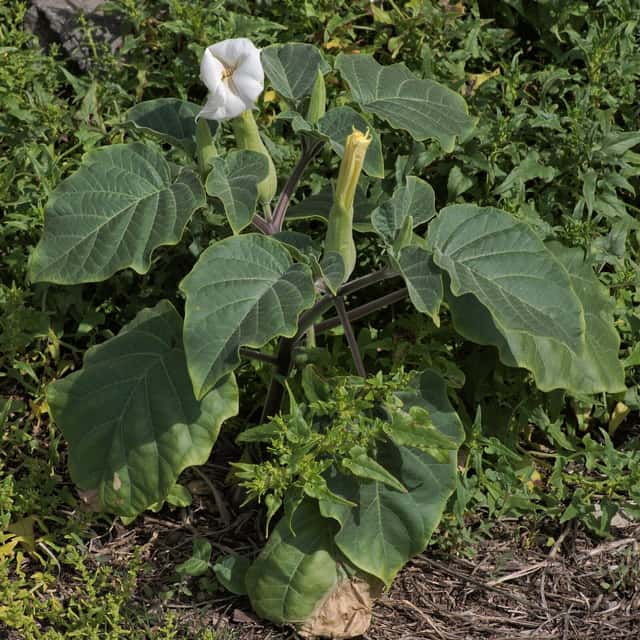
Downy thorn-apple (Datura innoxia) is a easy-care plant from the Solanaceae family. Downy thorn-apple (Datura innoxia) is a highly poisonous plant in the tomato family, native to the southwestern US, Mexico and Central America. It grows 60 cm to 1.5 m tall, and its stems and leaves are covered in soft grey hairs. The flowers are big white or cream trumpets up to 19 cm long, opening...
Downy thorn-apple grows up to 1.5m, spread of 180cm, watering every 7 days. It is not suitable for indoor environments and not safe for pets.
Unlike many tropical plants, Downy thorn-apple tolerates watering mistakes. Best for beginners. Without precautions, ingestion can cause irritation in pets. Keep out of reach of cats and dogs.
How to Care for Downy thorn-apple?
TLDR: Downy thorn-apple needs Bright indirect, watering every 7 days, and temperatures between 15-30°C with 40-70% humidity.
How Often Should You Water Downy thorn-apple?
Water when the top of the soil dries out, about once a week in hot weather. Once settled it copes with dry spells.
How Much Light Does Downy thorn-apple Need?
Full sun or part shade. It does poorly in full shade.
What Is the Best Soil for Downy thorn-apple?
It accepts average, sandy or alkaline soil, and does best in rich soil that drains well.
What Pot Should You Use for Downy thorn-apple?
A large pot with drainage holes, somewhere children and pets can't reach.
What Is Downy thorn-apple and Where Does It Come From?
Downy thorn-apple (Datura innoxia) is a highly poisonous plant in the tomato family, native to the southwestern US, Mexico and Central America. It grows 60 cm to 1.5 m tall, and its stems and leaves are covered in soft grey hairs. The flowers are big white or cream trumpets up to 19 cm long, opening in the late afternoon with a strong scent at night. The fruit is a round capsule covered in spines. It escapes from gardens easily and is invasive in several places. Every part of the plant is toxic.
How to Propagate Downy thorn-apple?
Seed
It drops seed on its own, and the seeds stay alive in soil for years. Cut the pods off before they open. Growing Datura is banned in some places, so check your local rules.
- 1 Wear gloves: the seeds are highly toxic
- 2 Sow in small pots 6 to 8 weeks before the last frost
- 3 Keep the soil moist and warm
- 4 Plant out after the last frost, 90 cm apart
Materials needed:
How Big Does Downy thorn-apple Grow?
TLDR: Downy thorn-apple can reach up to 1.5m tall with Medium growth rate.
Max height
1.5m
Spread
1.8m
Warning: Toxic Plant
This plant can be toxic if ingested. Keep out of reach of:
Plant Uses
Ornamental
Great for decoration
Is your plant showing symptoms?
Click on the symptom to discover possible causes:
What Diseases Commonly Affect Downy thorn-apple?
TLDR: Downy thorn-apple is susceptible to 4 known diseases. Monitor regularly for early detection.
Mosaic Virus
Mosaic virus is a group of plant viruses that cause mottled, patchy patterns on leaves and can affect a wide variety of plants. The virus creates characteristic yellow, white, and green mosaic patterns, often accompanied by stunted growth and deformed plant parts. This highly contagious disease spreads rapidly through insect vectors and contaminated tools.
Whiteflies
Whiteflies are small, soft-bodied, winged insects closely related to aphids and mealybugs. They are moth-like in appearance, about 1/16 inch long, triangular in shape, and gray-white in color. These sap-sucking pests feed on plant tissue, causing yellowing, stunted growth, and wilting. They also excrete honeydew, which attracts ants and promotes sooty mold growth. Whiteflies can transmit serious plant viruses.
Mealybugs
Mealybugs are small, soft-bodied insects covered with a white, waxy, cottony material. They are common pests of houseplants and outdoor plants in mild climates. These sap-sucking insects feed on plant tissue, causing damage, stunted growth, and can lead to plant death if left untreated. They produce sticky honeydew which attracts sooty mold.
Spider Mites
Spider mites are tiny arachnids (less than 1/20 inch long) related to spiders and ticks that feed on plant sap. They thrive in hot, dry conditions and can cause significant damage to ornamental and vegetable plants. During severe infestations, crop losses can reach 14% or higher as these pests disrupt vital plant processes including photosynthesis, carbon dioxide absorption, and transpiration.
Meaning & Symbolism
Many Native American peoples used it in rites of passage, and the Aztecs called it toloatzin.
Fun Facts
The name innoxia means harmless, which is the opposite of the truth.
Each flower opens late in the day and lasts only until the next afternoon.
Toxin levels can vary up to five times from one plant to another.
Frequently asked questions
Is downy thorn-apple poisonous?
What should I do if someone ate it or drank a tea made from it?
It came up in my yard. Should I pull it out?
How is it different from angel's trumpet (Brugmansia)?
Can I plant it near tomatoes?
Compare with similar plants
| Attribute | Difficulty | Light | Watering | Pet Safe |
|---|---|---|---|---|
| Field Maple | Easy | Bright indirect | 14d | ✓ |
| Iberian Houseleek | Easy | Direct sun | 14d | ✓ |
| Silver Birch | Easy | Direct sun | 14d | ✓ |
| Common Blanketflower | Easy | Direct sun | 10d | ✓ |





