Pittosporaceae
Dwarf Japanese Mock Orange (Pittosporum tobira 'Nanum')
Pittosporum tobira 'Nanum'
An easy, low-maintenance shrub: full sun or part shade, well-drained soil, moderate watering and almost no pruning. Drought tolerant once established, but not of waterlogged soil or hard frost.
Every 7 days
Bright indirect
-10° - °C
% - %
Categories
What is Dwarf Japanese Mock Orange?
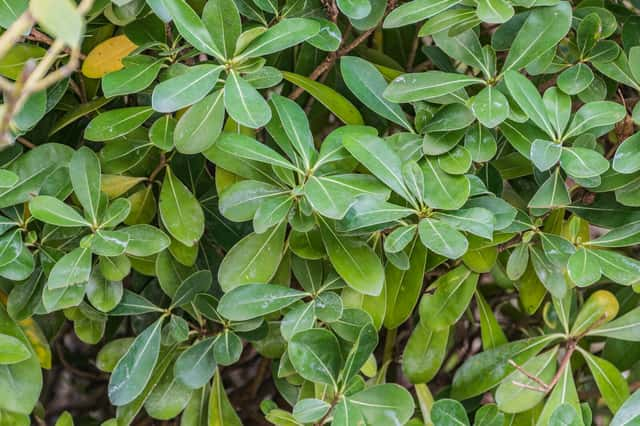
Dwarf Japanese Mock Orange (Pittosporum tobira 'Nanum') is a easy-care plant from the Pittosporaceae family. Pittosporum tobira 'Nanum' is the dwarf form of Japanese pittosporum: a compact, rounded evergreen shrub that grows slowly to 60 cm-1 m tall and up to 1.5 m wide, about a third the size of the species. The glossy, dark green, leathery leaves sit in whorls at the branch tips. In late spring and early...
Dwarf Japanese Mock Orange grows up to 1.0m, spread of 150cm, watering every 7 days. It is suitable for indoor environments and safe for pets.
Unlike many tropical plants, Dwarf Japanese Mock Orange tolerates watering mistakes. Best for beginners. Unlike many popular species, Dwarf Japanese Mock Orange is safe to keep around pets. Without adequate drainage, root rot can develop within 14 days.
How to Care for Dwarf Japanese Mock Orange?
TLDR: Dwarf Japanese Mock Orange needs Bright indirect, watering every 7 days, and temperatures between -10-30°C with 40-70% humidity.
How Often Should You Water Dwarf Japanese Mock Orange?
Water regularly in the first year, letting the surface dry between waterings. Once established it is drought tolerant; in pots, water when the top few centimetres are dry. Never let it sit in water.
How Much Light Does Dwarf Japanese Mock Orange Need?
Full sun or part shade. In deep shade it gets leggy and flowers less.
What Is the Best Soil for Dwarf Japanese Mock Orange?
Well-drained, moderately fertile soil; sand, loam or chalk, acid to alkaline. Avoid soil that stays wet.
What Pot Should You Use for Dwarf Japanese Mock Orange?
A medium to large pot with drainage holes; it stays happy in a container for years.
What Is Dwarf Japanese Mock Orange and Where Does It Come From?
Pittosporum tobira 'Nanum' is the dwarf form of Japanese pittosporum: a compact, rounded evergreen shrub that grows slowly to 60 cm-1 m tall and up to 1.5 m wide, about a third the size of the species. The glossy, dark green, leathery leaves sit in whorls at the branch tips. In late spring and early summer it can bear small clusters of white to cream flowers with a sweet, orange-blossom scent. It handles wind and salt spray, so it suits coastal gardens, borders, low hedges and containers.
How to Propagate Dwarf Japanese Mock Orange?
Stem cutting
As a cultivar, only cuttings keep the dwarf habit; seedlings revert to the full-size species.
- 1 In summer, cut 8-10 cm semi-ripe tips
- 2 Remove the lower leaves and dip the base in rooting hormone
- 3 Insert in a light mix with sand or perlite
- 4 Keep in bright light out of direct sun, with the mix lightly moist
- 5 Pot on once the roots are well formed
Materials needed:
How Big Does Dwarf Japanese Mock Orange Grow?
TLDR: Dwarf Japanese Mock Orange can reach up to 1.0m tall with Slow growth rate.
Max height
1.0m
Spread
1.5m
Growth rate
Slow
Foliage
Evergreen
Plant Uses
Ornamental
Great for decoration
Is your plant showing symptoms?
Click on the symptom to discover possible causes:
What Diseases Commonly Affect Dwarf Japanese Mock Orange?
TLDR: Dwarf Japanese Mock Orange is susceptible to 8 known diseases. Monitor regularly for early detection.
Aphids
Aphids are small, soft-bodied, pear-shaped insects (1/16 to 1/8 inch long) that feed by sucking nutrient-rich sap from plants. They reproduce rapidly and can quickly weaken plants, causing distorted growth and transmitting plant viruses. Aphids come in various colors including green, black, red, yellow, brown, and gray. They secrete honeydew, a sticky substance that attracts ants and encourages sooty mold growth.
Scale Insects
Scale insects are small sap-sucking pests that appear as brown, shell-like bumps on plant stems and leaves. There are over 25 species, divided into armored (hard) and unarmored (soft) scales. They feed by piercing plant tissue and extracting sap, which weakens the plant and can lead to yellowing, stunted growth, and even death if left untreated. They also excrete honeydew, which attracts ants and promotes sooty mold growth.
Mealybugs
Mealybugs are small, soft-bodied insects covered with a white, waxy, cottony material. They are common pests of houseplants and outdoor plants in mild climates. These sap-sucking insects feed on plant tissue, causing damage, stunted growth, and can lead to plant death if left untreated. They produce sticky honeydew which attracts sooty mold.
Leaf Spot
Leaf spot is a common fungal disease caused by various pathogens including Alternaria, Ascochyta, Colletotrichum, Septoria, and Venturia. It primarily affects leaves, causing discolored spots that can lead to premature leaf drop if left untreated.
Fun Facts
Its flowers smell like orange blossom, hence the name mock orange.
It is a favourite for seaside gardens because it shrugs off wind and salt spray.
It grows to about a third of the size of the species.
Frequently asked questions
How is it different from regular Japanese pittosporum?
Is it toxic to cats and dogs?
Can it grow in a pot?
What pests affect it?
Compare with similar plants
| Attribute | Difficulty | Light | Watering | Pet Safe |
|---|---|---|---|---|
| Field Maple | Easy | Bright indirect | 14d | ✓ |
| Iberian Houseleek | Easy | Direct sun | 14d | ✓ |
| Silver Birch | Easy | Direct sun | 14d | ✓ |
| Common Blanketflower | Easy | Direct sun | 10d | ✓ |





