Orchidaceae
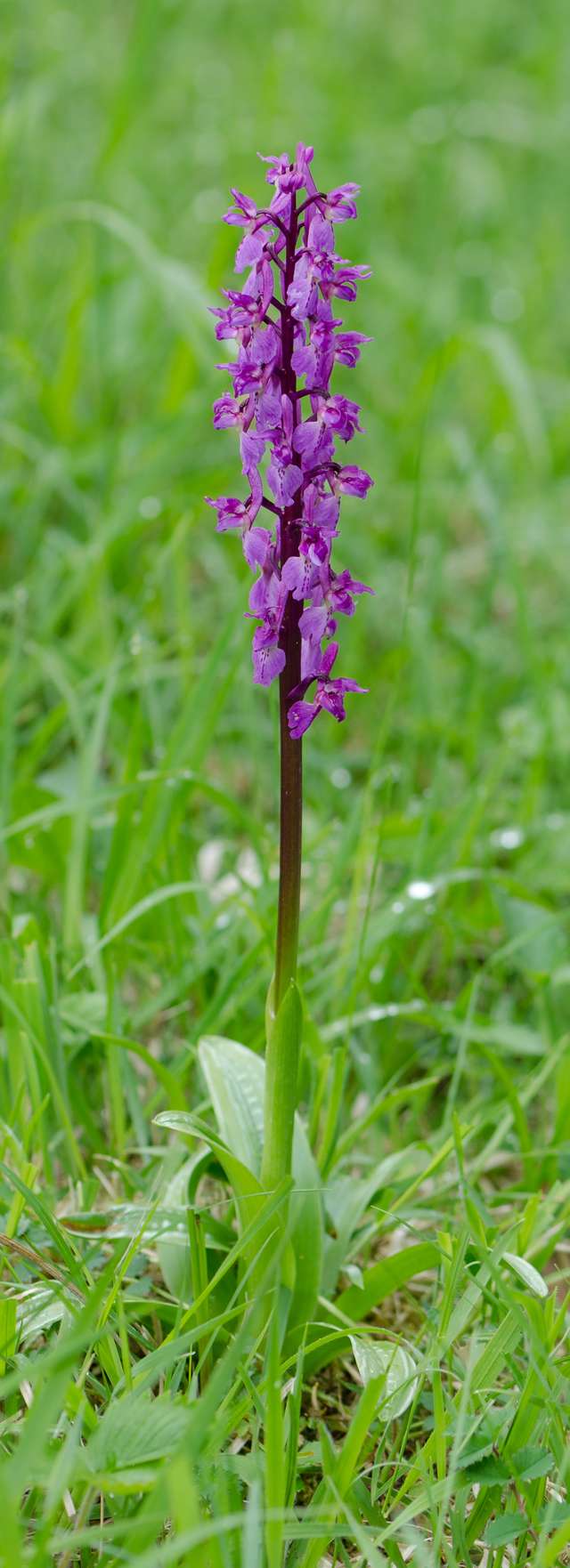
Early Purple Orchid (Orchis mascula)
Orchis mascula
Extremely difficult to cultivate. It requires calcareous or sandy-clay soil rich in mycorrhizal fungi, well-drained and undisturbed, partial shade to full sun, and cool, slightly moist conditions during active growth, followed by a dry dormancy period after the foliage withers in summer. Avoid fertilizers and fungicides, which kill the symbiotic fungus the plant depends on.
Every 10 days
Partial shade
-15° - 25°C
50% - 70%
Categories
What is Early-purple orchid?
Early-purple orchid (Orchis mascula) is a hard-care plant from the Orchidaceae family. Orchis mascula is a tuberous terrestrial orchid native to Europe, North Africa, and parts of Asia. It produces dense spikes of purple to pinkish flowers in the spring, rising above a rosette of leaves that are often spotted with dark purple. Unlike tropical orchids grown as houseplants, this is a wi...
Early-purple orchid grows up to 60cm, spread of 25cm, watering every 10 days, -15°C – 25°C, 50–70% humidity. It is not suitable for indoor environments and safe for pets.
Unlike easy-care plants, Early-purple orchid demands constant attention to humidity and light. Not recommended for beginners. Unlike many popular species, Early-purple orchid is safe to keep around pets.
How to Care for Early-purple orchid?
TLDR: Early-purple orchid needs Partial shade, watering every 10 days, and temperatures between -15-25°C with 50-70% humidity.
How Often Should You Water Early-purple orchid?
Keep the soil slightly moist during active growth in spring; reduce watering almost completely when the leaves yellow and the plant enters dormancy in summer. Waterlogging quickly kills the tuber.
How Much Light Does Early-purple orchid Need?
Provide partial shade under deciduous trees or shrubs, mimicking its natural woodland edge and meadow habitat; it also tolerates full sun in cooler climates.
What Is the Best Soil for Early-purple orchid?
Plant in humus-rich, well-drained, neutral to alkaline soil (calcareous/sandy-clay), ideally inoculated with the orchid-specific mycorrhizal fungus; common commercial substrates will not sustain it long-term.
What Pot Should You Use for Early-purple orchid?
Poorly suited for pot cultivation; if attempted, use a wide, shallow terracotta pot with excellent drainage and soil taken from near an established colony to include the mycorrhizal fungus.
What Is Early-purple orchid and Where Does It Come From?
Orchis mascula is a tuberous terrestrial orchid native to Europe, North Africa, and parts of Asia. It produces dense spikes of purple to pinkish flowers in the spring, rising above a rosette of leaves that are often spotted with dark purple. Unlike tropical orchids grown as houseplants, this is a wild species of woodlands and meadows that relies on a symbiotic soil fungus (mycorrhiza) to survive, making it notoriously difficult to cultivate outside its natural habitat. In many European countries, it is a protected wildflower and should never be removed from the wild.
How to Propagate Early-purple orchid?
Tuber division
Success is rare and disturbance often kills the plant, so division should only be attempted by experienced growers and never on wild or protected populations.
- 1 Locate a healthy, established clump during dormancy in late summer or fall
- 2 Carefully lift the paired tubers without disturbing the surrounding soil fungus
- 3 Separate the new, firmer tuber from the old, withered tuber
- 4 Replant the tuber immediately at the same depth (about 3 inches), in undisturbed, fungus-rich soil
Materials needed:
Symbiotic seed propagation
Orchid seeds have almost no nutrient reserves and will not germinate without infection by the correct fungus, so success rates outside specialized laboratories are extremely low.
- 1 Collect ripe seed capsules in late summer
- 2 Sow the dust-like seeds on or near soil already colonized by the orchid-specific mycorrhizal fungus
- 3 Keep the sowing site undisturbed, cool, and slightly moist
- 4 Wait several years for a seedling to form a tuber and eventually flower
Materials needed:
How Big Does Early-purple orchid Grow?
TLDR: Early-purple orchid can reach up to 60cm tall with Slow growth rate.
Max height
60cm
Spread
25cm
Growth rate
Slow
Foliage
Deciduous
Plant Uses
Ornamental
Great for decoration
Medicinal
Medicinal properties
Medicinal Uses
- Tubers historically dried and ground to produce salep, used as a soothing remedy (demulcent) for digestive irritation
Culinary Uses
- Tubers traditionally used to prepare salep, a starchy flour used in hot drinks and desserts (harvesting is illegal or discouraged where the species is protected)
Is your plant showing symptoms?
Click on the symptom to discover possible causes:
What Diseases Commonly Affect Early-purple orchid?
TLDR: Early-purple orchid is susceptible to 1 known diseases. Monitor regularly for early detection.
Meaning & Symbolism
In the Victorian language of flowers and ancient European folklore, the spotted leaves and paired, testicle-shaped tubers associated the plant with fertility and virility (the name Orchis itself comes from the Greek word for testicle); the tubers were dried and ground to produce salep, once considered an aphrodisiac and restorative tonic.
Fun Facts
The genus name Orchis comes from the Greek word for testicle, referring to the shape of the paired underground tubers.
Its tubers were once dried and ground into salep, a starchy flour used across Europe and the Ottoman Empire in hot drinks and ice cream.
The plant cannot survive without a specific mycorrhizal fungus partner in the soil; without it, seeds cannot even germinate.
In many parts of the UK and continental Europe, Orchis mascula is a legally protected wildflower.
Frequently asked questions
Can I grow Orchis mascula in a pot at home?
Is it legal to dig up Orchis mascula from the wild?
Why did my orchid disappear after flowering?
Is Orchis mascula toxic to pets?
What pests should I watch for?
Compare with similar plants
| Attribute | Difficulty | Light | Watering | Pet Safe |
|---|---|---|---|---|
| Sticky false asphodel | Hard | Bright indirect | 1d | ✓ |
| Creeping bentgrass | Hard | Direct sun | 3d | ✓ |
| Bulbous Adder's-tongue | Hard | Partial shade | 4d | ✓ |
| Crystal Anthurium | Hard | Partial shade | 7d | ⚠️ |