Iridaceae
Tears of the Virgin: Edible Plant
Eleutherine bulbosa
A hardy and easy-to-manage plant in tropical climates: it prefers full sun to partial shade, soil rich in organic matter and well-drained, and regular watering without waterlogging—the main cultivation risk is bulb rot due to excess water. It propagates easily by clump division.
Every 3 days
Bright indirect
15° - 35°C
60% - 90%
Categories
What is Tears of the Virgin?
Tears of the Virgin (Eleutherine bulbosa) is a medium-care plant from the Iridaceae family. The Tears of the Virgin (Eleutherine bulbosa, syn. Eleutherine plicata) is a stemless, bulbous, and rhizomatous herb native to the Amazon and widely distributed from southern Mexico to tropical South America. It forms clumps 20 to 30 cm tall, featuring reddish-scaled bulbs similar to red onions, sim...
Tears of the Virgin grows up to 30cm, spread of 30cm, watering every 3 days, 15°C – 35°C, 60–90% humidity. It is suitable for indoor environments and safe for pets.
Unlike many popular species, Tears of the Virgin is safe to keep around pets. Without adequate drainage, root rot can develop within 7 days.
How to Care for Tears of the Virgin?
TLDR: Tears of the Virgin needs Bright indirect, watering every 3 days, and temperatures between 15-35°C with 60-90% humidity.
How Often Should You Water Tears of the Virgin?
Water 2 to 3 times a week during hot weather, reducing to about once a week in cooler periods, always allowing the top layer of the substrate to dry slightly between waterings to prevent bulb rot.
How Much Light Does Tears of the Virgin Need?
Prefers full sun to partial shade; flowering is more abundant with good direct light, but it tolerates partial shading in very hot climates.
What Is the Best Soil for Tears of the Virgin?
Use a light substrate rich in organic matter (compost or well-rotted manure) with good drainage, at a slightly acidic to neutral pH (6.0–7.0); pots with generous drainage holes prevent the bulb from becoming waterlogged.
What Pot Should You Use for Tears of the Virgin?
Wide and relatively shallow pots favor the lateral multiplication of bulbs into clumps; prefer unglazed ceramic or terracotta, which helps evaporate excess moisture and reduces the risk of rot.
Care Schedule
Fertilize
Every 30 days
Misting
Every 2 days
Rotate
Every 15 days
Repot
Every 730 days
What Is Tears of the Virgin and Where Does It Come From?
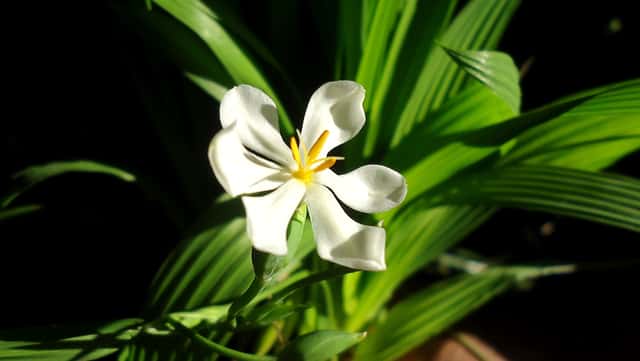
The Tears of the Virgin (Eleutherine bulbosa, syn. Eleutherine plicata) is a stemless, bulbous, and rhizomatous herb native to the Amazon and widely distributed from southern Mexico to tropical South America. It forms clumps 20 to 30 cm tall, featuring reddish-scaled bulbs similar to red onions, simple lanceolate leaves with longitudinal pleats, and star-shaped white or pinkish flowers that open at dusk. It is one of the most traditional medicinal plants of Amazonian indigenous peoples, with bulbs rich in naphthoquinones, anthraquinones, and flavonoids.
How Big Does Tears of the Virgin Grow?
TLDR: Tears of the Virgin can reach up to 30cm tall with Medium growth rate.
Max height
30cm
Spread
30cm
Growth rate
Medium
Foliage
Evergreen
Plant Uses
Ornamental
Great for decoration
Medicinal
Medicinal properties
Edible
Can be consumed
Medicinal Uses
- Stomach aches and cramps
- Diarrhea
- Intestinal worms (vermifuge)
- Wounds and bruises (external use as a poultice)
- Antibacterial, antifungal, and anti-inflammatory action
- Traditional use (Dayak people, Indonesia) for diabetes and hypertension
Culinary Uses
- Bulbs used in the preparation of flours and functional snacks (mixed with rice flour)
- Used as a prebiotic agent in fermented foods
- Decoction of the bulb consumed as a medicinal tea before meals
Is your plant showing symptoms?
Click on the symptom to discover possible causes:
What Diseases Commonly Affect Tears of the Virgin?
TLDR: Tears of the Virgin is susceptible to 3 known diseases. Monitor regularly for early detection.
Aphids
Aphids are small, soft-bodied, pear-shaped insects (1/16 to 1/8 inch long) that feed by sucking nutrient-rich sap from plants. They reproduce rapidly and can quickly weaken plants, causing distorted growth and transmitting plant viruses. Aphids come in various colors including green, black, red, yellow, brown, and gray. They secrete honeydew, a sticky substance that attracts ants and encourages sooty mold growth.
Spider Mites
Spider mites are tiny arachnids (less than 1/20 inch long) related to spiders and ticks that feed on plant sap. They thrive in hot, dry conditions and can cause significant damage to ornamental and vegetable plants. During severe infestations, crop losses can reach 14% or higher as these pests disrupt vital plant processes including photosynthesis, carbon dioxide absorption, and transpiration.
Root Rot
Root rot is a serious fungal disease that affects the root system of plants, causing them to decay and die. It is primarily caused by overwatering, poor drainage, or soil-borne fungi such as Pythium, Phytophthora, Rhizoctonia, and Fusarium. The disease thrives in waterlogged conditions where roots are deprived of oxygen, making them susceptible to fungal infection.
Meaning & Symbolism
A sacred bulb of the Amazonian pharmacopeia, the Tears of the Virgin symbolizes ancestral healing and the connection of indigenous peoples to the forest; its ephemeral flowers, which open only at dusk, evoke the fleeting nature of life and the mystery of the jungle.
Compare with similar plants
| Attribute | Difficulty | Light | Watering | Pet Safe |
|---|---|---|---|---|
| Dark Fieldcap | Medium | Low light | 2d | ⚠️ |
| Azalea | Medium | Partial shade | 3d | ⚠️ |
| Muriel's Bamboo | Medium | Partial shade | 3d | ✓ |
| Bougainvillea | Medium | Direct sun | 7d | ⚠️ |
Choose & Compare
Sources & References
- Marupazinho ou Eleuterine — Horto Didático de Plantas Medicinais (UFSC)
- Eleutherine bulbosa — Wikipedia
- Eleutherine bulbosa (Mill.) Urb. Bulb: Review of the Pharmacological Activities and Its Prospects for Application — PMC
- Eleutherine bulbosa (Lagrimas De La Virgen) — Top Tropicals Plant Encyclopedia
- Bawang Dayak (Eleutherine bulbosa) — Sow Exotic care guide




