Euphorbiaceae
Euphorbia loricata
Euphorbia loricata
Easy. Full sun or light shade, a gritty well-drained mix, regular water in the growing season and almost none in winter. Not frost hardy.
Every 10 days
Bright indirect
-1° - °C
% - %
Categories
What is Euphorbia loricata?
Euphorbia loricata (Euphorbia loricata) is a easy-care plant from the Euphorbiaceae family. Euphorbia loricata is a shrubby succulent in the spurge family (Euphorbiaceae), native to stony slopes of the Western Cape and Namaqualand in South Africa. It forms clumps of thin, cylindrical, upright stems 30 cm to 1 m tall that branch from the base. Long, narrow leaves grow at the stem tips and d...
Euphorbia loricata grows up to 1.0m, spread of 100cm, watering every 10 days. It is suitable for indoor environments and not safe for pets.
Unlike many tropical plants, Euphorbia loricata tolerates watering mistakes. Best for beginners. Without precautions, ingestion can cause irritation in pets. Keep out of reach of cats and dogs. Without adequate drainage, root rot can develop within 20 days.
How to Care for Euphorbia loricata?
TLDR: Euphorbia loricata needs Bright indirect, watering every 10 days, and temperatures between -1-30°C with 40-70% humidity.
How Often Should You Water Euphorbia loricata?
In spring and summer, water once the mix has dried out completely. In winter, keep it nearly dry. Never leave water standing in the saucer.
How Much Light Does Euphorbia loricata Need?
Full sun or bright light shade. If the plant has been in shade, move it into sun gradually or it will scorch.
What Is the Best Soil for Euphorbia loricata?
Use a fast-draining mix that is mostly mineral (grit, pumice, coarse sand) with little organic matter.
What Pot Should You Use for Euphorbia loricata?
A small terracotta pot with a drainage hole; it is happy slightly pot-bound.
What Is Euphorbia loricata and Where Does It Come From?
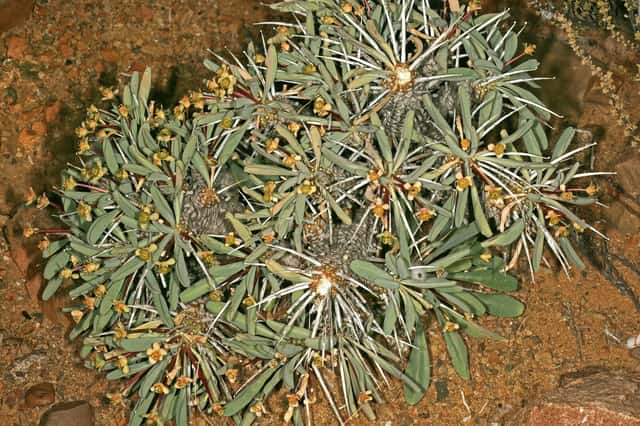
Euphorbia loricata is a shrubby succulent in the spurge family (Euphorbiaceae), native to stony slopes of the Western Cape and Namaqualand in South Africa. It forms clumps of thin, cylindrical, upright stems 30 cm to 1 m tall that branch from the base. Long, narrow leaves grow at the stem tips and drop in summer. The stalks of old flowers stay on the stem and harden into grey or brown spines, giving the plant an armoured look. Like all euphorbias, it bleeds an irritating white latex when cut.
How to Propagate Euphorbia loricata?
Stem cuttings
The latex irritates skin and eyes, so wash your hands before touching your face.
- 1 Wearing gloves, cut a stem in late spring or summer
- 2 Rinse off the latex and let the cut dry for 1-2 weeks
- 3 Plant in dry, loose, well-drained mix
- 4 Water sparingly until it roots
Materials needed:
Seed
Seed can take months to sprout.
- 1 Sow on cactus mix with coarse sand
- 2 Keep lightly moist and warm
- 3 Wait patiently for germination
Materials needed:
How Big Does Euphorbia loricata Grow?
TLDR: Euphorbia loricata can reach up to 1.0m tall with Medium growth rate.
Max height
1.0m
Spread
1.0m
Growth rate
Medium
Foliage
Deciduous
Warning: Toxic Plant
This plant can be toxic if ingested. Keep out of reach of:
Plant Uses
Ornamental
Great for decoration
Is your plant showing symptoms?
Click on the symptom to discover possible causes:
What Diseases Commonly Affect Euphorbia loricata?
TLDR: Euphorbia loricata is susceptible to 5 known diseases. Monitor regularly for early detection.
Mealybugs
Mealybugs are small, soft-bodied insects covered with a white, waxy, cottony material. They are common pests of houseplants and outdoor plants in mild climates. These sap-sucking insects feed on plant tissue, causing damage, stunted growth, and can lead to plant death if left untreated. They produce sticky honeydew which attracts sooty mold.
Scale Insects
Scale insects are small sap-sucking pests that appear as brown, shell-like bumps on plant stems and leaves. There are over 25 species, divided into armored (hard) and unarmored (soft) scales. They feed by piercing plant tissue and extracting sap, which weakens the plant and can lead to yellowing, stunted growth, and even death if left untreated. They also excrete honeydew, which attracts ants and promotes sooty mold growth.
Sunburn (Sun Scorch)
Sunburn or sun scorch is an environmental condition that occurs when plants are exposed to intense, direct sunlight beyond their tolerance level. This causes the breakdown of chlorophyll in the leaves, resulting in bleached, dried, and damaged foliage. The damage can happen rapidly, sometimes within just a few hours of exposure.
Mechanical Damage
Mechanical damage occurs when plant tissue is physically disrupted by external forces — including pets knocking over pots, children playing, strong winds, hail, accidental contact during gardening, improper pruning, or tools hitting stems and bark. The resulting wounds break vascular tissue, interrupt water and nutrient transport, and create open entry points for fungal and bacterial pathogens. Severity ranges from cosmetic (a torn leaf) to life-threatening (a fully girdled trunk).
Fun Facts
The spines are the leftover stalks of old flowers that stay on the stem.
The name loricata comes from the Latin lorica, the breastplate worn by Roman soldiers.
In strong wind the stems knock into each other and keep the scars for good.
Frequently asked questions
Is Euphorbia loricata toxic?
How often should I water it?
Why did it lose its leaves?
Can it grow indoors?
Compare with similar plants
| Attribute | Difficulty | Light | Watering | Pet Safe |
|---|---|---|---|---|
| Field Maple | Easy | Bright indirect | 14d | ✓ |
| Iberian Houseleek | Easy | Direct sun | 14d | ✓ |
| Silver Birch | Easy | Direct sun | 14d | ✓ |
| Common Blanketflower | Easy | Direct sun | 10d | ✓ |





