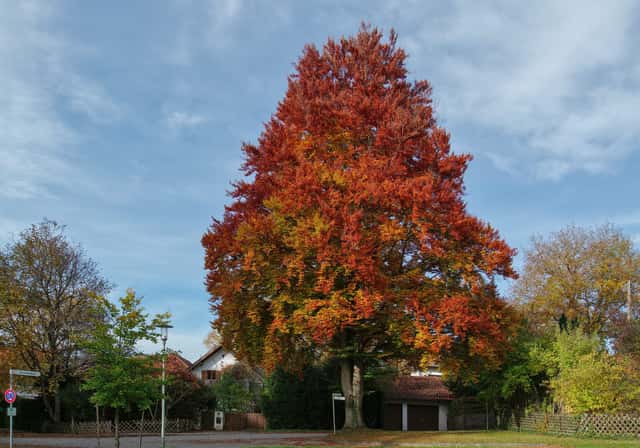
Fagaceae
European Beech (Fagus sylvatica)
Fagus sylvatica
Plant in well-drained soil in full sun to partial shade. Water regularly while young to establish a deep root system, then only during prolonged drought. Avoid wet or compacted ground. Requires little to no fertilizer once established; tolerates hard pruning for hedging.
Every 10 days
Bright indirect
-25° - 35°C
40% - 70%
Categories
What is European Beech?
European Beech (Fagus sylvatica) is a medium-care plant from the Fagaceae family. The European beech is a large, long-lived deciduous tree native to Europe, prized for its smooth grey bark, dense glossy foliage and dramatic golden-copper autumn colour. It is widely planted as a specimen tree, in parkland, and as a formal hedge, since it tolerates close pruning and retains dried l...
European Beech grows up to 30.0m, spread of 1500cm, watering every 10 days, -25°C – 35°C, 40–70% humidity. It is not suitable for indoor environments and not safe for pets.
Without precautions, ingestion can cause irritation in pets. Keep out of reach of cats and dogs.
How to Care for European Beech?
TLDR: European Beech needs Bright indirect, watering every 10 days, and temperatures between -25-35°C with 40-70% humidity.
How Often Should You Water European Beech?
Water deeply and regularly for the first two years after planting to establish the root system. Once established, water only during extended dry spells; the beech does not tolerate soggy or compacted soil.
How Much Light Does European Beech Need?
Grow in full sun for the best autumn colour, though it tolerates partial shade, especially when young.
What Is the Best Soil for European Beech?
Prefers well-drained sandy, loamy or clay soils with a slightly acidic to neutral pH (5.0-7.0). Avoid heavy, waterlogged ground.
What Pot Should You Use for European Beech?
Not typically grown in pots; plant directly in the ground. Young nursery specimens may be kept temporarily in large, well-draining containers.
What Is European Beech and Where Does It Come From?
The European beech is a large, long-lived deciduous tree native to Europe, prized for its smooth grey bark, dense glossy foliage and dramatic golden-copper autumn colour. It is widely planted as a specimen tree, in parkland, and as a formal hedge, since it tolerates close pruning and retains dried leaves through winter when clipped.
How to Propagate European Beech?
Seed propagation
Beechnuts have low viability and vary greatly year to year (mast years); test float viability before sowing.
- 1 Collect ripe beechnuts (mast) in autumn
- 2 Cold-stratify the seeds in moist sand for 12-16 weeks
- 3 Sow in trays or a nursery bed in early spring
- 4 Keep soil moist and protect seedlings from late frosts and rodents
Materials needed:
Grafting (for cultivars)
Used mainly for named ornamental cultivars (purple, weeping, fern-leaved forms) which do not come true from seed.
- 1 Select healthy dormant scion wood from the desired cultivar
- 2 Graft onto a Fagus sylvatica seedling rootstock using whip-and-tongue or side-veneer technique
- 3 Seal and protect the graft union
- 4 Grow on in a sheltered nursery bed until well established
Materials needed:
How Big Does European Beech Grow?
TLDR: European Beech can reach up to 30.0m tall with Slow growth rate.
Max height
30.0m
Spread
15.0m
Growth rate
Slow
Foliage
Deciduous
Warning: Toxic Plant
This plant can be toxic if ingested. Keep out of reach of:
Plant Uses
Ornamental
Great for decoration
Edible
Can be consumed
Culinary Uses
- Roasted beechnuts (in moderation, after processing to remove toxins)
Is your plant showing symptoms?
Click on the symptom to discover possible causes:
What Diseases Commonly Affect European Beech?
TLDR: European Beech is susceptible to 5 known diseases. Monitor regularly for early detection.
Canker
Canker is a disease caused by various fungi and bacteria that create necrotic, sunken areas on bark of branches, stems, and trunks. Pathogens enter through wounds and natural openings, especially when plants are stressed. Canker can gradually weaken or kill branches by disrupting water and nutrient flow.
Powdery Mildew
Powdery mildew is a common fungal disease caused by various fungi species including Erysiphe, Podosphaera, Oïdium, and Leveillula. It affects over 10,000 plant species worldwide. The disease thrives in warm, dry climates with high humidity and appears as a distinctive white powdery coating on plant surfaces.
Aphids
Aphids are small, soft-bodied, pear-shaped insects (1/16 to 1/8 inch long) that feed by sucking nutrient-rich sap from plants. They reproduce rapidly and can quickly weaken plants, causing distorted growth and transmitting plant viruses. Aphids come in various colors including green, black, red, yellow, brown, and gray. They secrete honeydew, a sticky substance that attracts ants and encourages sooty mold growth.
Woolly Beech Aphid
Phyllaphis is a genus of woolly aphids that primarily attack beech (Fagus), typically common beech and copper beech in hedges and as trees. They suck plant sap from young shoots and the undersides of leaves in spring and early summer. Signs of infestation include curled or rolled leaves, sticky honeydew, black sooty mold, and a white, cottony coating around the colonies. The plants usually survive, but heavy infestations can weaken new growth and make the hedge sticky and unsightly. The aphids often overwinter as eggs on thin twigs near buds.
Meaning & Symbolism
In Celtic and European folklore the beech is a symbol of wisdom, knowledge and endurance, often called the "queen of British trees" for its stately, long-lived presence.
Fun Facts
A clipped beech hedge retains its brown, dried leaves through winter, a trait called marcescence.
European beech can live for over 300 years and reach up to 30 metres in the wild.
Its smooth grey bark historically made it a popular surface for carving initials and messages.
Frequently asked questions
How much sun does a European beech need?
Is European beech toxic to pets?
How often should I water a young beech tree?
Can European beech be grown as a hedge?
Compare with similar plants
| Attribute | Difficulty | Light | Watering | Pet Safe |
|---|---|---|---|---|
| Dark Fieldcap | Medium | Low light | 2d | ⚠️ |
| Azalea | Medium | Partial shade | 3d | ⚠️ |
| Muriel's Bamboo | Medium | Partial shade | 3d | ✓ |
| Bougainvillea | Medium | Direct sun | 7d | ⚠️ |




