Ranunculaceae
European Columbine (Aquilegia vulgaris)
Aquilegia vulgaris
Easy in a cool climate, in sun or part shade, in rich soil that stays moist without getting soggy. Established garden plants rarely need extra water or feeding. Plants do not last long, so let a few seed heads drop for new ones. All parts may be toxic, the seeds most of all.
Every 7 days
Partial shade
° - °C
% - %
Categories
What is European columbine?
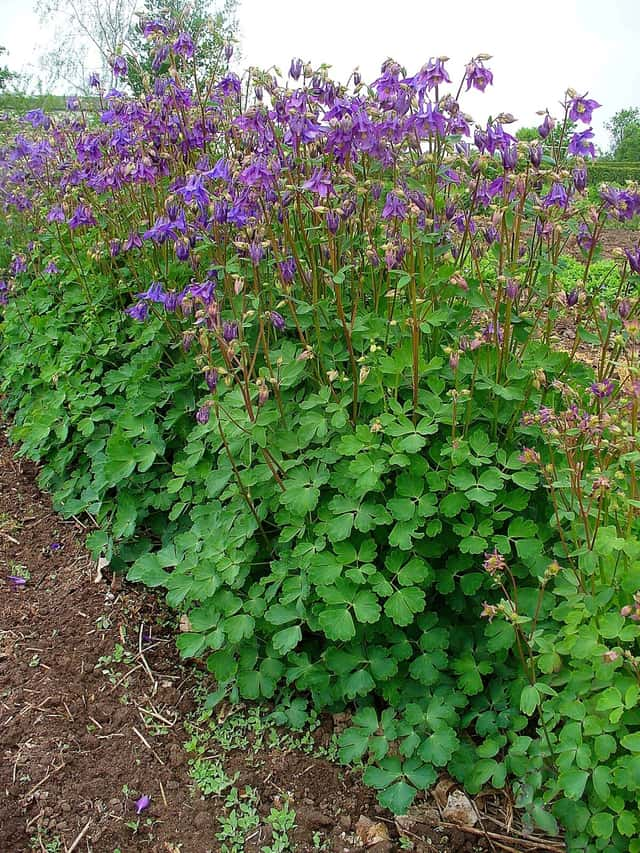
European columbine (Aquilegia vulgaris) is a easy-care plant from the Ranunculaceae family. European columbine is a perennial from Europe with leaves divided in threes and nodding flowers on thin stems up to 90 cm tall. The flowers reach 6 cm across, usually blue or purple, sometimes pink or white, and each petal ends in a curved spur that holds nectar. It blooms in late spring and early s...
European columbine grows up to 90cm, spread of 50cm, watering every 7 days. It is not suitable for indoor environments and not safe for pets.
Unlike many tropical plants, European columbine tolerates watering mistakes. Best for beginners. Without precautions, ingestion can cause irritation in pets. Keep out of reach of cats and dogs.
How to Care for European columbine?
TLDR: European columbine needs Partial shade, watering every 7 days, and temperatures between 15-30°C with 40-70% humidity.
How Often Should You Water European columbine?
In the ground it usually gets by on rain once settled. Water about once a week in dry spells or in a pot. A good soak after you cut it back helps fresh leaves come through.
How Much Light Does European columbine Need?
Sun or part shade. In hot areas, give it morning sun and afternoon shade.
What Is the Best Soil for European columbine?
Rich soil with plenty of organic matter that stays moist but drains. Soggy ground is what it can't take.
What Pot Should You Use for European columbine?
A deep pot with drainage holes in a cool, partly sunny spot. It can live in a pot, but it does better in the ground.
What Is European columbine and Where Does It Come From?
European columbine is a perennial from Europe with leaves divided in threes and nodding flowers on thin stems up to 90 cm tall. The flowers reach 6 cm across, usually blue or purple, sometimes pink or white, and each petal ends in a curved spur that holds nectar. It blooms in late spring and early summer. It is short-lived, but it often comes back from its own fallen seed. It has naturalized in parts of North America and Asia.
How to Propagate European columbine?
Seed
Flowers usually come the next year, sometimes after two. The seeds are toxic, so wash your hands after handling them.
- 1 Collect seed when the pods turn brown
- 2 Sow fresh seed in spring or early summer
- 3 Keep the soil moist in a cool place
- 4 If nothing comes up after several months, chill the seed in moist soil in the fridge, then try again
- 5 Plant the seedlings out in the fall
Materials needed:
How Big Does European columbine Grow?
TLDR: European columbine can reach up to 90cm tall with Medium growth rate.
Max height
90cm
Spread
50cm
Foliage
Deciduous
Warning: Toxic Plant
This plant can be toxic if ingested. Keep out of reach of:
Plant Uses
Ornamental
Great for decoration
Is your plant showing symptoms?
Click on the symptom to discover possible causes:
What Diseases Commonly Affect European columbine?
TLDR: European columbine is susceptible to 6 known diseases. Monitor regularly for early detection.
Downy Mildew
Downy mildew is a fungal-like disease caused by oomycetes (water molds) that thrives in cool, wet conditions. It affects a wide range of plants, causing yellowing leaves with fuzzy white-gray growth underneath, leading to defoliation and reduced yields if left untreated.
Powdery Mildew
Powdery mildew is a common fungal disease caused by various fungi species including Erysiphe, Podosphaera, Oïdium, and Leveillula. It affects over 10,000 plant species worldwide. The disease thrives in warm, dry climates with high humidity and appears as a distinctive white powdery coating on plant surfaces.
Aphids
Aphids are small, soft-bodied, pear-shaped insects (1/16 to 1/8 inch long) that feed by sucking nutrient-rich sap from plants. They reproduce rapidly and can quickly weaken plants, causing distorted growth and transmitting plant viruses. Aphids come in various colors including green, black, red, yellow, brown, and gray. They secrete honeydew, a sticky substance that attracts ants and encourages sooty mold growth.
leaf miners
Larval stages of leaf-mining insects are feeding on the leaf tissue of plants, building little tunnels under the leaf surface.
Meaning & Symbolism
In Christian art the dove-like flowers stood for the Holy Spirit. In Shakespeare's Hamlet the plant stands for deception.
Fun Facts
The name columbine comes from the Latin columba, dove, because the flowers look like a group of doves.
Bumblebees with long tongues are the classic visitors to the flower's spurs.
In Hamlet, Ophelia hands out columbine as a sign of deception.
Frequently asked questions
Is European columbine toxic to pets or people?
Why did my columbine die after two years?
The leaves have yellow patches with fuzz underneath. What is it?
Will self-sown seedlings look like the parent?
Compare with similar plants
| Attribute | Difficulty | Light | Watering | Pet Safe |
|---|---|---|---|---|
| Field Maple | Easy | Bright indirect | 14d | ✓ |
| Iberian Houseleek | Easy | Direct sun | 14d | ✓ |
| Silver Birch | Easy | Direct sun | 14d | ✓ |
| Common Blanketflower | Easy | Direct sun | 10d | ✓ |
Choose & Compare
Sources & References
- RHS - Aquilegia vulgaris (common columbine)
- RHS - How to grow aquilegias
- RHS - Aquilegia downy mildew
- Wikipedia - Aquilegia vulgaris
- Gardenia.net - Aquilegia vulgaris (search snippet)
- Plantura - Is aquilegia poisonous
- Wikipedia PT - Aquilegia vulgaris (common names)
- Wikipedia ES - Aquilegia vulgaris (common names)





