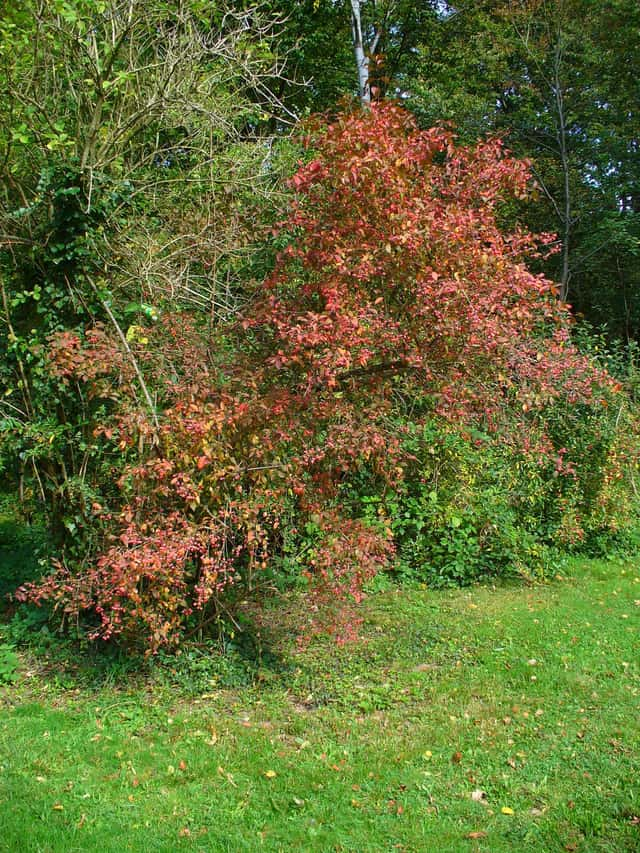
Celastraceae
Spindle (Euonymus europaeus)
Euonymus europaeus
A tough, low-maintenance plant: full sun or part shade, fertile, well-drained soil (it likes chalk), an annual mulch and water only in dry spells. No routine pruning. Very cold hardy.
Every 10 days
Bright indirect
-20° - °C
% - %
Categories
What is Spindle?
Spindle (Euonymus europaeus) is a easy-care plant from the Celastraceae family. Spindle is a deciduous shrub or small tree native to most of Europe, where it grows on woodland edges and in hedgerows. It usually reaches 3 to 6 m. The opposite, oval, finely toothed leaves are dark green in summer and turn yellow to reddish-purple in autumn. The late-spring flowers are small and y...
Spindle grows up to 6.0m, spread of 600cm, watering every 10 days. It is not suitable for indoor environments and not safe for pets.
Unlike many tropical plants, Spindle tolerates watering mistakes. Best for beginners. Without precautions, ingestion can cause irritation in pets. Keep out of reach of cats and dogs.
How to Care for Spindle?
TLDR: Spindle needs Bright indirect, watering every 10 days, and temperatures between -20-30°C with 40-70% humidity.
How Often Should You Water Spindle?
Water well at planting and through the first year, especially in summer. Once established it only needs water in long droughts; mulch helps hold moisture.
How Much Light Does Spindle Need?
Full sun or part shade. Full sun gives the strongest autumn colour and the most fruit.
What Is the Best Soil for Spindle?
Fertile, deep, well-drained soil, ideally chalky or neutral. Alkaline soil is fine.
What Pot Should You Use for Spindle?
Best planted in the ground; in a container, use a large, deep pot with good drainage.
What Is Spindle and Where Does It Come From?
Spindle is a deciduous shrub or small tree native to most of Europe, where it grows on woodland edges and in hedgerows. It usually reaches 3 to 6 m. The opposite, oval, finely toothed leaves are dark green in summer and turn yellow to reddish-purple in autumn. The late-spring flowers are small and yellow-green, easy to miss. The real show comes in autumn: bright pink, four-lobed capsules split open to reveal orange seeds and hang on into winter. All parts are poisonous if eaten, especially the fruit.
How to Propagate Spindle?
Seed
The seeds are dormant and need warmth followed by cold to germinate. Protect sowings from mice. Wear gloves: the seed is poisonous.
- 1 Collect seeds from ripe fruit in autumn, wearing gloves
- 2 Remove the orange coat from the seeds
- 3 Keep in moist sand somewhere warm for about 10 weeks
- 4 Then refrigerate for up to 16 weeks
- 5 Sow the sprouted seeds in compost and grow on for 1-2 years before planting out
Materials needed:
How Big Does Spindle Grow?
TLDR: Spindle can reach up to 6.0m tall with Medium growth rate.
Max height
6.0m
Spread
6.0m
Growth rate
Medium
Foliage
Deciduous
Warning: Toxic Plant
This plant can be toxic if ingested. Keep out of reach of:
Plant Uses
Ornamental
Great for decoration
Is your plant showing symptoms?
Click on the symptom to discover possible causes:
What Diseases Commonly Affect Spindle?
TLDR: Spindle is susceptible to 4 known diseases. Monitor regularly for early detection.
Scale Insects
Scale insects are small sap-sucking pests that appear as brown, shell-like bumps on plant stems and leaves. There are over 25 species, divided into armored (hard) and unarmored (soft) scales. They feed by piercing plant tissue and extracting sap, which weakens the plant and can lead to yellowing, stunted growth, and even death if left untreated. They also excrete honeydew, which attracts ants and promotes sooty mold growth.
Aphids
Aphids are small, soft-bodied, pear-shaped insects (1/16 to 1/8 inch long) that feed by sucking nutrient-rich sap from plants. They reproduce rapidly and can quickly weaken plants, causing distorted growth and transmitting plant viruses. Aphids come in various colors including green, black, red, yellow, brown, and gray. They secrete honeydew, a sticky substance that attracts ants and encourages sooty mold growth.
Caterpillars
Caterpillars are the larval stage of moths and butterflies that feed voraciously on plant foliage, stems, flowers, and fruits. Common species include cabbage loopers, tomato hornworms, armyworms, and cutworms. These pests can cause extensive damage by consuming large amounts of plant tissue in a short time. They vary in size from small (1/4 inch) to large (5 inches), with colors ranging from green to brown, often featuring stripes or spots. Caterpillars are highly mobile and can quickly spread throughout gardens, making them one of the most destructive common pests.
Powdery Mildew
Powdery mildew is a common fungal disease caused by various fungi species including Erysiphe, Podosphaera, Oïdium, and Leveillula. It affects over 10,000 plant species worldwide. The disease thrives in warm, dry climates with high humidity and appears as a distinctive white powdery coating on plant surfaces.
Fun Facts
Its hard wood was once used to make spindles for spinning wool, hence the name.
Spindle charcoal is prized by artists for drawing.
It is the main winter host of the black bean aphid.
Frequently asked questions
Is spindle poisonous?
When does it fruit?
Does it need pruning?
What pests affect it?
Compare with similar plants
| Attribute | Difficulty | Light | Watering | Pet Safe |
|---|---|---|---|---|
| Field Maple | Easy | Bright indirect | 14d | ✓ |
| Iberian Houseleek | Easy | Direct sun | 14d | ✓ |
| Silver Birch | Easy | Direct sun | 14d | ✓ |
| Common Blanketflower | Easy | Direct sun | 10d | ✓ |





