Brassicaceae
Evergreen Candytuft: How to Care for Iberis sempervirens
Iberis sempervirens
Easy and long-lived in full sun and well-drained soil. Water while it establishes, then only in dry spells. Trim lightly after flowering to keep it compact and encourage repeat bloom, and feed lightly in spring and early autumn.
Every 7 days
Direct sun
° - °C
% - %
Categories
What is Evergreen candytuft?
Evergreen candytuft (Iberis sempervirens) is a easy-care plant from the Brassicaceae family. Evergreen candytuft (Iberis sempervirens) is a low, mounding sub-shrub from southern Europe and north-west Africa, from Spain and Portugal to Turkey. It grows 15-30 cm tall and spreads into a cushion of narrow, leathery, dark green leaves that stay on all year. From early spring into early summer it...
Evergreen candytuft grows up to 30cm, spread of 45cm, watering every 7 days. It is not suitable for indoor environments and safe for pets.
Unlike many tropical plants, Evergreen candytuft tolerates watering mistakes. Best for beginners. Unlike many popular species, Evergreen candytuft is safe to keep around pets.
How to Care for Evergreen candytuft?
TLDR: Evergreen candytuft needs Direct sun, watering every 7 days, and temperatures between 15-30°C with 40-70% humidity.
How Often Should You Water Evergreen candytuft?
Water regularly in the first season. Once established it is drought tolerant: water only when the soil is dry a few centimetres down. Avoid soggy soil and overhead watering, which lead to crown rot and leaf diseases.
How Much Light Does Evergreen candytuft Need?
Full sun, 6 hours or more of direct light, gives the most flowers. It tolerates light shade but blooms less.
What Is the Best Soil for Evergreen candytuft?
Well-drained, moderately fertile soil, neutral to alkaline (pH about 6-8). It copes with poor, chalky, sandy or loamy soil, but not with wet or poorly drained ground, especially in winter.
What Pot Should You Use for Evergreen candytuft?
A shallow, wide terracotta pot or trough with drainage holes and a gritty, free-draining mix.
Care Schedule
Fertilize
Every 180 days
What Is Evergreen candytuft and Where Does It Come From?
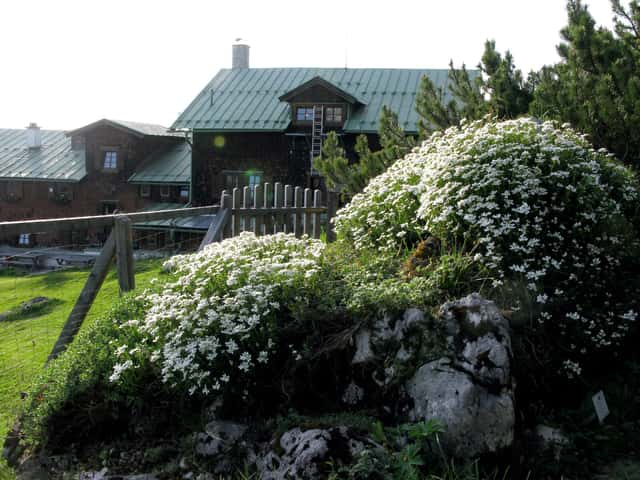
Evergreen candytuft (Iberis sempervirens) is a low, mounding sub-shrub from southern Europe and north-west Africa, from Spain and Portugal to Turkey. It grows 15-30 cm tall and spreads into a cushion of narrow, leathery, dark green leaves that stay on all year. From early spring into early summer it is covered in flat clusters of small, bright white four-petalled flowers that attract butterflies. It is deer and rabbit resistant and tolerates drought and salt.
How to Propagate Evergreen candytuft?
Semi-ripe cuttings
Do not overwater cuttings; this plant rots in wet compost.
- 1 After flowering, cut 5-8 cm non-flowering shoots.
- 2 Strip the lower leaves.
- 3 Insert into gritty, well-drained cutting compost.
- 4 Keep in bright shade and lightly moist until rooted, then pot on.
Materials needed:
Seed
Named cultivars do not come true from seed; use cuttings to keep a variety.
- 1 Sow seed thinly on well-drained seed compost.
- 2 Cover lightly and keep just moist.
- 3 Prick out seedlings and plant out when large enough.
Materials needed:
Natural layering
Stems root on their own where they lie on the ground.
- 1 Find a stem that has rooted where it touches the soil.
- 2 Cut it from the parent plant.
- 3 Lift it with its roots and replant.
Materials needed:
How Big Does Evergreen candytuft Grow?
TLDR: Evergreen candytuft can reach up to 30cm tall with Medium growth rate.
Max height
30cm
Spread
45cm
Growth rate
Medium
Foliage
Evergreen
Plant Uses
Ornamental
Great for decoration
Ground Cover
Soil coverage
Is your plant showing symptoms?
Click on the symptom to discover possible causes:
What Diseases Commonly Affect Evergreen candytuft?
TLDR: Evergreen candytuft is susceptible to 10 known diseases. Monitor regularly for early detection.
Slugs and Snails
Slugs and snails are mollusks that feed on plant tissue, causing irregular holes in leaves and damage to young seedlings. They are most active at night and in moist conditions, leaving characteristic silvery slime trails. These pests can quickly devastate gardens, especially during wet seasons.
Caterpillars
Caterpillars are the larval stage of moths and butterflies that feed voraciously on plant foliage, stems, flowers, and fruits. Common species include cabbage loopers, tomato hornworms, armyworms, and cutworms. These pests can cause extensive damage by consuming large amounts of plant tissue in a short time. They vary in size from small (1/4 inch) to large (5 inches), with colors ranging from green to brown, often featuring stripes or spots. Caterpillars are highly mobile and can quickly spread throughout gardens, making them one of the most destructive common pests.
Aphids
Aphids are small, soft-bodied, pear-shaped insects (1/16 to 1/8 inch long) that feed by sucking nutrient-rich sap from plants. They reproduce rapidly and can quickly weaken plants, causing distorted growth and transmitting plant viruses. Aphids come in various colors including green, black, red, yellow, brown, and gray. They secrete honeydew, a sticky substance that attracts ants and encourages sooty mold growth.
Downy Mildew
Downy mildew is a fungal-like disease caused by oomycetes (water molds) that thrives in cool, wet conditions. It affects a wide range of plants, causing yellowing leaves with fuzzy white-gray growth underneath, leading to defoliation and reduced yields if left untreated.
Fun Facts
The genus name Iberis refers to Iberia, the Spanish and Portuguese peninsula where the plant grows wild.
Sempervirens means always green in Latin, because the leaves stay on through winter.
Stems that lie on the ground often root by themselves.
Frequently asked questions
Should I cut back candytuft after it flowers?
How often should I water evergreen candytuft?
Does candytuft grow in shade?
Is evergreen candytuft deer resistant?
Compare with similar plants
| Attribute | Difficulty | Light | Watering | Pet Safe |
|---|---|---|---|---|
| Field Maple | Easy | Bright indirect | 14d | ✓ |
| Iberian Houseleek | Easy | Direct sun | 14d | ✓ |
| Silver Birch | Easy | Direct sun | 14d | ✓ |
| Common Blanketflower | Easy | Direct sun | 10d | ✓ |





