Moraceae
Ficus luschnathiana: care and growing guide
Ficus luschnathiana
This is a large tree for parks, farms and big gardens. Plant it in sun in deep, well-draining soil and water it regularly for the first few years. Once established it needs little care. The roots are strong, so keep it well away from walls, paving and pipes.
Every 7 days
Bright indirect
° - °C
% - %
Categories
What is Ficus luschnathiana?
Ficus luschnathiana (Ficus luschnathiana) is a easy-care plant from the Moraceae family. Ficus luschnathiana is a fig tree native to southern, south-eastern and west-central Brazil, Paraguay, Uruguay and north-eastern Argentina. It often starts life high up on another tree, from seeds dropped by birds, and sends aerial roots down the host's trunk to the ground. Over time these roots thi...
Ficus luschnathiana grows up to 20.0m, watering every 7 days. It is not suitable for indoor environments and not safe for pets.
Unlike many tropical plants, Ficus luschnathiana tolerates watering mistakes. Best for beginners. Without precautions, ingestion can cause irritation in pets. Keep out of reach of cats and dogs.
How to Care for Ficus luschnathiana?
TLDR: Ficus luschnathiana needs Bright indirect, watering every 7 days, and temperatures between 15-30°C with 40-70% humidity.
How Often Should You Water Ficus luschnathiana?
For the first two years, water once a week, or more in hot, dry weather. Mature trees live on rainfall. In a pot, water when the top few centimetres of the mix are dry.
How Much Light Does Ficus luschnathiana Need?
Full sun to partial shade. It needs plenty of light to grow well and does not adapt to indoor conditions.
What Is the Best Soil for Ficus luschnathiana?
Deep, fertile, well-draining soil. It accepts many soil types as long as they do not stay waterlogged.
What Pot Should You Use for Ficus luschnathiana?
Only in a pot while young or as a bonsai, in a deep container with drainage holes. It belongs in the ground, with room to grow.
What Is Ficus luschnathiana and Where Does It Come From?
Ficus luschnathiana is a fig tree native to southern, south-eastern and west-central Brazil, Paraguay, Uruguay and north-eastern Argentina. It often starts life high up on another tree, from seeds dropped by birds, and sends aerial roots down the host's trunk to the ground. Over time these roots thicken into a trunk of their own and can strangle the host tree. A mature tree is 8 to 16 m tall with a broad crown and evergreen, alternate, leathery, elliptic leaves. The small round figs turn yellow when ripe and feed many birds.
How to Propagate Ficus luschnathiana?
Stem cutting
Wear gloves, as the latex irritates skin and eyes.
- 1 Cut a semi-woody shoot 20 to 30 cm long
- 2 Let the latex run off and dry
- 3 Remove the lower leaves
- 4 Bury a third of the cutting in moist mix
- 5 Keep it in bright light without strong sun until it roots
Materials needed:
Seed
The seeds are tiny and slow to sprout. Cuttings are much faster.
- 1 Take the seeds from fully ripe figs
- 2 Rinse them and scatter on moist mix
- 3 Cover with a thin layer of mix
- 4 Keep moist and warm
Materials needed:
How Big Does Ficus luschnathiana Grow?
TLDR: Ficus luschnathiana can reach up to 20.0m tall with Medium growth rate.
Max height
20.0m
Growth rate
Medium
Foliage
Evergreen
Warning: Toxic Plant
This plant can be toxic if ingested. Keep out of reach of:
Plant Uses
Ornamental
Great for decoration
Medicinal
Medicinal properties
Medicinal Uses
- Leaves, figs and latex used in folk medicine; the fruit is considered sedative
Culinary Uses
- Ripe figs are edible, though small and rarely eaten
Is your plant showing symptoms?
Click on the symptom to discover possible causes:
What Diseases Commonly Affect Ficus luschnathiana?
TLDR: Ficus luschnathiana is susceptible to 9 known diseases. Monitor regularly for early detection.
Scale Insects
Scale insects are small sap-sucking pests that appear as brown, shell-like bumps on plant stems and leaves. There are over 25 species, divided into armored (hard) and unarmored (soft) scales. They feed by piercing plant tissue and extracting sap, which weakens the plant and can lead to yellowing, stunted growth, and even death if left untreated. They also excrete honeydew, which attracts ants and promotes sooty mold growth.
Mealybugs
Mealybugs are small, soft-bodied insects covered with a white, waxy, cottony material. They are common pests of houseplants and outdoor plants in mild climates. These sap-sucking insects feed on plant tissue, causing damage, stunted growth, and can lead to plant death if left untreated. They produce sticky honeydew which attracts sooty mold.
Thrips
Thrips are tiny cigar-shaped insects (1/25-inch long) that damage plants by sucking plant juices and scraping at fruits, flowers, and leaves. With over 6,000 species and rapid reproduction (lifecycle as short as 14 days), they can quickly infest plants and transmit viruses like tomato spotted wilt virus.
Spider Mites
Spider mites are tiny arachnids (less than 1/20 inch long) related to spiders and ticks that feed on plant sap. They thrive in hot, dry conditions and can cause significant damage to ornamental and vegetable plants. During severe infestations, crop losses can reach 14% or higher as these pests disrupt vital plant processes including photosynthesis, carbon dioxide absorption, and transpiration.
Fun Facts
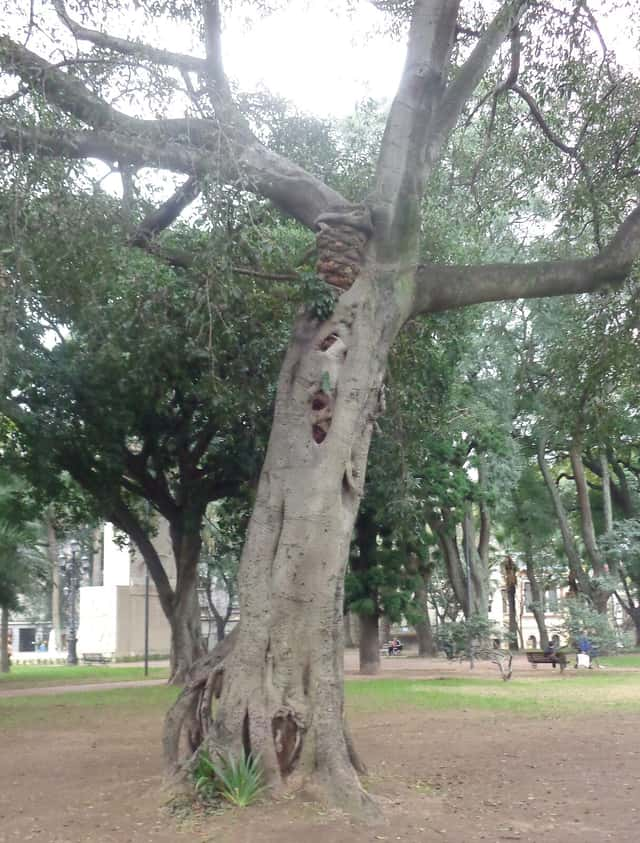
A notable tree in Buenos Aires grew from a seed on a palm, and the palm's remains can still be seen in its trunk
Birds that eat the figs carry the seeds up into other trees
Miquel described it in 1853 as Urostigma luschnathianum
It was once known as Ficus monckii
Frequently asked questions
Is Ficus luschnathiana a strangler fig?
Can I plant Ficus luschnathiana near a house?
Is Ficus luschnathiana toxic?
Are the figs edible?
Compare with similar plants
| Attribute | Difficulty | Light | Watering | Pet Safe |
|---|---|---|---|---|
| Field Maple | Easy | Bright indirect | 14d | ✓ |
| Iberian Houseleek | Easy | Direct sun | 14d | ✓ |
| Silver Birch | Easy | Direct sun | 14d | ✓ |
| Common Blanketflower | Easy | Direct sun | 10d | ✓ |





