Onagraceae
Fireweed: Edible Plant
Chamaenerion angustifolium
Fireweed is an extremely hardy and low-maintenance wild plant that prefers sunny locations and well-drained, slightly acidic to neutral soil. The plant tolerates dry periods well but appreciates moderate moisture during the growing season. Fertilization is not essential—excessive nitrogen makes the stems weak and prone to flopping. The plant spreads aggressively via rhizomes, so it may need to be contained in a garden landscape.
Every 6 days
Direct sun
-40° - 35°C
30% - 70%
Categories
What is Fireweed?
Fireweed (Chamaenerion angustifolium) is a easy-care plant from the Onagraceae family. Fireweed (Chamaenerion angustifolium) is a perennial herbaceous plant in the willowherb family Onagraceae. The height of the aerial stem usually reaches 60-120 cm, rarely up to 150-200 cm. The stem is generally unbranched and hairless, with leaves arranged spirally along the stem. The flowers are li...
Fireweed grows up to 2.0m, spread of 90cm, watering every 6 days, -40°C – 35°C, 30–70% humidity. It is not suitable for indoor environments and safe for pets.
Unlike many tropical plants, Fireweed tolerates watering mistakes. Best for beginners. Unlike many popular species, Fireweed is safe to keep around pets.
How to Care for Fireweed?
TLDR: Fireweed needs Direct sun, watering every 6 days, and temperatures between -40-35°C with 30-70% humidity.
How Often Should You Water Fireweed?
Water moderately, keeping the soil slightly moist, especially during the growth and flowering periods. Once established, the plant is quite drought-tolerant. Avoid waterlogged, poorly drained soil, as this promotes root rot.
How Much Light Does Fireweed Need?
Requires full sun for the best flowering but can tolerate partial shade. In low light, growth becomes sparse and flowering will be modest.
What Is the Best Soil for Fireweed?
Prefers well-drained, mineral-rich sandy, gravelly, or stony soil with a pH of 5.5–7.5. It tolerates nutrient-poor and scorched earth but does not tolerate standing water.
What Pot Should You Use for Fireweed?
Because the plant has a thick, creeping rhizome that spreads aggressively, it is best suited for deep and wide containers (at least 30–40 cm) with root barriers, or grown in open ground where its spread can be controlled by mowing.
Care Schedule
Fertilize
Every 60 days
What Is Fireweed and Where Does It Come From?
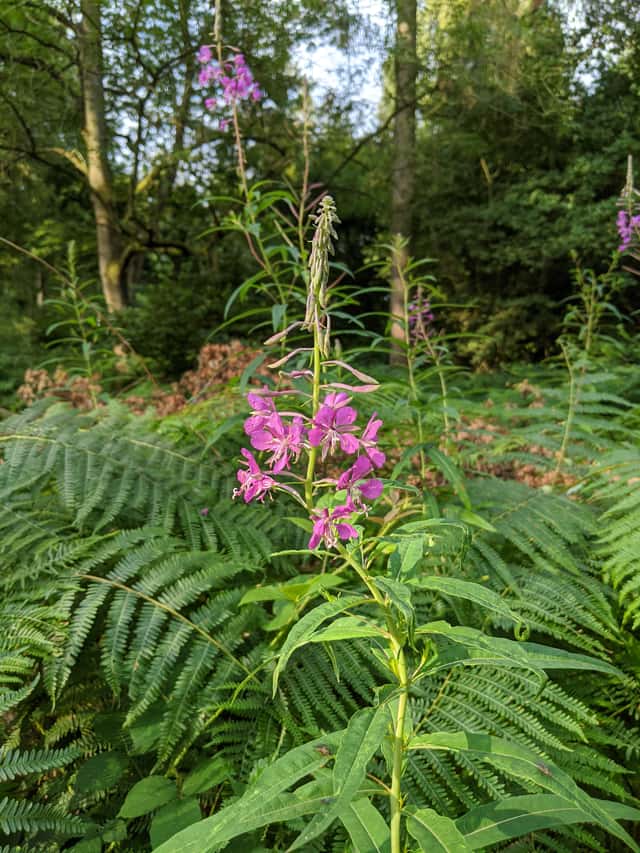
Fireweed (Chamaenerion angustifolium) is a perennial herbaceous plant in the willowherb family Onagraceae. The height of the aerial stem usually reaches 60-120 cm, rarely up to 150-200 cm. The stem is generally unbranched and hairless, with leaves arranged spirally along the stem. The flowers are lilac-pink to dark pink, radially symmetrical with four petals, blooming in long racemes from early June to September. The four-chambered capsule opens to disperse seeds via the wind using white feathery hairs. The rhizome is creeping and thick, forming numerous new shoots. The plant is a pioneer species that quickly colonizes burn sites, clearings, and other disturbed areas, and is common in Estonia.
How to Propagate Fireweed?
How Big Does Fireweed Grow?
TLDR: Fireweed can reach up to 2.0m tall with Fast growth rate.
Max height
2.0m
Spread
90cm
Growth rate
Fast
Foliage
Deciduous
Plant Uses
Ornamental
Great for decoration
Edible
Can be consumed
Medicinal
Medicinal properties
Medicinal Uses
- Relieving symptoms of benign prostatic hyperplasia (BPH) in stages I and II
- Anti-inflammatory, anti-tumor, and antimicrobial properties
- Relieving digestive disorders and gastritis
- Supportive herbal remedy for peptic ulcer disease
- Tea made from leaves and roots contains tannins, vitamin C, carotenes, and pectins
Culinary Uses
- Young spring shoots are peeled and eaten raw or lightly steamed—good sources of vitamins A and C
- Leaves are used to make herbal tea (known as Ivan Chai)
- Rhizomes are peeled and roasted, though the taste is often bitter
- Flowers and leaves are used in Alaska to make candies, syrup, jelly, and ice cream
- Fireweed is an excellent honey plant; its honey has a spicy aroma
Is your plant showing symptoms?
Click on the symptom to discover possible causes:
What Diseases Commonly Affect Fireweed?
TLDR: Fireweed is susceptible to 7 known diseases. Monitor regularly for early detection.
Powdery Mildew
Powdery mildew is a common fungal disease caused by various fungi species including Erysiphe, Podosphaera, Oïdium, and Leveillula. It affects over 10,000 plant species worldwide. The disease thrives in warm, dry climates with high humidity and appears as a distinctive white powdery coating on plant surfaces.
Downy Mildew
Downy mildew is a fungal-like disease caused by oomycetes (water molds) that thrives in cool, wet conditions. It affects a wide range of plants, causing yellowing leaves with fuzzy white-gray growth underneath, leading to defoliation and reduced yields if left untreated.
Rust
Rust is a common fungal disease caused by fungi in the order Pucciniales that affects a wide variety of plants. The disease gets its name from the characteristic orange, yellow, or reddish-brown pustules that appear on leaves, resembling metal rust. This obligate fungal parasite requires living plants to survive and can cause significant economic losses in agricultural crops.
Anthracnose
Anthracnose is a fungal disease caused by fungi in the genus Colletotrichum that affects many plants, including vegetables, fruits, and trees. The disease thrives in cool, wet conditions, causing dark, sunken lesions on leaves, stems, flowers, and fruits.
Meaning & Symbolism
As fireweed is one of the first plants to colonize post-fire and disturbed areas, it symbolizes rebirth and resilience after destruction. It is the floral emblem of Hedmark county in Norway and the Yukon territory in Canada, and was chosen as the floral emblem of London in 2002.
Compare with similar plants
| Attribute | Difficulty | Light | Watering | Pet Safe |
|---|---|---|---|---|
| Field Maple | Easy | Bright indirect | 14d | ✓ |
| Silver Birch | Easy | Direct sun | 14d | ✓ |
| Common Blanketflower | Easy | Direct sun | 10d | ✓ |
| Cushion Bush | Easy | Direct sun | 14d | ✓ |





