Bromeliaceae
Billbergia pyramidalis (Flaming Torch): Complete Care Guide
Billbergia pyramidalis
Grow in strong indirect light, keep the central cup topped with a little clean water, water the potting mix when the top layer dries out, and use a light, well-draining substrate. It is forgiving and low-maintenance, great for beginners.
Every 7 days
Partial shade
15° - 27°C
50% - 70%
Categories
What is Flaming Torch?
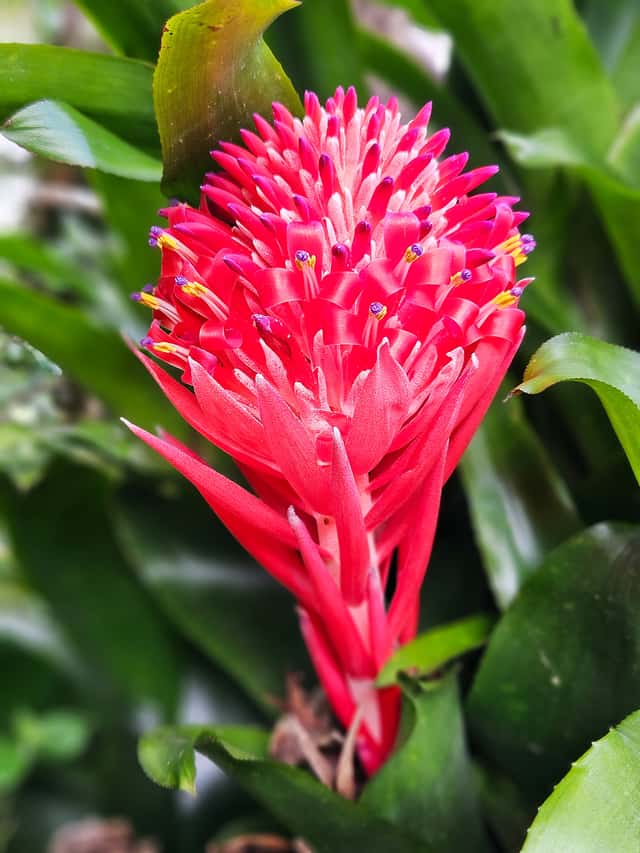
Flaming Torch (Billbergia pyramidalis) is a easy-care plant from the Bromeliaceae family. Billbergia pyramidalis, commonly called flaming torch or foolproof plant, is an epiphytic or terrestrial bromeliad native to northern South America and the Caribbean. It forms a compact rosette of glossy green leaves and produces a pyramidal scarlet-red inflorescence with violet and yellow highlight...
Flaming Torch grows up to 40cm, spread of 50cm, watering every 7 days, 15°C – 27°C, 50–70% humidity. It is suitable for indoor environments and safe for pets.
Unlike many tropical plants, Flaming Torch tolerates watering mistakes. Best for beginners. Unlike many popular species, Flaming Torch is safe to keep around pets. Without adequate drainage, root rot can develop within 14 days.
How to Care for Flaming Torch?
TLDR: Flaming Torch needs Partial shade, watering every 7 days, and temperatures between 15-27°C with 50-70% humidity.
How Often Should You Water Flaming Torch?
Keep a small amount of clean water in the central cup formed by the leaves, refreshing it weekly to prevent mosquitoes and salt buildup. Water the soil only when the top layer feels dry, avoiding waterlogging.
How Much Light Does Flaming Torch Need?
Bright, indirect light is ideal, such as near a sheer-curtained window or under a tree canopy. Intense direct sun can scorch the leaves, while too little light reduces flowering.
What Is the Best Soil for Flaming Torch?
Use a light, well-draining mix, such as an orchid blend with bark, perlite and a bit of organic compost. Avoid heavy soils that hold excess moisture.
What Pot Should You Use for Flaming Torch?
A terracotta or ceramic pot with generous drainage holes, since it retains less moisture than plastic and suits its epiphytic growth habit.
Care Schedule
Fertilize
Every 30 days
Repot
Every 900 days
What Is Flaming Torch and Where Does It Come From?
Billbergia pyramidalis, commonly called flaming torch or foolproof plant, is an epiphytic or terrestrial bromeliad native to northern South America and the Caribbean. It forms a compact rosette of glossy green leaves and produces a pyramidal scarlet-red inflorescence with violet and yellow highlights, typically in late summer or early autumn. It is a tough, low-maintenance plant popular in tropical gardens and decorative pots.
How to Propagate Flaming Torch?
Offset (pup) division
Always use sterilized tools to avoid contamination, and wait until the pup has firm leaves before separating it from the parent plant.
- 1 Wait until side offsets (pups) reach about a third of the parent plants size
- 2 Using a clean, sharp knife, cut the pup away as close to the base as possible, keeping any roots attached
- 3 Let the cut callus over for a few hours in a shaded spot
- 4 Plant in a light, well-draining substrate and keep lightly moist until rooted
Materials needed:
How Big Does Flaming Torch Grow?
TLDR: Flaming Torch can reach up to 40cm tall with Medium growth rate.
Max height
40cm
Spread
50cm
Growth rate
Medium
Foliage
Evergreen
Plant Uses
Ornamental
Great for decoration
Is your plant showing symptoms?
Click on the symptom to discover possible causes:
What Diseases Commonly Affect Flaming Torch?
TLDR: Flaming Torch is susceptible to 6 known diseases. Monitor regularly for early detection.
Root Rot
Root rot is a serious fungal disease that affects the root system of plants, causing them to decay and die. It is primarily caused by overwatering, poor drainage, or soil-borne fungi such as Pythium, Phytophthora, Rhizoctonia, and Fusarium. The disease thrives in waterlogged conditions where roots are deprived of oxygen, making them susceptible to fungal infection.
Rust
Rust is a common fungal disease caused by fungi in the order Pucciniales that affects a wide variety of plants. The disease gets its name from the characteristic orange, yellow, or reddish-brown pustules that appear on leaves, resembling metal rust. This obligate fungal parasite requires living plants to survive and can cause significant economic losses in agricultural crops.
Mealybugs
Mealybugs are small, soft-bodied insects covered with a white, waxy, cottony material. They are common pests of houseplants and outdoor plants in mild climates. These sap-sucking insects feed on plant tissue, causing damage, stunted growth, and can lead to plant death if left untreated. They produce sticky honeydew which attracts sooty mold.
Scale Insects
Scale insects are small sap-sucking pests that appear as brown, shell-like bumps on plant stems and leaves. There are over 25 species, divided into armored (hard) and unarmored (soft) scales. They feed by piercing plant tissue and extracting sap, which weakens the plant and can lead to yellowing, stunted growth, and even death if left untreated. They also excrete honeydew, which attracts ants and promotes sooty mold growth.
Meaning & Symbolism
Like many bromeliads, Billbergia pyramidalis is associated with hospitality and resilience, since it blooms even under tough conditions and thrives with minimal care.
Fun Facts
Despite its scientific name, it is not closely related to the pineapple, though both belong to the Bromeliaceae family.
In the wild it grows both in soil and on tree trunks, absorbing water and nutrients through its leaves.
Its flowers last less than a month, but the vividly colored bracts can persist for weeks.
Frequently asked questions
How often should I water Billbergia pyramidalis?
Is Billbergia pyramidalis toxic to cats and dogs?
Why is not my Billbergia pyramidalis blooming?
How do I propagate this bromeliad?
Compare with similar plants
| Attribute | Difficulty | Light | Watering | Pet Safe |
|---|---|---|---|---|
| Field Maple | Easy | Bright indirect | 14d | ✓ |
| Silver Birch | Easy | Direct sun | 14d | ✓ |
| Common Blanketflower | Easy | Direct sun | 10d | ✓ |
| Cushion Bush | Easy | Direct sun | 14d | ✓ |





